If you’ve been around the developer block, you’ve probably heard of Supabase—a backend-as-a-service (BaaS) platform that’s giving Firebase a run for its money. But is it the right choice for your project? What are the alternatives if it’s not? Let’s break this down and explore Supabase in detail, followed by its competitors.
What Is Supabase?
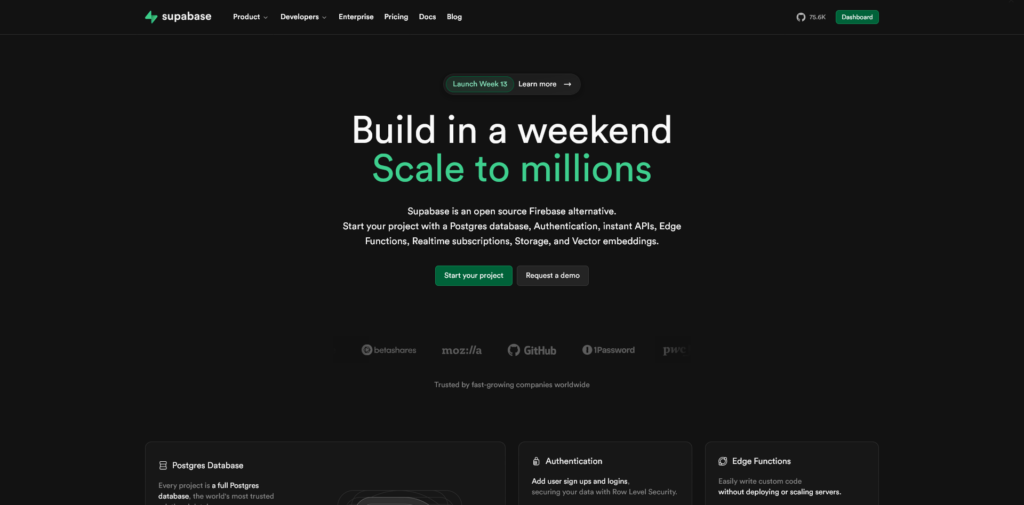
Supabase is often dubbed the “open-source Firebase alternative.” It provides developers with tools to build and scale applications quickly, without managing a backend. It’s built on top of PostgreSQL, which gives it a robust foundation for handling relational data.
Here’s what you get with Supabase:
- Database: A fully managed PostgreSQL database.
- Auth: User authentication and authorization.
- Storage: File storage with public and private access controls.
- Realtime: Live updates for database changes.
- Edge Functions: Serverless functions for custom business logic.
Supabase by the Numbers
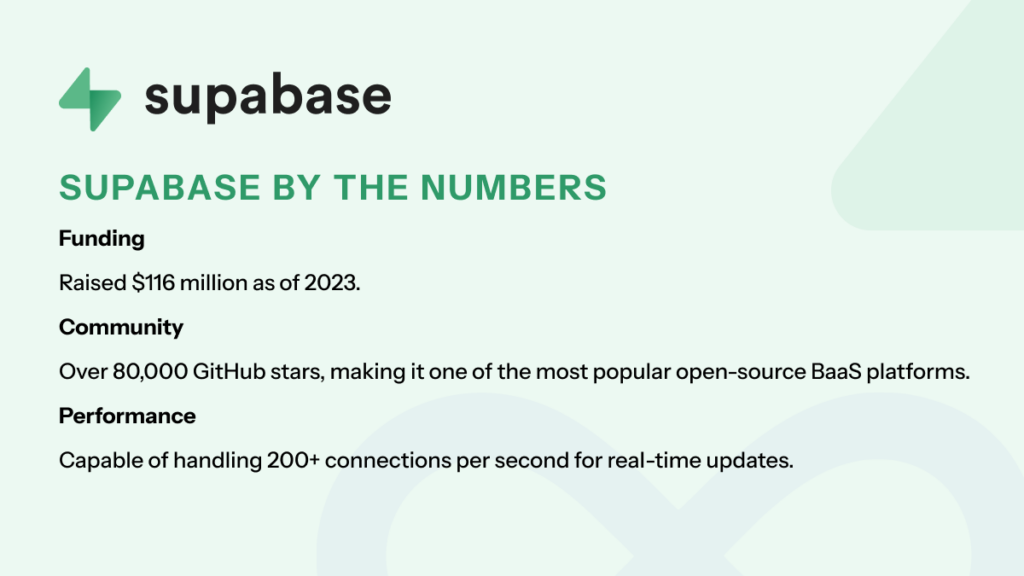
- Funding: Raised $116 million as of 2023. (Crunchbase)
- Community: Over 80,000 GitHub stars, making it one of the most popular open-source BaaS platforms.
- Performance: Capable of handling 200+ connections per second for real-time updates. (Supabase Docs)
Why Developers Love Supabase
1. Open Source
Unlike Firebase, Supabase’s codebase is fully open-source. Developers can self-host it or customize it to fit their needs.
- Stat: 70% of developers prefer open-source tools for their flexibility and transparency. (Stack Overflow Developer Survey)
2. SQL-Based
Supabase uses PostgreSQL, a widely adopted relational database. If you’re comfortable with SQL, you’ll feel right at home.
- Stat: PostgreSQL is the 4th most-used database globally. (DB-Engines)
3. Realtime Features
Supabase’s real-time updates are powered by PostgreSQL’s replication capabilities, making it perfect for chat apps, dashboards, and live feeds.
4. Scalability
Whether you’re building a side project or a full-scale app, Supabase scales effortlessly with your needs.
The Downsides of Supabase
1. No Native Offline Support
Supabase currently lacks Firebase’s offline-first capabilities, which can be a dealbreaker for certain applications.
2. Complex Pricing
While the free tier is generous, costs can escalate quickly for apps with high usage.
- Example: High read/write operations and large file storage can significantly increase your monthly bill.
3. Still Maturing
Despite its rapid growth, Supabase is relatively new compared to Firebase and lacks some polished features.
Alternatives to Supabase
Supabase is great, but it’s not the only player in town. Here are some alternatives you might consider:
1. Firebase
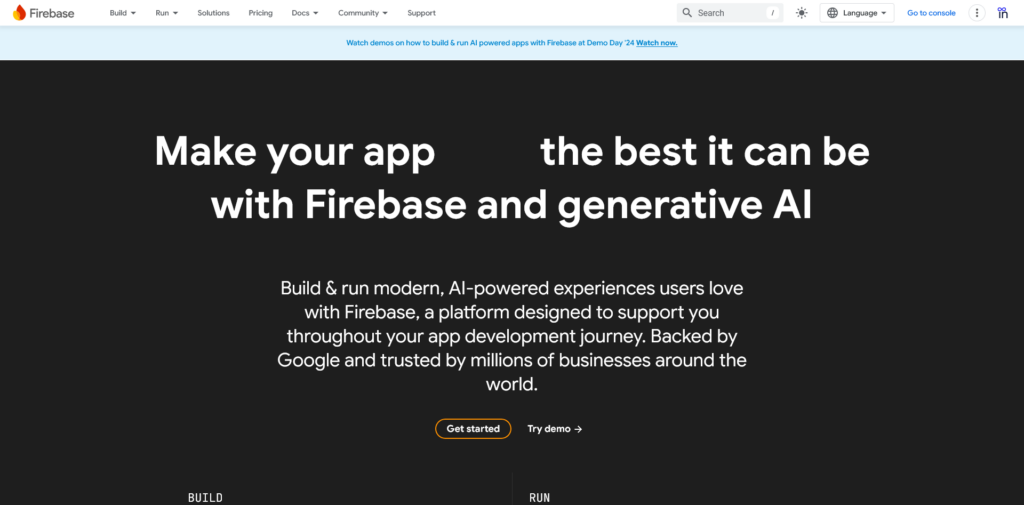
The OG BaaS platform, Firebase, is owned by Google and offers a comprehensive suite of tools:
- Database: Firestore (NoSQL) and Realtime Database.
- Hosting: Free static web hosting.
- Analytics: Built-in analytics for user behavior.
Why Choose Firebase?
- Native offline support.
- Strong ecosystem with seamless integration into Google Cloud.
- Stat: Firebase powers 2.5 million apps worldwide.
2. Appwrite
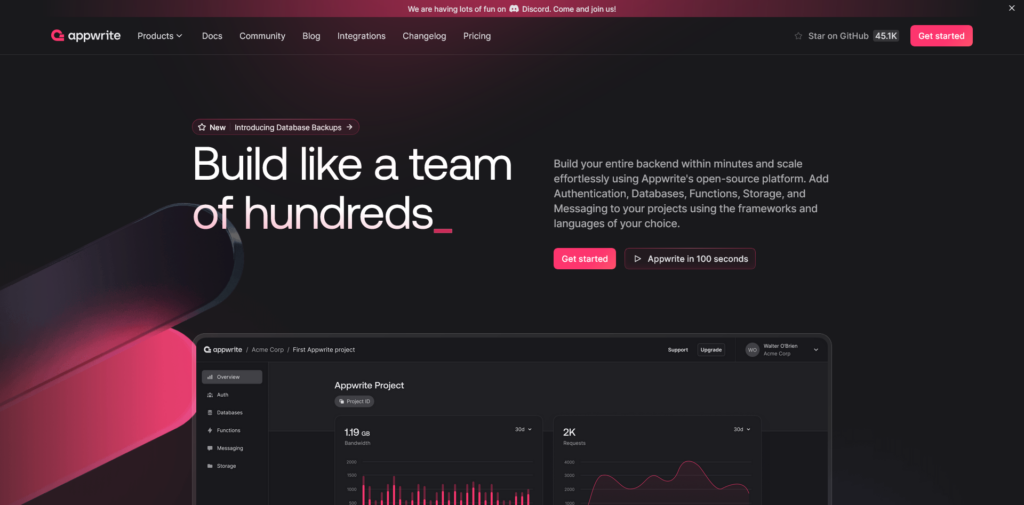
An open-source backend server designed for frontend developers. It provides APIs for user authentication, databases, file storage, and more.
Why Choose Appwrite?
- Self-hostable and highly customizable.
- Community-driven with a focus on developer experience.
3. Parse
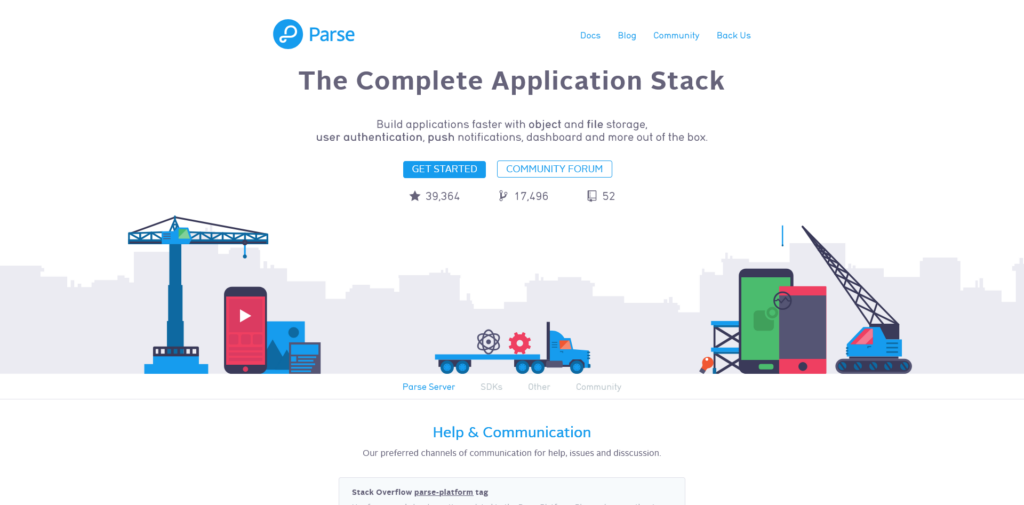
Parse was acquired by Facebook and later open-sourced. It’s another self-hosted backend solution that offers:
- User authentication.
- Push notifications.
- Database and file storage.
Why Choose Parse?
- Mature community support.
- Extensible and well-documented.
4. AWS Amplify
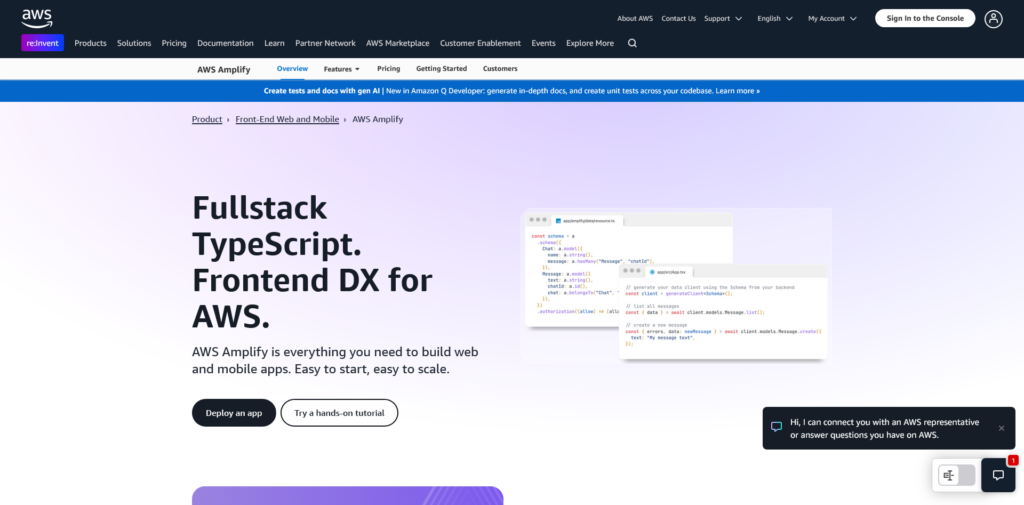
AWS’s answer to BaaS, Amplify, integrates with the broader AWS ecosystem to provide:
- APIs and databases.
- Authentication.
- Storage.
Why Choose AWS Amplify?
- Tight integration with AWS services.
- Highly scalable for enterprise-grade applications.
- Stat: AWS Amplify’s usage grew by 40% in 2023.
5. Hasura
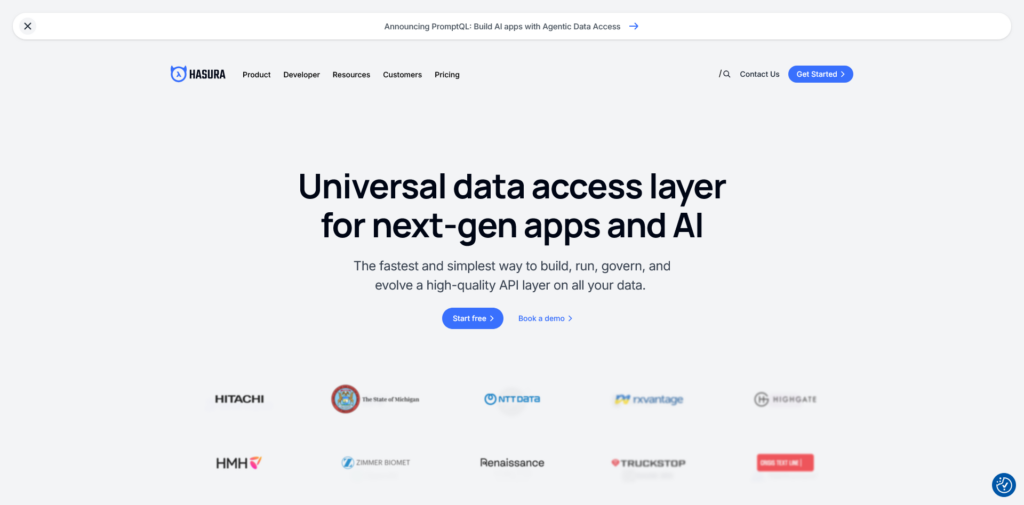
Hasura is a GraphQL engine that provides real-time APIs for PostgreSQL databases.
Why Choose Hasura?
- Lightning-fast GraphQL APIs.
- Real-time data updates.
- Great for GraphQL enthusiasts.
6. NHost
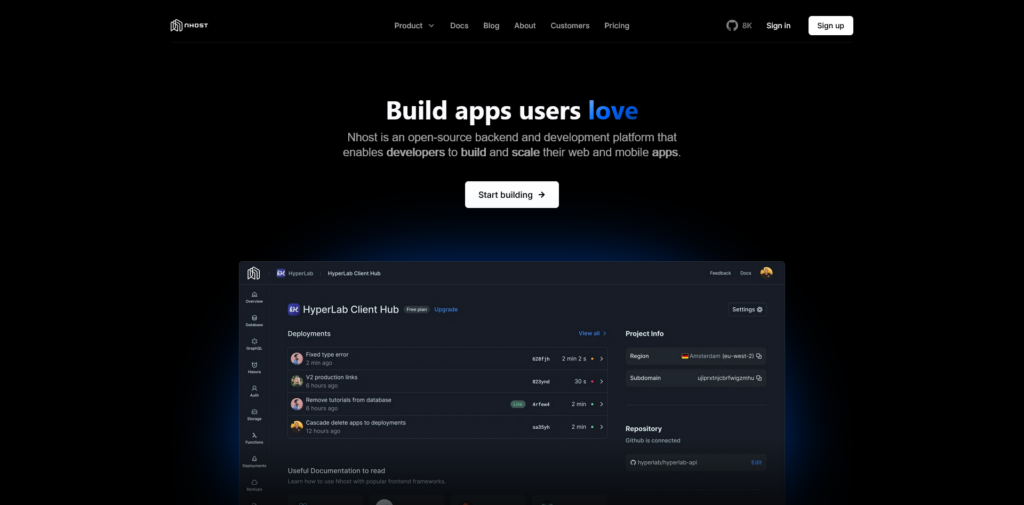
NHost combines the simplicity of Firebase with the power of PostgreSQL and GraphQL. It’s open-source and designed for modern developers.
Why Choose NHost?
- Built-in GraphQL APIs.
- Simplifies serverless app development.
7. Backendless
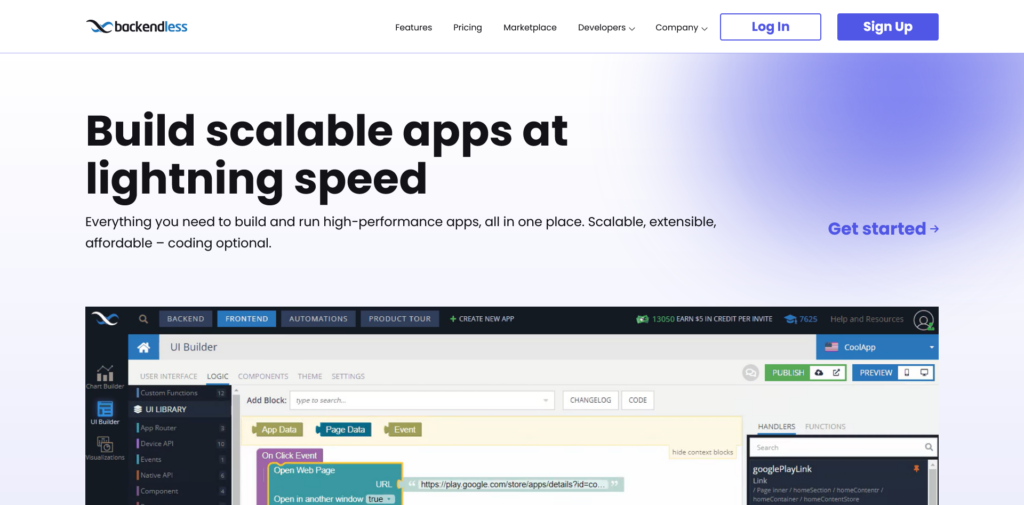
Backendless is a visual app development platform offering backend services like:
- User management.
- Data storage.
- Cloud code and APIs.
Why Choose Backendless?
- Visual tools for rapid app prototyping.
- Strong focus on user management and engagement.
8. PocketBase
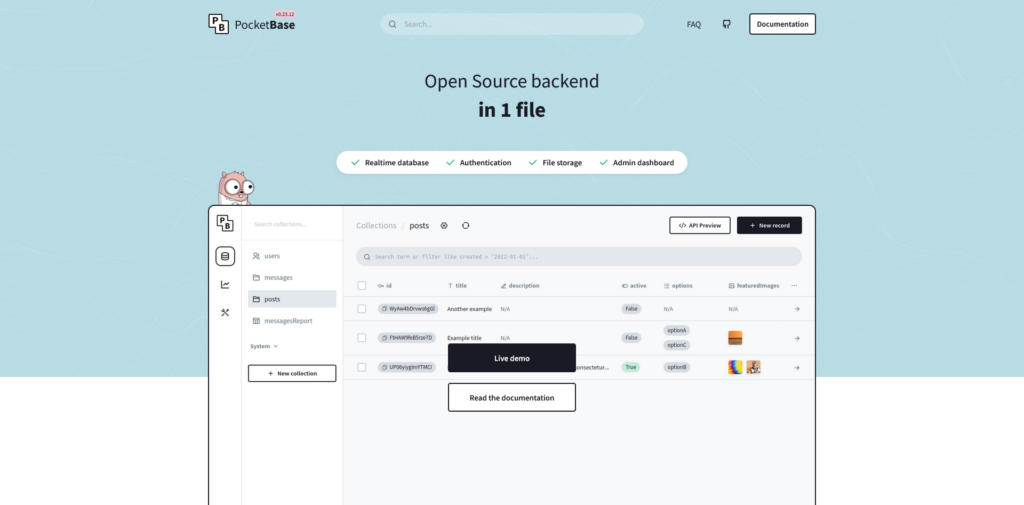
PocketBase is a lightweight, self-hosted backend solution that includes:
- SQLite as its database.
- Authentication and file storage.
Why Choose PocketBase?
- Simple setup and deployment.
- Great for small-scale projects or prototypes.
9. Kuzzle
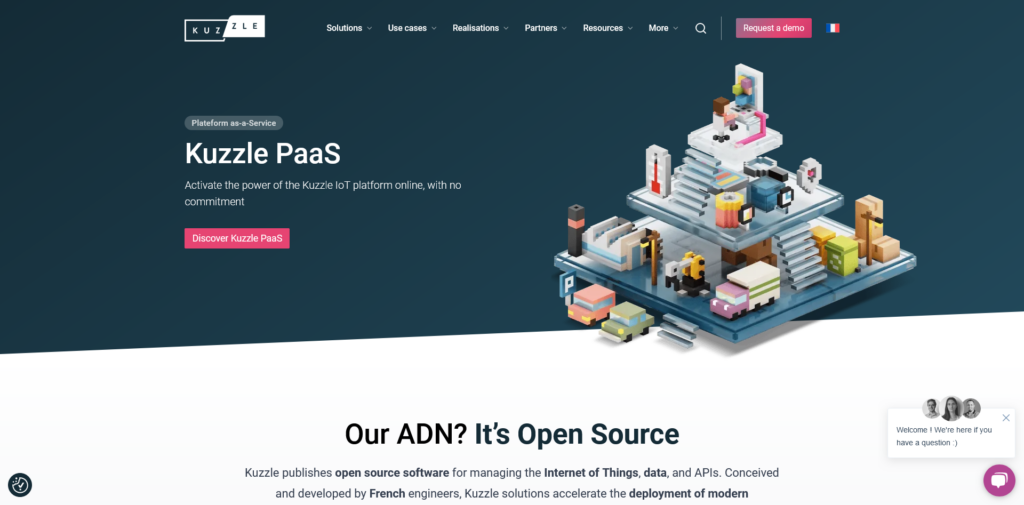
Kuzzle is an open-source backend for building IoT and web applications. It supports real-time functionalities and advanced search features.
Why Choose Kuzzle?
- Ideal for IoT projects.
- Real-time capabilities and geospatial queries.
10. Railway
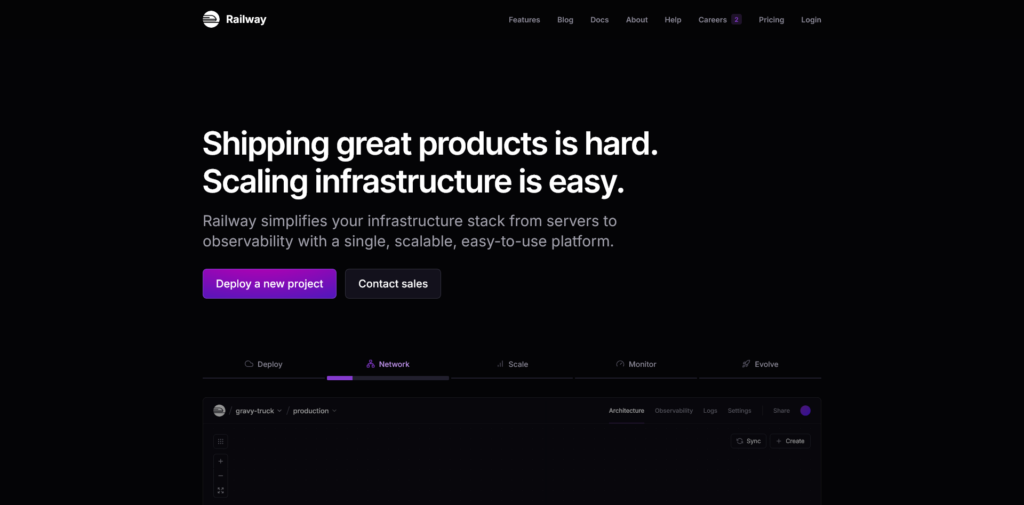
Railway focuses on simplifying deployment for full-stack apps with:
- Postgres hosting.
- Built-in deployment workflows.
Why Choose Railway?
- Great for developers who value streamlined DevOps.
- Flexible hosting and integrations.
Pricing Comparison Table
| Platform | Free Tier | Paid Plans (Starting At) | Highlights |
|---|---|---|---|
| Supabase | 2 GB storage, 50 MB database, 500K requests | $25/month | Open-source, PostgreSQL-based |
| Firebase | 1 GB storage, 50K reads, 50 writes/day | Pay-as-you-go | Google Cloud integration |
| Appwrite | Self-hosted, free | Self-managed costs | Open-source, customizable |
| Parse | Self-hosted, free | Self-managed costs | Mature community support |
| AWS Amplify | Free for first 5 GB storage, 1M requests | Pay-as-you-go | Enterprise-grade scalability |
| Hasura | Free for self-hosting | $99/month | Real-time GraphQL APIs |
| NHost | Free for small projects | $25/month | GraphQL, PostgreSQL |
| Backendless | Free for 200 users, 1 GB storage | $15/month | Visual app-building tools |
| PocketBase | Free | Self-managed costs | Lightweight and simple |
| Kuzzle | Free for self-hosting | Self-managed costs | IoT-focused features |
| Railway | Free for limited usage | $10/month | DevOps-friendly, Postgres hosting |
Which Platform Should You Choose?
It all comes down to your needs:
- If you want open-source and SQL, go with Supabase.
- For offline-first and NoSQL, Firebase is still king.
- Need customization? Check out Appwrite or Parse.
- Want enterprise-grade scalability? AWS Amplify has your back.
- For GraphQL powerhouses, Hasura or NHost are excellent choices.
- Small-scale and lightweight? Try PocketBase or Backendless.
Final Thoughts
Supabase has emerged as a strong contender in the BaaS space, especially for developers who value open-source tools and SQL-based databases. However, no single platform is perfect for every use case. By weighing the pros and cons of each alternative, you can make an informed decision that aligns with your project’s goals.
So, what’s it gonna be? Supabase or one of its competitors? Either way, the backend of your dreams is just a few clicks away.