Blog

  • Add Custom Attributes Dropdown to WooCommerce Product Page

    Add Custom Attributes Dropdown to WooCommerce Product Page

    WooCommerce product attributes let you define extra product data, such as size or colour to help customers know more about the product. The default Woocommerce template does have the features to display it in the additional information section but if you are looking to show it just above the cart button then you can use the WooCommerce hook woocommerce_before_add_to_cart_button. This is the best way to show custom product attributes on the shop page programmatically.

    Display Custom Products Attributes Dropdown

    The following code will work only for simple product or if you are using WooCommerce lottery. To show a list, select or a dropdown for all the custom attributes in the frontend just above the cart button you can add the code to functions.php file of the current theme you are using.

    add_action('woocommerce_before_add_to_cart_button', 'custom_product_attributes');
    
    function custom_product_attributes() {
    global $product;
    $attributes = $product->get_attributes();
    if ( ! $attributes ) {
    return;
    }
    if ($product->is_type( 'variable' )) {
    return;
    }
    echo '<div class="wc-prod-attributes"><h2>Custom Attributes</h2>';
    foreach ( $attributes as $attribute ) {
    $attribute_data = $attribute->get_data();
    $attribute_terms = $attribute_data['options'];
    $label = $attribute_data['name'];
    ?>
    <div class="wc-prod-single-attribute">
    <h3><?php echo $label; ?></h3>
    <select class="wc-custom-select-attribute" name="attribute[<?php echo $attribute_data['id']; ?>]" id="attribute[<?php echo $attribute_data['id']; ?>]">
                    <option value selected>Choose an option</option>
                    <?php foreach ( $attribute_terms as $pa ): ?>
                        <option value="<?php echo $pa; ?>"><?php echo $pa; ?></option>
                    <?php endforeach; ?>
                </select>
    </div>
    <?php
    }
    echo '</div>';
    }
    ?>

    Note: Don’t place the code in the woocommerce plugin folder. It is always advised to place the above code in functions.php of the theme you are using so that the files don’t overwrite when you update WooCommerce plugin.

    Adding Custom Attribute to the Backend

    We are using lottery plugin and wanted to show a custom attribute in the frontend. To add a custom attribute, click on the Attributes Tab. Select Custom product attribute and enter the name and the values. The dropdown values have to be separated by | as per the screenshot.

    Add Custom Attributes Dropdown to WooCommerce

    Custom Attribute Select Display

    As you can see the list shows all the options that we have added in the backend of the particular product. You can add any number of values in the backend which is shown as an option in the frontend.

    select list woocommerce custom attribute

    Conclusion

    Using Custom Attributes at the right place in the product page will definitely help the customers in taking the right decision while purchasing the products. If you have any questions or face issues with the implementation of custom product attributes into your woocommerce page, then feel free to contact us. We will get back to you as soon as possible

  • 10 Key Points You Should Know While Upgrading Joomla 3 to Joomla 4

    10 Key Points You Should Know While Upgrading Joomla 3 to Joomla 4

    Upgrading your Joomla 3 to Joomla 4 can bring a host of benefits, from increased speed to better security. However, you need to ensure the process is done correctly to avoid potential issues. Here are 10 keypoints you should keep in mind to make the transition smooth.

    Taking Backup is a Must Using Akeeba Backup

    Never start an upgrade without a proper backup. With Akeeba Backup, you can create a complete backup of your Joomla site with ease.

    Check if the Joomla 4 Versions of the Extensions You are Using is Available

    Ensure that the extensions you’re using are compatible with Joomla 4. You can do this by visiting the developers’ website or Joomla extensions directory.

    Search for Similar Extension if the Joomla 4 Version isn’t Available

    If you find an extension that isn’t compatible with Joomla 4, search for an alternative. There are thousands of Joomla 4 compatible extensions available, and chances are you’ll find one that fits your needs. If you don’t find one, then you can also ask us to upgrade the extension and make it compatible.

    Ask the Developer to Upgrade the Module, Plugin, or Component

    If you can’t find an alternative, reach out to the extension developer. They might be working on a Joomla 4 version or can guide you on how to make it compatible with the latest version.

    Check Your Template’s Compatibility

    Like extensions, your Joomla 3 template might not work with Joomla 4. Check if an updated version is available. If not, consider using a new template.

    Run a Joomla 3 to Joomla 4 Update Check

    A Joomla update check will tell you which extensions are compatible and which ones need to be updated. This step can save you from potential headaches down the line.

    To do that go to Components > Joomla Update

    or

     https://YOUR_WEBSITE/administrator/index.php?option=com_joomlaupdate

    You can run a dry run and check the compatibility.

    Disable Incompatible Extensions

    If you find any incompatible extensions during the update check, unpublish them. Do not uninstall them, as you may lose important data.

    Disable System Plugins

    Before you start the upgrade, disable all system plugins. This will ensure they don’t interfere with the process.

    Ensure Your Server Meets Joomla 4 Requirements

    Joomla 4 requires PHP 7.2 or higher. Make sure your server meets this requirement to avoid any compatibility issues.

    Test Before Going Live

    Once you’ve upgraded, don’t push your website live right away. Test thoroughly to ensure everything is working as expected.

    Frequently Asked Questions​

    Upgrading to Joomla 4 offers numerous benefits, including better security, enhanced SEO, and improved performance. Read the features of Joomla 4.

    While Joomla 3 is still a secure platform, Joomla 4 has added security features that make it even more secure. Also, support for Joomla 3 will eventually be discontinued, making it more vulnerable to security risks.

    Joomla 4 requires PHP 7.2 or higher. Check if your hosting supports it.

    Yes, Joomla 4 is a stable and robust CMS platform. It has gone through extensive testing to ensure its stability and performance.

    The best time to upgrade is when your website is not experiencing heavy traffic. You should also make sure you have a complete backup of your site before you start the upgrade process. It is also better to upgrade your Joomla site on your local computer and then upload it to a live server.

    Conclusion

    Upgrading your Joomla website from Joomla 3 to Joomla 4 is a significant step. The process might seem daunting, but with careful preparation, you can ensure a smooth transition. Always remember to take a full backup of your site and check the compatibility of your extensions and templates with Joomla 4. Happy upgrading!

  • Caching in Joomla: An Essential Tool for Accelerating Your Website Speed

    Caching in Joomla: An Essential Tool for Accelerating Your Website Speed

    Hello Joomla enthusiasts! Today, we’re going to delve into the world of caching and its crucial role in Joomla. You might be wondering: What is caching and why is it so important? Let’s embark on this journey together!

    Introduction to Joomla Cache

    Caching, in the simplest terms, is a process that stores a version of your website content to deliver it quickly to the visitors without needing to generate it from scratch every time. The necessity of caching arises from its ability to significantly enhance website speed, thus, improving user experience and Joomla SEO ranking.

    Joomla presents you with a variety of caching options: Page Caching, Conservative Caching, and Progressive Caching. Each type caters to different needs and situations, ensuring that your Joomla website functions optimally at all times.

    Cache Settings in Joomla

    To access the cache settings in Joomla, head over to System > Global Configuration > System Tab. In the Cache Section you will find 3 System Cache options:

    cache settings joomla

    • Caching Disabled: As the name suggests, no caching happens when this option is selected.
    • Conservative Caching: This option caches the content for each visitor separately.
    • Progressive Caching: This more aggressive form of caching stores the same content for all visitors, making it especially beneficial for websites with mostly static content.

    Cache Handler

    Under the cache settings, there’s another crucial setting you need to know about – the Cache Handler. This option determines how Joomla stores the cached content. The two common cache systems are the ‘File’ and ‘Memcached’, each having their unique benefits.

    Cache Time

    The Cache Time is another significant factor that determines the lifespan of cached content. It’s essential to set the cache time based on the dynamics of your website. For instance, a news website may require a shorter cache time due to frequent content updates.

    Page Cache

    enable system page cache joomla 4

    Enabling the page cache in Joomla is straightforward. Go to Extensions > Plugins, then search for “System – Page Cache” and enable it. It is a type of caching that saves an entire page’s HTML, significantly reducing server load.

    Browser Caching

    Browser caching takes caching a step further by storing static files (like CSS, JavaScript, and images) of your website in the visitors’ browsers. This reduces server load and increases the speed for returning visitors.

    To enable it, simply navigate to

    Extensions > Plugins, find “System – Page Cache”, and enable “Use Browser Caching”.

    system page cache

    Browser caching can bring remarkable improvements in your website’s loading speed and enhance user experience manifold. Check out our guide on how to enable, disable, and clear cache in Joomla for detailed instructions.

    Frequently Asked Questions​

    To clear the cache in Joomla 4, follow these steps:

    1. Navigate to the Joomla Administrator Panel.
    2. From the ‘System’ menu, choose ‘Clear Cache’.
    3. Choose the items you want to clear by checking their boxes or simply click ‘Check All’.
    4. Click ‘Delete All’ button on the toolbar to clear the selected cache files.

    Joomla caching improves the website’s performance by storing a copy of your webpage after the first load. This cached version is then served to subsequent visitors, reducing the load on the server and providing a faster user experience. When a page is updated, the cache refreshes to reflect these changes. The check-in cache process ensures that the latest version of the page is always displayed to your visitors.

    To disable caching in Joomla, follow these steps:

    1. Log in to the Joomla Administrator Panel.
    2. Navigate to ‘System’ -> ‘Global Configuration’.
    3. On the ‘System’ tab, find the ‘Cache Settings’ section.
    4. Set the ‘Cache’ option to ‘OFF – Caching Disabled’.
    5. Save your changes.

    To clear the Joomla cache manually, you can do the following:

    1. Access your website’s file system either through FTP or your web host’s file manager.
    2. Go to the ‘cache’ folder, which is usually located in the root directory of your Joomla installation.
    3. Delete all the files and folders inside the ‘cache’ folder. Do not delete the ‘cache’ folder itself.

    The cache time in Joomla refers to the duration for which the system stores the cached copy of your webpage. After this period, the cached version of the page will be discarded, and a fresh version will be created. The default cache time in Joomla is 15 minutes, but this can be adjusted to suit the dynamics of your website. You can find and adjust the cache time in the ‘System’ tab of the ‘Global Configuration’ settings.

    Conclusion

    Caching in Joomla is not just a feature but a necessity for every website aiming for top performance and superior user experience. Whether you’re using Page Caching, Conservative Caching, or Progressive Caching, remember that every type has its unique advantages that can be utilized based on your website’s needs.

    Alternately you can use some thrid party cache plugins from Joomla Extensions Directory

  • How to Upgrade Joomla Using cPanel: A Comprehensive Guide

    How to Upgrade Joomla Using cPanel: A Comprehensive Guide

    This detailed tutorial will help you handle the upgrade process quickly, whether you’re considering upgrading Joomla 3 to 4, or perhaps looking to improve your older Joomla 1.5 to the latest version.

    For those wondering how to upgrade Joomla manually, or wishing to update to the latest Joomla version, this article will provide the necessary steps to make the process as smooth as possible.

    Upgrading your Joomla version regularly is essential to maintaining a secure, efficient, and feature-rich website. Let’s delve into the step-by-step process of upgrading Joomla using cPanel.

    Backup Your Website

    Before any major changes to your Joomla website, it’s always prudent to create a backup. This way, should anything go wrong during the upgrade, you can revert to the previous state. You can do this within cPanel using the Backup Wizard or by using Joomla extensions like Akeeba Backup.

    Check Extension Compatibility

    Before upgrading, make sure your extensions are compatible with the new Joomla version. You can find this information on the Joomla extensions directory or the extension developer’s website. It’s crucial to ensure smooth operation after the upgrade.

    Upgrade Your Joomla Version

    Once the backup is complete and the extensions are compatible, you can proceed with the upgrade. If you’re using Joomla 3, you can easily upgrade to Joomla 4 from your Joomla control panel.

    If you’re using an older version such as Joomla 1.5, the upgrade process might be a bit more complex. You would need to migrate your site to Joomla 2.5 before proceeding with the upgrade to Joomla 3 or 4. Here, you can follow a detailed guide on how to upgrade Joomla 1.7 to 2.5 and subsequently upgrade from Joomla 3 to Joomla 4.

    Test Your Website

    Once you’ve completed the upgrade, make sure to thoroughly test your website to ensure everything is functioning correctly. If you run into issues, you might need to refer to this guide on fixing Joomla issues.

    Update Your Extensions and Templates

    After ensuring your website works well with the new Joomla version, it’s time to update your extensions and templates. Doing this after the Joomla upgrade reduces the chances of encountering compatibility issues.

    Now that you know how to upgrade Joomla using cPanel, it’s important to regularly check for new Joomla updates to keep your website secure and running efficiently. Joomla’s latest version, Joomla 4, has introduced several new features to enhance your website’s performance and improve the user experience.

    Frequently Asked Questions​

    How often should I upgrade my Joomla version?

    Joomla regularly releases updates to enhance security and functionality. Therefore, it’s recommended to check for updates every few months.

    How do I check if my extensions are compatible with the new Joomla version?

    You can check the compatibility of your extensions by visiting the Joomla Extensions Directory or the extension developer’s website.

    What do I do if my website breaks after the Joomla upgrade?

    If your website breaks after the upgrade, you can restore your website from the backup you created before the upgrade process.

    How do I upgrade from Joomla 1.5 to Joomla 4?

    Upgrading from Joomla 1.5 to Joomla 4 involves migrating to Joomla 2.5, then upgrading to Joomla 3, and finally to Joomla 4.

    Embrace the world of enhanced features, improved user experience, and robust security with the latest Joomla version. Happy Upgrading!

  • How to add a module inside an article in Joomla?

    How to add a module inside an article in Joomla?

    Joomla is one of the most used CMS platform, allowing you to customize your website to your exact specifications. But, have you ever wanted to embed a Joomla module directly into an article? Well, you’re in luck. With Joomla’s built-in loadposition plugin, you can easily do this. Let’s dive in!

    What is a Joomla Module?

    Before we delve into the process, let’s take a moment to understand what a Joomla module is. Modules in Joomla are lightweight and flexible extensions used for page rendering. These modules are often boxes positioned around a component like login, menu, or a custom HTML box.

    Step-by-Step Guide: Adding a Joomla Module into an Article

    Create a new module instance

    Navigate to the ‘Extensions’ tab and select ‘Modules’. Here, click the ‘New’ button to create a new module.

    Set a position for your module

    In your new module settings, find the ‘Position’ option. Here, you can assign a unique position that doesn’t conflict with your existing module positions. Lets name it my-custom-position.

    Enable the loadposition plugin

    Now go to ‘Extensions’, > ‘Plugins’. Search for ‘Content – Load Modules’, and ensure it is enabled. If not, click on it and set the status to ‘Enabled’. The loadposition plugin allows you to load a module inside an article.

    Insert your module into an article

    Open the article where you want to insert your module. In the content area, type {loadposition my-custom-position}. Make sure to replace ‘your-position’ with the position name you set for your module.

    Now, your module will appear wherever you’ve placed the {loadposition} tag within your article.

    Save your changes

    Don’t forget to save your changes both in your module settings and your article.

    Viewing Your Joomla Module Inside an Article

    Congratulations! You’ve just learned how to insert a module inside a Joomla article. Now, when you view your article on your website, you should see your module displayed in the position you designated.

    Remember, adding a module inside an article can be beneficial for displaying extra content or functionality, such as a login form or a custom HTML box. Keep exploring and see what amazing things you can create with Joomla!

    Frequently Asked Questions​

    Absolutely! You can use the loadposition command as many times as you like within an article.

    Ensure the plugin is enabled and that you’ve correctly typed the module position in the loadposition command.

    There are many ways to customize your Joomla articles. For example, you can add custom JavaScript or even insert HTML codes into your articles.

    Joomla is a powerful and flexible platform, offering features like ecommerce solutions, various extensions, and a robust community for support. Learn more about the benefits of using Joomla on our blog.

    For more tips and guides about Joomla, check out our other posts and learn how to optimize your Joomla website speed or add a favicon in your Joomla website.

    Happy Joomla-ing!

  • How to Add Custom JavaScript to Joomla: A Comprehensive Guide

    How to Add Custom JavaScript to Joomla: A Comprehensive Guide

    When it comes to extending the functionality of your Joomla website, custom JavaScript (JS) can be a game-changer. Whether you want to add JavaScript to a Joomla article, include a JS file to your Joomla template, or insert JavaScript into a module, component, or plugin, this guide has got you covered.
    Here, we’ll explain all you need to know about adding custom JavaScript to your Joomla site. So, without further ado, let’s dive in!
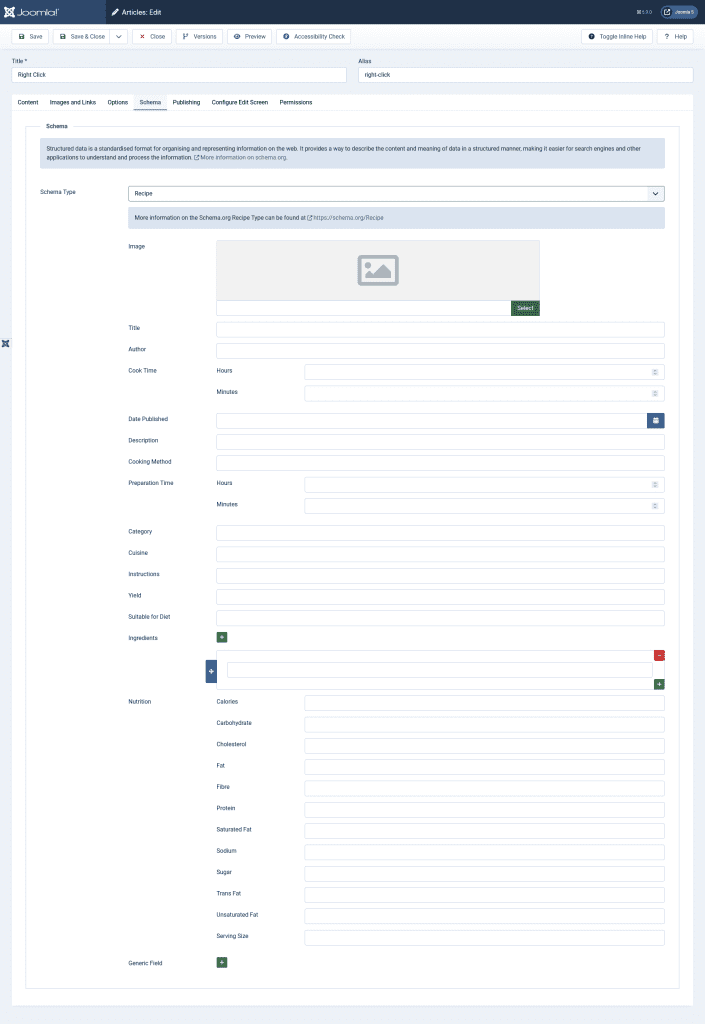
    Adding JavaScript to a Joomla Article

    When you want to inject JavaScript into a Joomla article, the process is relatively straightforward.

    1. Open the article you want to edit.
    2. In the editor, click on the “Toggle Editor” button. This will switch the editor to its raw HTML mode.
    3. In this mode, you can insert your custom JavaScript  directly into the article.
    4. If the code gets stripped then go to Global Configuration, switch the editor to no editor and add the code. Few editors may not allow you to add javascripts to the article.

    Example to Add Javascript

     <script> let d = new Date(); document.body.innerHTML = "<h1>Today's date is " + d + "</h1>" </script>

    Example to Add Javascript Files

    <script src="file.js"></script>

    It’s as simple as that! You can read more about creating and editing articles in Joomla here.

    Adding a JS File to a Joomla Template

    If you want to add a JavaScript file to a Joomla template, you need to edit the template’s index.php file.
    Here’s how:

    1. Go to the Joomla 4 administrator panel.
    2. Click on System > Site Templates
    3. Select your template and click on “Edit Main Page template.”
    4. Find a suitable location in the index.php file to insert your JavaScript file. It’s best to place it before the </head> tag.
    5. Include the JavaScript file by adding <script src="path_to_your_file.js"></script>. Replace “path_to_your_file.js” with the actual path to your JavaScript file.
    6. You can do the same using FTP

    You can also add the javascript file using the following PHP code

    <?php
    $document = JFactory::getDocument();
    $document->addScript('/media/system/js/sample.js');
    ?>
    

    The above code instructs Joomla to load the sample.js file from the specified path. Here, the path is relative to your Joomla root directory. To ensure the right path, use the absolute URL to JavaScript in Joomla.
    When you add a JS file to a Joomla template, you allow for cleaner, more manageable code, and ensure that the same script can be used across different parts of your website.
    For more insights on working with Joomla templates, check out this detailed guide.

    Adding JavaScript to Joomla Modules, Components, or Plugins

    Just as with  templates, you can add custom JavaScript to Joomla modules, components, or plugins. This could be particularly useful if you want a specific module, component, or plugin to carry out a JavaScript function.
    To add JavaScript to a Joomla module, you would typically edit the module’s PHP files like default.php which can be generally found inside the tmpl folder and insert your JavaScript code. However, always ensure that you follow the Joomla best practices to prevent any potential conflicts or errors.

    Frequently Asked Questions​

    How do I add JavaScript to a Joomla article?

    You can add JavaScript to a Joomla article by opening the article for editing, switching the editor to raw HTML mode, and inserting your custom JavaScript between <script> tags.

    How do I add JavaScript to a Joomla module?

    You can add JavaScript to a Joomla module by locating the module’s PHP file which can be found at

    modules/mod_your_module/tmpl/default.php. Edit the default.php file and insert the code with addScript.

    How do I add an absolute URL to JavaScript in Joomla?

    You can add an absolute URL to JavaScript in Joomla by adding the full URL in the src attribute of the script tag, like so: <script src="https://example.com/path_to_your_file.js"></script>.

    How do I add JavaScript to Joomla’s head?

    You can add JavaScript to Joomla’s head by editing your template’s index.php file and inserting your script tag before the </head> tag.

    Alternately when you add the addScript Joomla function, it will automatically add all the scripts into the head of the Joomla website.
    For more tips, tricks, and guides on how to make the most of your Joomla site, be sure to check out our blog.

    Finally, if you’re looking to enhance your Joomla site even more, consider hiring a Joomla programmer. A professional can help you incorporate more advanced features and ensure your website is running smoothly.

    If you have any questions about adding custom JavaScript to Joomla or any other Joomla-related topic, feel free to reach out. We’re here to help!

    This article is intended for educational purposes only. All code should be used responsibly and appropriately. Always remember to backup your site and test in a staging environment before making changes to your live site.

    For more information on Joomla, check out the official Joomla documentation.

  • The Benefits of Using Joomla: Features and Advantages

    The Benefits of Using Joomla: Features and Advantages

    The digital world is brimming with various content management systems (CMS), each boasting unique features. Among them, Joomla stands out, offering an array of benefits. In this blog, we dive into the advantages of Joomla, its features, and how it stacks up against others in the CMS landscape.

    A Versatile CMS: Advantages of Joomla

    Joomla is incredibly versatile, accommodating a variety of website types. Here are some key Joomla advantages and disadvantages you should consider:

    Ease of Use: Joomla strikes a perfect balance between simplicity and functionality. It may require a slight learning curve compared to other CMSs, but it provides more control and customization opportunities.

    Extensive Extensions: Joomla’s extension directory offers over 8,000 extensions, enhancing your site’s functionality.

    Multilingual Support: Joomla stands out with its in-built multilingual support, eliminating the need for a plugin.

    SEO Friendly: Joomla has robust SEO capabilities, offering SEO settings right out of the box.

    Security Updates: Regular security updates make Joomla a safe choice for websites of all sizes.

    Possible Disadvantages

    Despite its many advantages, Joomla may not be the right fit for everyone. It might be more complex than WordPress for basic sites, and may not offer as many commercial plugins compared to other CMSs.

    Digging Deeper: Advantages of Joomla CMS

    Let’s dive deeper into the advantages of Joomla CMS and its standout features:

    Open-Source

    Being an open-source platform, Joomla grants users full access to its source code. This enables you to customize your site extensively, tailoring it to your unique requirements.

    Powerful Content Management

    Managing and organizing content is a breeze with Joomla. You can categorize your content into different hierarchies without the need for additional plugins.

    Seamless E-commerce Integration

    Joomla makes setting up an online store simple with numerous e-commerce extensions like VirtueMart.

    Accessibility

    Joomla leads the CMS pack in accessibility, meeting WCAG 2.0 and Section 508 standards.

    Frequently Asked Questions​


    What are the main features and benefits of Joomla?

    Joomla is a free, open-source content management system (CMS) used to create and manage digital content for websites. It’s known for its flexibility, extensibility, and user-friendly interface.


    Is Joomla easy to use?

    Joomla is user-friendly but does require a slight learning curve. Once mastered, it offers more control and flexibility than many other CMSs.


    How does Joomla compare to other CMS platforms?

    Joomla offers more advanced functionality than WordPress, and while it’s less developer-oriented than Drupal, it’s easier to use.


    Can I create an e-commerce store with Joomla?

    Absolutely! Joomla offers numerous e-commerce extensions such as VirtueMart to help you establish your online store.


    Is Joomla a secure platform for my website?

    Yes, Joomla offers regular security updates and features, ensuring a secure environment for your website.

    In conclusion, the advantages of Joomla CMS are immense, particularly for those seeking versatility and control. From creating custom JavaScript to adjusting user registration settings, Joomla offers a high level of customization and functionality that can enhance your website experience.

    In the end, the right CMS for you depends on your specific needs and technical proficiency. While Joomla may not be as user-friendly as WordPress for beginners, or as powerful as Drupal for developers, it offers a compelling middle ground with a host of features and benefits. You may also refer to this comparison to make an informed decision.

    For further insights on Joomla and its uses, feel free to explore our other posts.

  • Procedure to Upload an Excel Sheet on Joomla Website

    Procedure to Upload an Excel Sheet on Joomla Website

    Uploading an Excel sheet to a Joomla website involves several steps. Here’s a step-by-step procedure to help you achieve this:

    1. Login to Joomla Administrator Panel:
      • Navigate to your Joomla website’s admin URL (typically yourwebsite.com/administrator).
      • Enter your username and password to log in.
    2. Media Manager:
      • From the top menu, select Content and then click on Media.
      • This will take you to the Media Manager, where you can manage and upload files.
    3. Upload the Excel File:
      • Click on the Upload button (usually represented by an upward arrow icon).
      • Browse your computer to select the Excel file you wish to upload.
      • Once selected, click on the Start Upload button. Your Excel file will be uploaded to the Joomla server.
    4. Linking the Excel File:
      • Once the file is uploaded, you can link to it from articles or modules.
      • Edit or create a new article where you want to place the link.
      • Highlight the text you want to use as a link.
      • Click on the Insert/Edit Link button in the editor toolbar.
      • In the URL field, browse or type the path to the uploaded Excel file. It will typically be in the format: /images/yourfilename.xlsx.
      • Set the target to “_blank” if you want the file to open in a new window/tab.
      • Click on Insert to add the link.
    5. Extensions for Advanced Functionality:
      • If you want to display the Excel content directly on your Joomla site or provide advanced download features, you might consider using Joomla extensions. Extensions like “Edocman” or “Dropfiles” can help manage and display documents, including Excel sheets, more effectively.
    6. Ensure File Security:
      • Make sure that any sensitive information is removed from the Excel sheet before uploading.
      • Regularly backup your Joomla site, including the Media Manager files.
      • Consider using security extensions to protect your uploaded files from unauthorized access.
    7. Test the Upload:
      • After uploading and linking the Excel file, visit the front end of your Joomla site.
      • Click on the link you created to ensure the Excel file downloads or displays correctly.

    Remember, the exact names of buttons and the layout might vary depending on the Joomla version you’re using and any customizations or extensions you have installed. Always ensure that you’re following best practices for website security when uploading and linking to files.

  • Remove index.php from URL using htaccess

    Many PHP developers find it difficult to remove index.php from URL. The best way is to use  .htaccess file in your root directory.

    mod_rewrite must be enable with php and this will work for the php version higher than 5.2.6

    RewriteEngine On  RewriteCond %{REQUEST_FILENAME} !-f RewriteCond %{REQUEST_FILENAME} !-d RewriteRule ^(.*)$ /index.php?/$1 [L]

    PHP version less than 5.2.6 try this

    RewriteEngine On  RewriteCond %{REQUEST_FILENAME} !-f RewriteCond %{REQUEST_FILENAME} !-d RewriteRule ^(.*)$ /index.php/$1 [L]

    Save the .htaccess file. We hope the above changes to the htaccess file can help you to remove the index.php from your URL. You can use the above method for any CMS like Joomla, Magento or WordPress.


    If you need any help on this then feel free to contact us. Our experienced developers will help you fix the issue.