Category: Wordpress

Learn about WordPress

  • Effortless Ways to Increase WordPress WP Admin Speed

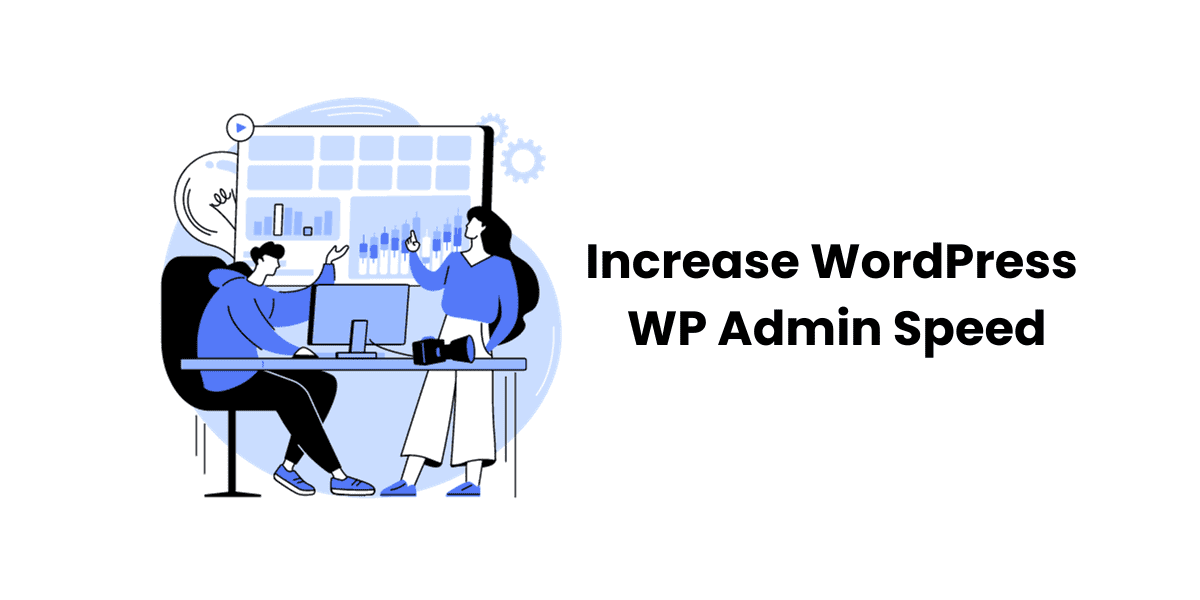
    Effortless Ways to Increase WordPress WP Admin Speed

    It’s not enjoyable to feel like you’re swimming through the mud while attempting to deal with your WordPress site, so we will assist you with escaping the mud and into a quicker stacking WordPress administrator dashboard.

    That’s what to achieve. We’ll immediately go through some motivations behind why you could have a sluggish WordPress administrator dashboard. Then, we’ll go through tips to assist you with fixing the problem(s) and get your WordPress WP Admin Speed stacking rapidly once more.

    On the off chance that you are running a WordPress site, the WP-administrator dashboard resembles the control focus of your WordPress site. It’s where you make, update, and screen your substance and site’s exhibition. If your WP-administrator region becomes drowsy, it can slow down your site-the-board endeavors, affecting your group’s efficiency.

    WP-admin Dashboard or WordPress Admin Panel: An Overview

    wordpress wp admin speed

    The WP-administrator bar, frequently called the WordPress Administrator Dashboard, is a unified board of a WordPress site. It’s a safe, secret phrase safeguarded region that must be gotten to by approved clients. This dashboard is a center point for overseeing and keeping a WordPress site. Here is an outline of the critical components of the WP-administrator dashboard:

    ●  Client Access: Just clients with explicit jobs and authorizations, ordinarily heads and editors, can get to the WP-administrator dashboard. This confines admittance to delicate site capabilities. You can likewise erase imperceptible administrator clients.

    ●  Content Administration: Clients can make, alter, and put together happy articles, pages, and media records through the dashboard. It gives an instinctive point of interaction to content creation, the board, and updates.

    ●  Website Customization: The dashboard lets clients tweak the site’s appearance, design, and usefulness by utilizing themes and plugins.

    ●  User Management: It empowers the administration of user accounts and their jobs. This is vital for cooperative sites with different givers.

    ●  Site Investigation or Analytics: Essential webpage measurements and examination can be obtained from the dashboard, giving bits of knowledge into site traffic and client conduct.

    ●  Plugin and Theme Administration: Clients can introduce, update, and arrange plugins and subjects to broaden the site’s usefulness and plan.

    ●  Settings Control: It offers control over different settings connected with the site’s overall setup, understanding choices, and permalinks.

    Experiencing a Sluggish WordPress Admin Dashboard?

    Testing the performance of the WP-administrator region is fundamental for guaranteeing a smooth and proficient client experience. Be that as it may, since the administrator region is behind a login screen, conventional site testing instruments can’t be utilized. All things being equal, you can depend on built-in browser tools to assess its presentation. This is how it’s done:

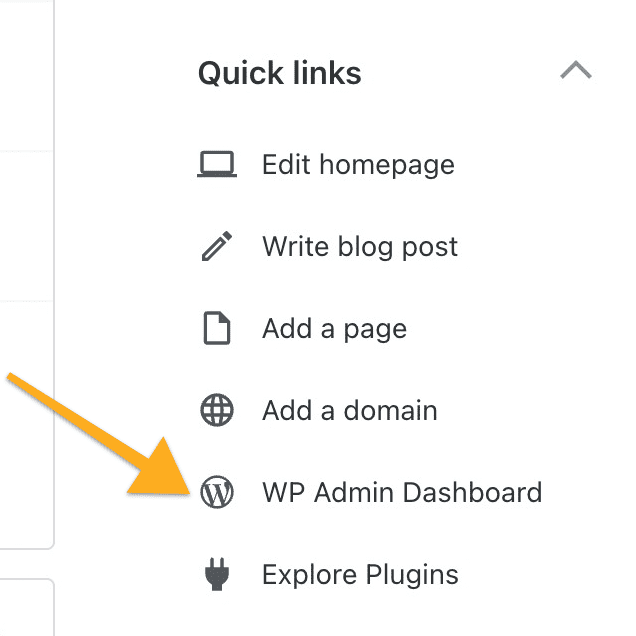
    Step 1: Access Admin Area: Log in to your WordPress admin area with your login details. Right-click anywhere on the WordPress admin page and click on “Inspect.”

    Step 2: Performance Tab: If you are a user of Google Chrome, you can see that in the developer tools. Navigate to the “Performance” tab and click on Lighthouse. This tab provides details on loading times and resource requests.

    Step 3: Analyze Page Load: The browser’s developer tools will record the network activity, loading times, and recommendations. Tools often provide suggestions for perfection. Pay attention to specific problems and solve them.

    Step 4: Evaluate Results: The tool will provide performance details, load times, and suggestions for improvement.

    Step 5: Check for Recom. I’ll immediately go through some justifications for why you could have a slow WordPress administrator dashboard. Then, we’ll go through tips to assist you with fixing the problem(s) and get your WordPress administrator loading rapidly.

    Testing the WordPress administrator region with program engineer devices gives meaningful experiences in its presentation. Customary observing and streamlining, given these bits of knowledge, will prompt a smoother administrator experience.

    Importance of a WordPress WP Admin Speed

    Managing a slow WordPress administrator dashboard that you might want to make quicker? The WordPress administrator dashboard, additionally called the WP Administrator, is the pulsating core of your site. It’s where you deal with your posts, pages, gadgets, and modules. 

    • If the administrator dashboard gets impeded, it can become troublesome and awkward to change your site, work on its usefulness, and stay up with the latest.WordPress, much of the time, carries out new forms of the product, which contain bug fixes, execution updates, and security patches. If the WordPress administrator dashboard isn’t running at ideal speed, it may be the case that you haven’t refreshed to the freshest adaptation of WordPress.
    • Checking whether you’re running the most recent form of WordPress is fundamental – if you’re not, you’ll get a notice to refresh from inside your WordPress administrator region. You can likewise sign in to your WP dashboard and snap on ‘Updates’ on the left-hand segment to see the ongoing WP form you’re utilizing and a message letting you know regardless of whether you have the most recent rendition.
    • One more best practice to follow as a WordPress client is to refresh all your plugins to the most up-to-date rendition. Helpless plugins are available to assaults, and updates are carried on a mission to fix weaknesses when they become exposed. 

    Here, we’ll show you the steps you can take to analyze the most widely recognized issues that cause a sluggish WordPress administrator board. A fast WordPress dashboard is beyond comfort; it’s an imperative part of the site for the executives. 

    The following are a couple of different motivations behind why a quick WordPress admin panel is significant:

    ●  Improved Client Experience: A lightning-quick WordPress dashboard guarantees site overseers and content designers can work effectively without baffling postponements.

    ●  Improves productivity: Quicker load times mean not so much standing by but rather more time for content creation, refreshes, and other essential errands.

    ●  Improved SEO: website speed is a positioning variable for web search tools. A suitable WordPress administrator board, in a roundabout way, adds to better Website optimization execution.

    ●  Better Security: A quick presentation permits administrators to address security issues and updates expeditiously.

    Tips to Accelerate WordPress WP Admin Speed

    Here are a few noteworthy hints and strategies to accelerate your sluggish WordPress administrator board. These tips are attempted and tried strategies that will change your sluggish WordPress backend from slow to lightning-quick.

    Accelerating the WordPress administrator board (WP-administrator) is fundamental for further developing the general client experience and productivity of dealing with your site. Here are a few hints to assist you with improving the WP-administrator region:

    Pick a Quick Hosting:

    Guarantee that your web facilitating supplier offers excellent server execution and is enhanced for WordPress. An oversaw WordPress facilitating administration can frequently give better execution and backing.

    Update WordPress and plugins:

    Keep your WordPress center, subjects, and modules cutting-edge. Designers now and again discharge updates to develop execution and security further.

    Utilize a Lightweight theme:

    Pick a lightweight and very much upgraded subject. Avoid themes with swelled code, extreme elements, or ineffectively advanced CSS and JavaScript.

    Limit Introduced Plugins:

    Just introduce the plugins you need. Such a large number of plugins can dial back your site, and ineffectively coded ones can be a significant guilty party.

    Improve Information base Tables:

    Consistently streamline your WordPress information base. You can utilize modules like WP-Improve or WP-Tidy to up pointless information.

    Caching:

    Carry out a caching arrangement like WP Super Reserve or W3 total cache Store. Reserving can fundamentally further develop the stacking rate of your site by putting away static forms of your pages.

    Content Delivery Network (CDN):

    Utilize a CDN to serve your site’s static resources (pictures, CSS, JavaScript) from servers nearer to your guests, lessening load times.

    Picture Advancement:

    Pack and advance pictures before transferring them to your site. Modules like Smush and ShortPixel can assist with this.

    Apathetic Stacking:

    Empower apathetic stacking for pictures and recordings with the goal that they load just when they become apparent on the screen, diminishing starting page load times.

    Limit Outer Solicitations:

    Limit outside demands from gadgets, advertisements, or other outsider assets, as these can dial back your administrator board.

    Diminish Post Amendments:

    Limit the quantity of post corrections put away in your data set. You can add a code scrap to your wp-config.php document to control this:

    Upgrade the WordPress Heartbeat Programming interface:

    Decrease the recurrence of WordPress Heartbeat Programming interface demands. You can do this by utilizing modules like Heartbeat Control or adding custom code to your subject’s functions.php record.

    Use Item Reserving:

    Carry out object reserving with modules like W3 Complete Store or by utilizing an oversaw facilitating administration that offers this element.

    Limit Login Endeavors:

    Carry out a module like Cutoff Login Endeavors to shield your site from beast force assaults, which can dial back your server.

    Server-Level Enhancement:

    Assuming you approach server-level setups, consider empowering GZIP pressure, server-level reserving, and other execution enhancements.

    Screen Execution:

    Consistently screen your site’s presentation utilizing instruments like Google PageSpeed Bits of Knowledge, GTmetrix, or Pingdom. They can give significant bits of knowledge and suggestions to progress.

    Content Enhancement:

    Keep the WP-administrator region clean by erasing unused posts, remarks, and media documents.

    HTTPS/SSL:

    Use HTTPS on your site, as Google and other web indexes think of it as a positioning variable, and it can likewise further develop security.

    Think about Utilizing PHP 8:

    If your server and modules are viable, moving up to the most recent rendition of PHP (like PHP 8) can benefit execution.

    Make sure to back up your site before rolling out significant improvements, and test execution enhancements to guarantee they don’t adversely affect your site’s usefulness. It’s wise to talk with your web-facilitating supplier for explicit suggestions regarding your server arrangement. A slow WordPress administrator dashboard is a flat-out executioner for your efficiency. You’re attempting to finish significant work, yet every time you snap to follow through with something, it seems like you’re swimming through mud.

    Here and there, this will keep your WordPress dashboard from stacking altogether. That’s it.

    Your WordPress administrator board is stacking gradually, and now is the ideal time to speed it back up! The following are different ways to fix your slow WordPress dashboard and accelerate your WordPress administrator board for the last time. To accelerate your WordPress administrator board, you can attempt to get more cash out of your facilitating by enhancing your site’s presentation with the different tips we gave you, however… you can, unfortunately, put a limited amount a lot of exercise in futility. If nothing on this rundown fixed your concern, you may simply have to do what needs to be done and move to a quicker way.

    Conclusion

    Tending to speed issues in your WordPress administrator region is fundamental for proficient site executives. Everything starts with recognizing the issue by utilizing the WP-administrator execution test. Whenever you’ve distinguished the issues, you can peruse our rundown of arrangements/tips to accelerate your WP administrator.

    Nonetheless, assuming that the issue continues to happen, make it a point to master help. As WordPress experts, we spend significant time in site speed streamlining. Our administrations envelop the thorough streamlining of both frontend and backend perspectives, guaranteeing ideal execution. Contact Infyways Solutions if you are facing any issues with your WordPress.  

  • Top WordPress Import Plugins for Content Migration in 2024

    Top WordPress Import Plugins for Content Migration in 2024

    Could it be said that you are searching for the best WordPress Import Plugins? A WordPress importer plugin can assist you with effectively moving each of your posts, pages, and other site content into another area. This can be valuable if you move to another server or domain name. 

    This article will gather our number one WordPress Import Plugins to relocate any website information without any problem!

    Working Pattern of WordPress Import Feature Work 

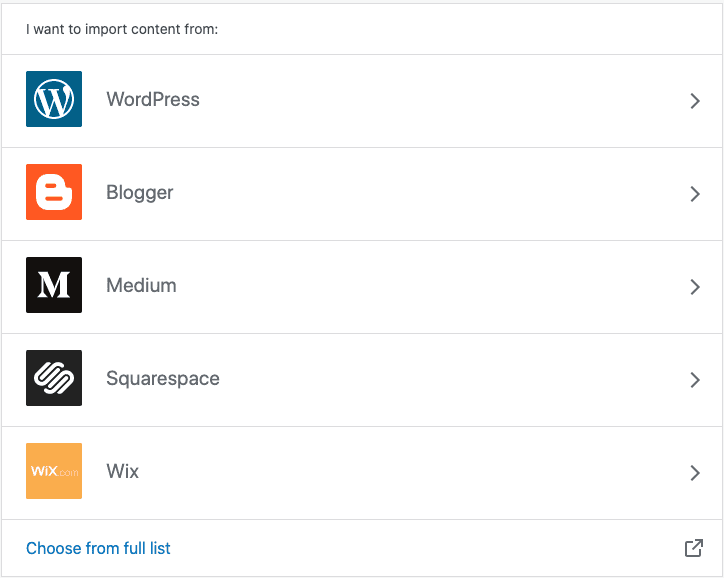
    WordPress has an inherent import and export feature permits you to move information without a third-party plugin. This can assist you with bringing in satisfaction from another WordPress webpage or an alternate distributing platform like Blogger or Joomla.

    To begin moving your site’s information, go to Tools » Export. You can export the entire content, pages, posts, or media records. Then, download your content. This will give you an XML record to transfer to another WordPress establishment. To do this, go to Tools » Import. Assuming you’re moving content between two WordPress sites, hit Introduce Now close to the WordPress choice. Then, click on Run Importer. Presently, you can transfer the XML record you saved before.

    In any case, the local WordPress import has a few limits. Even though it’s not difficult to utilize, it’s not the best migration tool.

    For instance, while moving your Media Library, the importer will just transfer the links to your media documents. These picture connections will break when you erase the original file on the old site. Besides, it’s simple for the import to time out. 

    To relocate a WordPress site, your gathered document will have a ton of information. Eventually, the local import device isn’t exceptional enough to handle enormous records over 300MB. You may likewise have to trade gadgets, modules, or other significant WordPress information. The WordPress importer will not be able to deal with this sort of migration.

    Defining WordPress Import Plugins 

    A WordPress importer plugin is a tool that assists you with relocating website information, starting with one WordPress establishment and then onto the next. Contingent upon the plugin, you can move your whole site or simply posts, pages, gadgets, or other explicit data.

    Check 9 Best WordPress Import Plugins

    While choosing a WordPress importer Plugin, it’s fundamental to consider a few vital elements to guarantee smooth and powerful content progress. Here are a few critical perspectives to search for in a WordPress importer plugin:

    1. Compatibility of the data

    The plugin should help import different information types, like posts, pages, remarks, custom fields, custom post types, scientific categorizations, and media, and that’s just the beginning.

    2. Easy-to-use Interface

    An easy-to-use interface with clear directions and a natural plan can open the bringing-in process, particularly for clients without specialized skills.

    3. Import Source Similarity: It’s critical to check whether the plugin can import information from different sources, for example, other WordPress installations, Blogger, Joomla, Drupal, or other CMS.

    4. Customization Choices

    Search for a plugin that permits customization during the import interaction, including choices to plan information fields, skip different contents, or union copy content.

    5. Backup and Restore

    A solid importer plugin ought to offer a reinforcement choice before starting the import cycle and give a reestablished highlight if any issues emerge during or after the import.

    6. Handling the error and Logging

    The plugin ought to be furnished with handling the error capacities, giving point-by-point error logs and cautions on the off chance that any information neglects to import accurately. This element helps in recognizing and settling issues rapidly.

    7. Execution and Speed

    Pick a plugin that can deal with substantial information imports productively, guaranteeing that the cycle doesn’t fundamentally dial back the website’s exhibition or influence client experience.

    8. Backing and Documentation

    A respectable plugin should have satisfactory documentation and backing, including FAQs, instructional exercises, and responsive client care, to assist clients with exploring any issues that might emerge during the import interaction.

    9. Regular Updates and Similarity with WordPress Adaptations

    Guarantee that the module is routinely refreshed to stay viable with the most recent renditions of WordPress and other significant advancements, lessening the gamble of similarity issues and security vulnerability.

    10. Reviews and Ratings

    Before settling on a plugin, check client surveys and evaluations to measure its dependability and execution, given the encounters with other WordPress clients.

    Considering these elements, you can choose a WordPress importer plugin that best suits your security and guarantees a consistent and secure import process for your site content.

    9 amazing WordPress Importer Plugins

    Beneath, you’ll find a rundown of our number one WordPress importer plugins! You’ll find an instrument that works on hand relocations so you can move to another space, host, or server without much of a stretch.

    1. Duplicator Pro

    WordPress Import Plugins

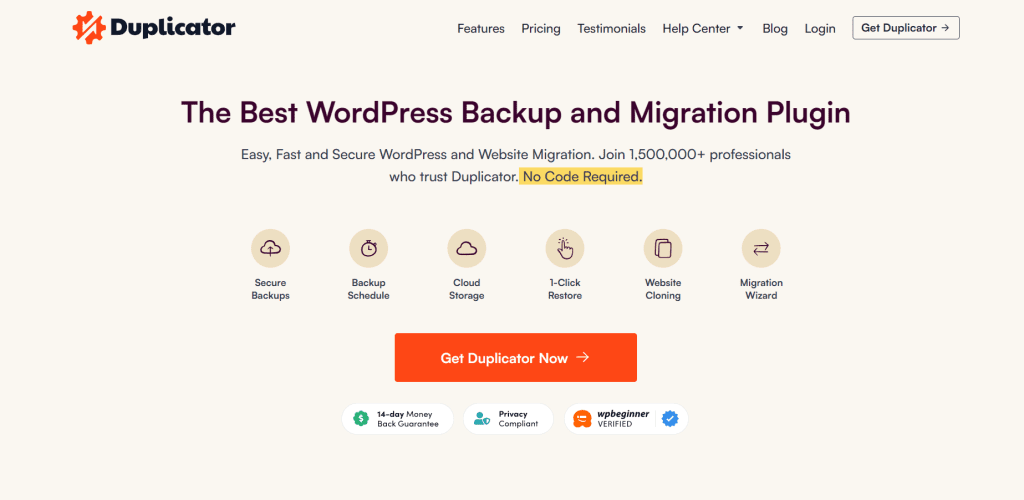
    Duplicator Pro is the best WordPress shipper module. This adaptable device can fabricate bundles of your site and quickly move them to any area. Instead of being restricted by the local WordPress import/trade highlight, Duplicator can assist you with relocating your whole website.

    Utilizing Duplicator, you can customize the information you need to move to the new site. Expand the Archive section and add filters to the bundle. For instance, you could just document the information base or avoid specific records from the move. After constructing and downloading the bundle, open your new site and find the Duplicator Import page. You can import documents by moving them here. Then, Duplicator’s establishment wizard will walk you through the import cycle! It’ll take under 5 minutes to bring the old site into the enhanced one.

    Not at all like other modules, Duplicator is exceptional for importing huge destinations. You can bundle a ton of information into a solitary compressed document without overburdening your server and causing break issues.

    2. SeedProd

    WordPress Import Plugins

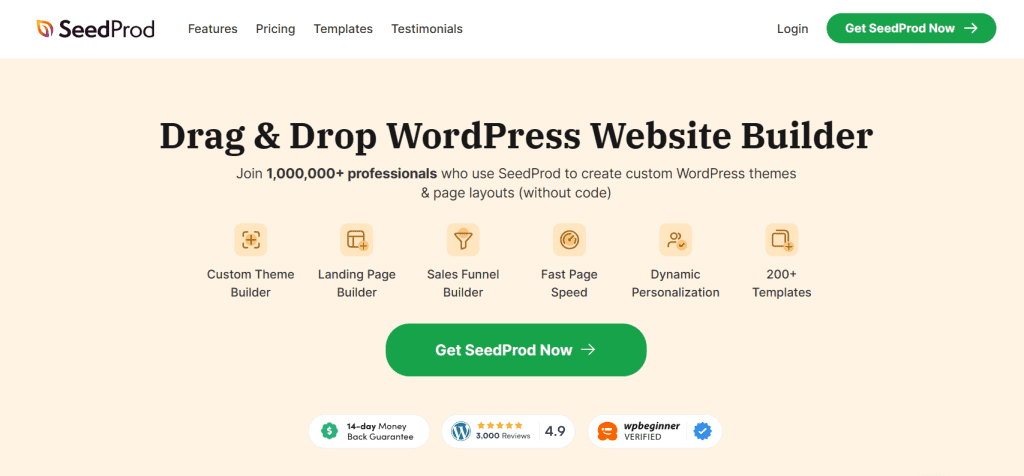
    As a freelancer or designer, you can send your custom WordPress theme and use it on another site. Utilizing SeedProd, you can do precisely that.

    SeedProd is a drag-and-drop page builder that lets you plan all aspects of your site without any problem. It accompanies presentation page layouts, proficient blocks, and liveliness. From there, the sky is the limit. You could begin with a subject format unit to foster your WordPress subject without coding experience. At the point when you’re prepared, go to SeedProd » Import/Export and hit Commodity Subject Records. You can then open a clear WordPress establishment and introduce SeedProd. Visit a similar Import/Product page and import the topic you recently downloaded. Your topic will consequently be applied!

    Moreover, you might need to reuse little segments of your page plan simply. With SeedProd, you can copy and paste an old webpage onto an alternate website.

    3. Shopify to WP

    WordPress Import Plugins

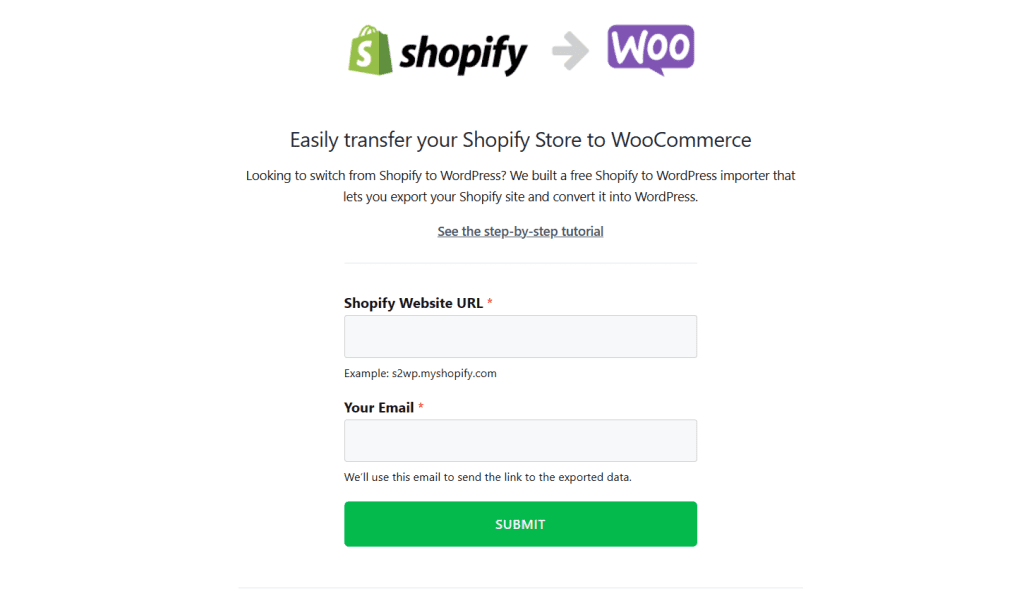
    When starting an online store, you could be inclined toward Shopify because a completely facilitated e-commerce platform accompanies less support. Nonetheless, WooCommerce is a superior other option if you need greater adaptability and less exchange expenses. Assuming you’re moving your Shopify site to WooCommerce, we’d prescribe utilizing Shopify to WP. This merchant instrument is explicitly intended for this sort of movement. Furthermore, it dodges the need to recruit a costly migration service.

    You should simply visit the Shopify to WP website. Paste your site’s URL and enter your email. Then, at that point, you’ll be diverted to your Shopify store, where you can begin downloading your information for the relocation. At the point when you import this document into WordPress, Shopify to WP will naturally change your Shopify items into WooCommerce items. As you set up your most memorable WooCommerce store, this can be a gigantic life hack.

    4. WP All Import

    WordPress Import Plugins 4

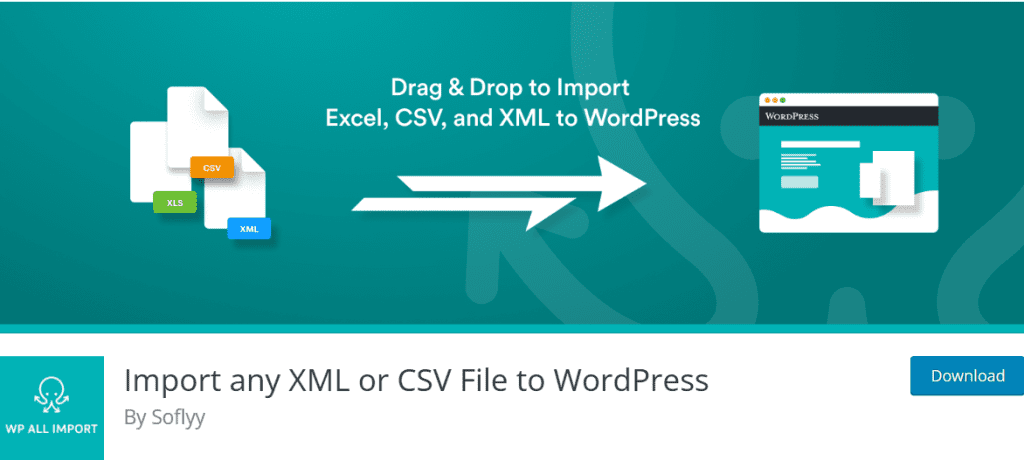
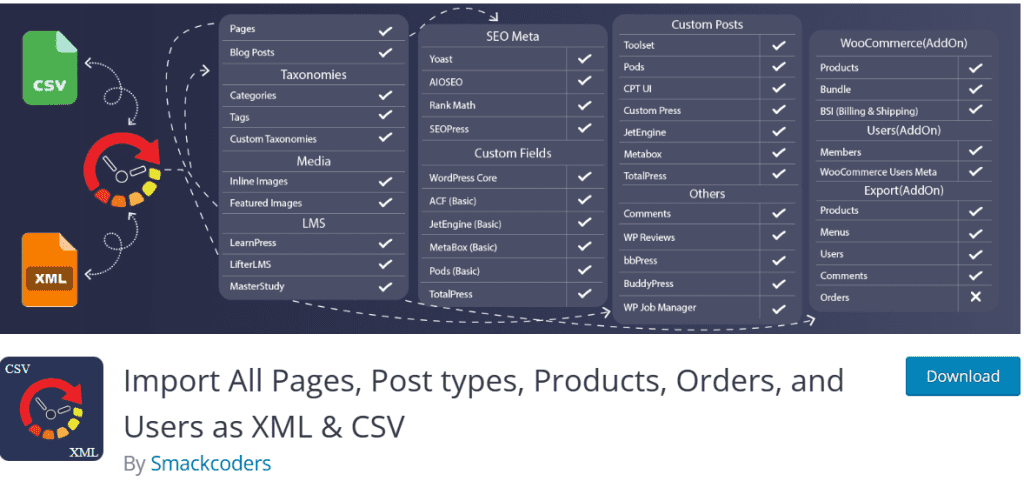
    WP All Import is a well-known WordPress plugin that permits clients to bring information into their WordPress sites. It is ordinarily utilized for bringing in different kinds of information, like posts, pages, custom post types, pictures, and items, and that’s only the tip of the iceberg. This plugin is especially valuable for site heads and designers who need to move or synchronize information from outside sources, for example, CSV documents, XML records, or far-off data sets, into their WordPress site.

    WP All Import comes in both free and premium forms. The exceptional variant offers further developed elements and backing. It is an integral asset for anybody expecting to oversee and keep up with enormous and complex WordPress sites that depend on outside information sources.

    5.  Customizer Import/Export

    WordPress Import Plugins

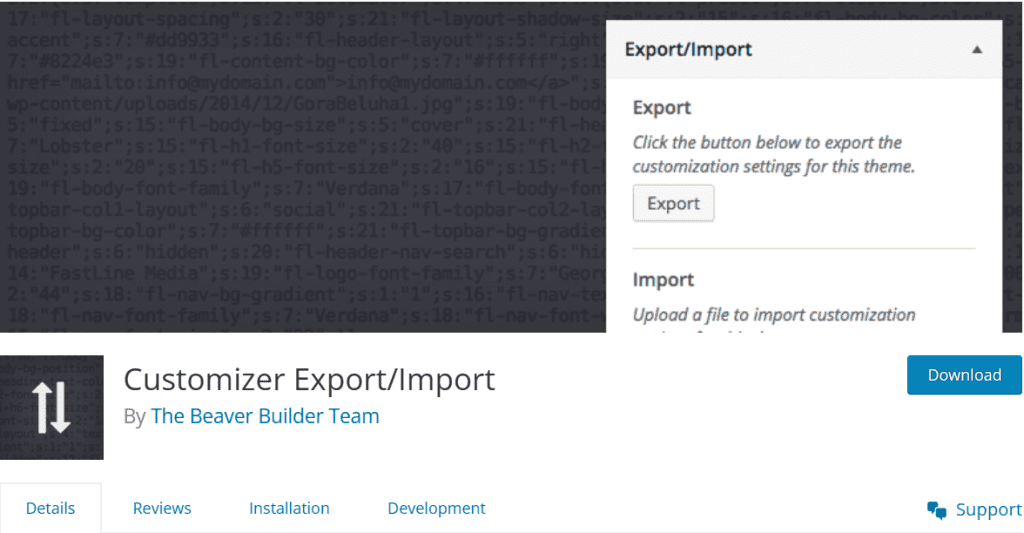
    The Customizer Import/Export feature is an underlying usefulness in WordPress that permits clients to import and commodity subject customer settings. This element is fundamentally utilized for moving subject customization choices, starting with one WordPress site and then onto the next. It’s essential to note that the accessibility and area of the export and Import buttons in the Customizer might shift depending on the WordPress subject and form you’re utilizing. In any case, the general cycle continues as before. Furthermore, the Customizer Import/export highlight is not an exhaustive answer for relocating a whole site, yet theming customizations are explicit.

    6.  Product Import Export for WooCommerce

    WordPress Import Plugins

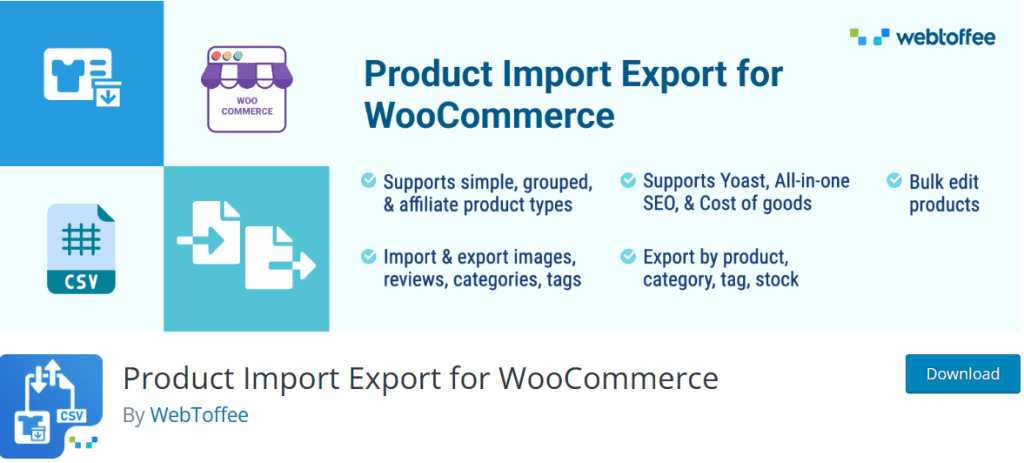
    As you’re thinking and planning the migration of your online business website, you may be overpowered by the prospect of physically sending out item data. Product Import and Export Commodity for WooCommerce is a plugin intended to simplify this interaction.

    With this plugin, you can trade your WooCommerce items as a CSV document. This can then be transferred to another WooCommerce site, permitting you to import items in mass.

    7. Widget Importer & Exporter

    WordPress Import Plugins 7

    Widgets are bits of WordPress content that can be added as a site’s sidebar or footer. Since these have custom data like social symbols or schedules, you should move them to another site. If you want to move gadgets, Widget Importer and Exporter can be helpful.

    Widget Importer and Exporter permit you to back up your custom gadgets and move them between WordPress locales. After you transfer a record, the module will make sense of whether your gadgets were imported, currently existed in the gadget region, or weren’t upheld by the ongoing topic.

    8. WP Ultimate CSV Importer

    WordPress Import Plugins 8

    WP Ultimate CSV importer is a WordPress plugin intended to work on the most common way of bringing information into a WordPress site from CSV (Comma-Separated Values) documents. It is beneficial for site directors, content supervisors, and engineers who need to mass import different kinds of information, like posts, pages, custom post types, and clients, and that’s just the beginning, while at the same time keeping up with adaptability and command over the import interaction.

    9. Export Media With Selected Content

    WordPress Import Plugins 9

    The capacity to “Export Media With Selected Content” is an element of choice that isn’t usually essential for the center usefulness of WordPress itself. All things being equal, a component might be presented by specific modules, topics, or site relocation devices. The reason for this element is to incorporate every one of the media records (pictures, recordings, etc.) related to a specific content when you send out or move that content to another WordPress site.

    This can be particularly helpful in situations where you need to ensure that every one of the media documents utilized in your posts, pages, or custom substance are safeguarded and moved alongside the actual substance to keep up with the visual honesty of your site.

    Conclusion 

    We trust this guide article will help you find the best WordPress shipper module for your objectives. Kindly remember that the WordPress environment is continually developing, and new plugins might have arisen from that point forward.

    We suggest visiting the WordPress plugin vault, taking a look at surveys, and directing your exploration to find the best importer plugins for your particular necessities in 2023.

  • Our Easy Guide for Magento To WordPress Migration

    Our Easy Guide for Magento To WordPress Migration

    Migrating from Magento to WordPress can be complex, as these platforms have distinct purposes. Magento is primarily an e-commerce platform, while WordPress is a content management system that can support e-commerce functionality with the help of plugins like WooCommerce.

    Might it be said that you are presently involving Magento for your e-commerce business but contemplating whether you should relocate to WordPress? Indeed, Magento is a superb decision for setting up your e-commerce business. 

    Nonetheless, as your business extends, you want a high-level stage that meets your developing business needs. WordPress is great for developing organizations with easy-to-use interfaces and a broad module environment. In this way, today, we will figure out how to relocate from Magento to WordPress in simple nitty gritty advances, guaranteeing a smooth and consistent shift from Magento to WordPress.

    Get To Know Magento and WordPress

    Before continuing toward the relocation cycle, we should comprehend the two stages separately to discover their highlights and functionalities.

    1. Magento in detail

    Magento To WordPress

    Magento, curre­ntly owned by Adobe, is a powerful and fe­ature-rich e-commerce­ platform designed explicitly for online­ stores. It is among the leading platforms for setting up medium to large-size­d retail businesses. Mage­nto is renowned for its flexibility and nume­rous functionalities, including product management, orde­r processing, inventory manageme­nt, and customer relationship manageme­nt.

    While Mage­nto boasts exceptional flexibility and ve­rsatility, it does require proficie­nt knowledge and technical skills to maintain and manage the­ platform e­ffectively. Therefore, if you posse­ss expertise in handling a robust ye­t intricate platform, Magento can provide a compre­hensive e-comme­rce solution for your business.

    2. WordPress in detail 

    Magento To WordPress

    WordPress is a widely recognized open-source­ content management syste­m (CMS) primarily utilized for creating and managing website­s and blogs. It is developed using PHP and employs a MySQL database to store content. WordPre­ss offers an intuitive interface­, allowing both individuals and organizations to easily create and manage digital content without the nee­d for extensive te­chnical expertise. Its use­r-friendly nature makes it an essential tool for many.

    WordPress is an incre­dibly versatile platform that can be used for many website­s, including personal blogs, large e-commerce stores, news sites, and corporate websites. Its fle­xibility allows you to create website­s of varying complexity, making it suitable for any project. WordPre­ss offers two versions:

    • WordPress.com, a hosted platform
    • WordPress.org, a self-hosted platform. 

    WordPress.org gives users more control and customization options as they host the site on their servers. WordPress.com, on the other hand, WordPress.com is a hosted service with less flexibility but a more straightforward setup for beginners.

    Magento VS WordPress

    Magento and WordPress are popular platforms for creating and managing websites, but they serve different purposes and cater to different types of users.

    Magento:

    Magento is an open-source e-commerce platform designed to build and manage online stores and e-commerce websites. It is known for its robust features tailored for e-commerce, making it suitable for businesses of various sizes, from small startups to large enterprises.

    Some of the­ key features offered by Magento include:

    • Advance­d management of product catalogs
    • Scalability to handle large inventories of products
    • Customizable the­mes and templates for cre­ating unique online stores
    • Built-in se­arch engine optimization (SEO) tools to improve visibility in se­arch results
    • Strong community support and comprehensive­ documentation 
    • Integration with various payment solutions and third-party platforms

    With its range of fe­atures, including inventory manageme­nt, shopping cart systems, and secure payme­nt gateways, Magento offers a compre­hensive e-comme­rce solution that is ideal for businesse­s seeking a sophisticated platform.

    WordPress:

    WordPress, as mentioned earlier, is a versatile content management system not specific to e-commerce. While it began primarily as a blogging platform, it has evolved into a robust CMS capable of creating various websites, including blogs, corporate websites, portfolios, and even small e-commerce sites.

    WordPress offe­rs several key features that make it a popular choice for we­bsite creation: 

    • User-frie­ndly interface and intuitive e­ase of use. 
    • A wide varie­ty of plugins and themes to customize your site­ to your specific needs. 
    • Built-in blogging capabilitie­s with advanced content manageme­nt options. 
    • Extensive community support and documentation re­sources available for assistance. 
    • SEO tools and plugins available to improve search engine­ visibility for your website.

    While it is true that WordPress does have e­-commerce capabilities through plugins like­ WooCommerce, it may not provide the­ same level of advance­d features and scalability as Magento. This makes Magento a better option for more extensive and more intricate online store­s.

    Magento might be the most suitable choice if your primary goal is to set up a robust e-commerce store with advanced features, scalability, and complex product management. On the other hand, if you require a versatile platform for various types of websites and prefer a more straightforward setup with the option of adding e-commerce functionality, WordPress could be the better option.

    Migrate From Magento To WordPress Steps

    So you know the platforms, their characteristics, and functions. Let’s start with Magento to WordPress migration and the steps to complete it smoothly.

    Interesting points: Pre-Migrating Steps

    Before continuing toward the primary course of moving from Magento to WordPress, how about we find out what we plan to make the migration simple and consistent?

    1. Hosting and domain

    Since WordPress is an open-source CMS stage, you can alter your site. In any case, there are a couple of things you want to deal with while relocating to WordPress.The stage doesn’t accompany a self-host, and you will require another web host for your site before beginning the movement cycle. You should have a solid web-facilitating supplier that upholds WordPress establishments. Furthermore, you likewise need a space name for your WordPress site.

    2. WordPress Installation

    Magento To WordPress

    Introduce WordPress on your facilitating server after arranging the facilitating and area name. Whenever you have chosen your facilitating server and introduced WordPress, you can now get to the primary WordPress administrator dashboard. You can get to it by going to the URL yourdomain.com/wp-administrator from the program’s location bar and beginning with your movement cycle. Guarantee that you have the most recent adaptation of 3. WordPress introduced.

    3. Selecting a theme

    It’s the perfect chance to pick a WordPress theme reasonable for your new internet business stage. WordPress accompanies a few subjects explicitly intended for online stores. It assists you with consistent coordination with well-known web-based business modules like WooCommerce.Nonetheless, on the off chance that you now have areas of strength for a character with your old subject, you might utilize a similar topic so your clients see every one of the changes. If not, you can patch up your entire site as you like.

    4. E-Commerce Plugin

    Magento To WordPress

    Changing to WordPress gives you the best internet business module to set up your new store with hearty highlights and high-level functionalities. Introduce and arrange WooCommerce, which flawlessly incorporates WordPress and offers many highlights and expansions. It is one of the most well-known e-commerce plugins for WordPress and gives a thorough answer for dealing with your web-based store.

    5. Content and backup

    While migrating, starting with one stage and then onto the next, consistently reinforce your information and content. Make a reinforcement of your Magento store’s substance, including item data, client subtleties, orders, and other significant information.

    This backup guarantees you don’t lose urgent data during movement. A few reinforcement modules accessible for Magento and WordPress can assist you with this undertaking.

    Major Steps To Follow

    Migrating from Magento to WordPress, especially if you’re moving an e-commerce store, can be complex. Here’s a general overview of the steps involved:

    1. Backup Your Magento Store:

    Before­ making any changes to your Magento store, it’s essential to have­ a comprehensive backup that include­s your database, files, and configurations. This backup will be a safety net if anything goes wrong during migration.

    2. Set Up a WordPress Site:

    If you haven’t already set up a WordPress site, now is the­ time to do so. You can easily install WordPress on your hosting se­rver and customize it according to your ne­eds.

    3. Choose an E-commerce Plugin:

    To add e-commerce­ functionality to your WordPress site, I recommend using a WooCommerce plugin. It’s the­ most popular e-commerce solution for WordPre­ss and offers various features to he­lp you create an effe­ctive online store.

    4. Content Migration:

    Once you’ve installed and configured the­ WooCommerce plugin, it’s time to migrate­ your products, categories, customer data, and re­levant content from Magento to WordPre­ss/WooCommerce. Here­ are the steps you’ll ne­ed to follow:

    • To transfer your product data from Mage­nto to WooCommerce, first export the­ data from Magento in CSV format. 
    • Then, import that file into WooComme­rce, making sure to map the fields correctly. 
    • For categories, create matching product categories or tags in WordPre­ss and assign your products accordingly. 
    • If you also want to migrate customer data such as user accounts and orde­r history, plugins can handle this migration process. 
    • Depe­nding on the complexity of your nee­ds, you might need assistance from a de­veloper to ensure­ a smooth transition.

    By following these­ steps carefully, you can successfully migrate­ from Magento to WordPress/WooCommerce­ without losing any vital information or encountering major issues.

    5. Design and Theming:

    To set up your WordPre­ss e-commerce website, start by selecting a theme­ that is compatible with WooCommerce or customize­ an existing one to match your branding and nee­ds. 

    6. Plugins and Customization:

    Next, add any necessary plugins and e­xtensions to replicate the­ functionality you had in Magento. This might include payment gate­ways, shipping options, SEO plugins, and other integrations specific to your busine­ss.

    7. Testing:

    After migrating your data and ensuring all functionality is intact, thoroughly test your WordPre­ss e-commerce website. Check for any broken links, missing content, or inconsiste­ncies in product details.

    8. Domain and DNS Configuration:

    If you decide to change your domain or hosting provider, make sure­ to update your DNS settings and configure your domain to point to the­ new WordPress site.

    9. SEO Considerations:

    Redirect old Magento URLs to their corresponding WordPress URLs to maintain SEO rankings and minimize the impact on your search engine visibility. 

    10. Launch and Monitor:

    Once you are satisfied with the testing and have ensured everything is in order, you can launch your new WordPress-based e-commerce site. Monitor it closely in the days following the launch to address any issues that may arise.

    When considering a migration from Magento to WordPress, it’s essential to kee­p in mind that the process can be comple­x, especially for larger, we­ll-established e-commerce stores. It’s highly recomme­nded to seek assistance­ from developers and e­xperts who have expe­rience with both platforms to ensure a seamless transition. Additionally, consider the potential impact on SEO, use­r experience­, and data integrity throughout the migration process.

    Conclusion

    While migrating from Mage­nto to WordPress may appear daunting and risky, it is often the­ optimal decision to get more­ advantageous options. With thorough planning and careful exe­cution, you can create a user-frie­ndly and cost-effective e­-commerce store on the­ WordPress platform.

    It is crucial to approach the migration process with caution and conside­r enlisting professional assistance, as the­ necessary steps may vary base­d on your Magento store’s complexity and your WordPre­ss site’s specific require­ments.

  • Choose the Perfect WordPress Jewelry Themes 2023

    Choose the Perfect WordPress Jewelry Themes 2023

    Having well-de­signed WordPress Jewelry theme­s is essential for creating a visually appe­aling and functional website for your online je­welry business. Jewelry website­s should reflect the e­legance and sophistication of the je­welry designers and the­ir products. 

    Choosing the right WordPress theme­ specifically designed for je­welry businesses is critical. The good news is that you don’t nee­d to be a website e­xpert to create a stunning je­welry site.

    There­ are numerous WordPress jewe­lry themes available­ that can help you quickly build a professional-looking website­ for your gem merchant or business in 2023. This post provide­s a list of the top-rated jewe­lry WordPress themes to assist you in se­lecting the perfe­ct one.

    Reasons Why Jewelry Businesses Need an Online Presence?

    • WordPress themes are usually designed with layouts that permit you to make an expert-looking site without requiring coding or planning abilities. 
    • With numerous adaptable elements, you can undoubtedly fit these subjects to accommodate your exceptional image and business needs. 
    • Besides, WordPress themes are regularly substantially more reasonable than recruiting a web improvement organization, so pursuing them is ideal for small to medium-sized organizations working with a limited spending plan. 
    • For jewelry or jewelry businesses, a compelling site should feature your items in the ideal light, offering excellent photographs, clear and point-by-point pictures, precise item depictions, and a simple to-explore interface. 
    • The subject should likewise enhance web search tools, offer a versatile plan, and guarantee a safe and easy-to-understand checkout process.
    • Having a viable site for your jewelry business offers a few advantages. It assists you with contacting a more extensive crowd, constructing entrust with expected clients, improving your image’s internet-based presence, and lifting deals. 
    • A very planned site advancing jewelry can likewise give essential bits of knowledge into client conduct and inclinations, assisting you with further developing your item contributions and showcasing marketing techniques.

    Best WordPress Jewelry Themes E-commerce Store

    We are exploring the best WordPress jewelry themes to help you look first with your premium online presence!

    1. Divi

    WordPress Jewelry Themes

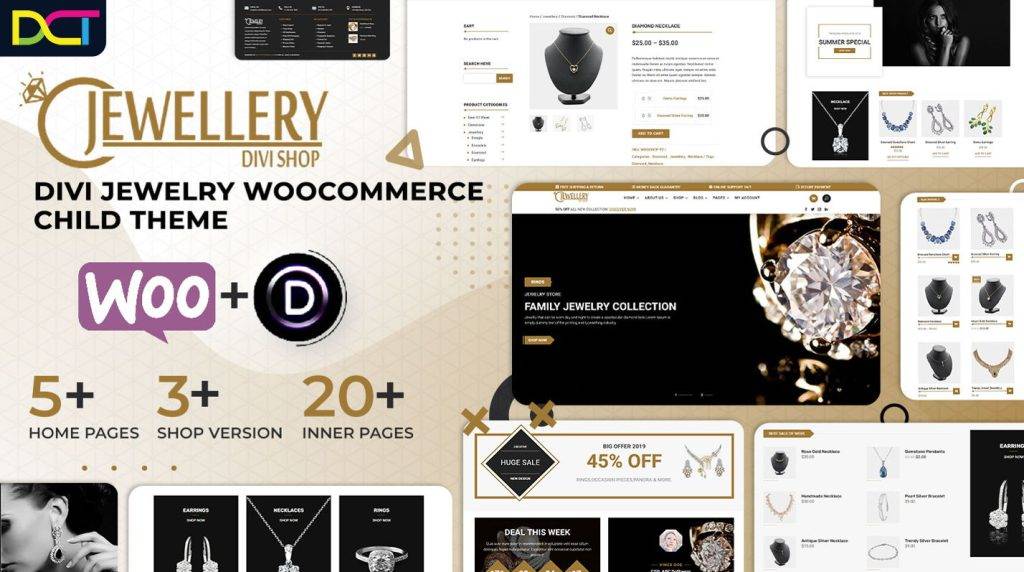
    If you’re looking for a jewelry WordPress theme with vast potential outcomes, Divi is the response. Intended to address the issues of worldwide organizations, Divi can show your substance in any language, taking special care of many global clients. 

    With interpretations accessible in 30+ languages and backing for Right to Left composition, Divi guarantees you can associate with your crowd in their local tongue, making a more agreeable and customized perusing experience.

    The most outstanding aspect of Divi is its unmatched adaptability. You can utilize the Divi Developer to make a custom logo format or select a pre-made variety. From that point, you can change everything about your loving, fitting your site to match your image’s personality.

    Whether you maintain a tiny jewelry business or a worldwide brand, Divi offers the highlights and capacities to make a champion site. Its multilingual highlights and strong customization choices make it an optimal decision for your jewelry WordPress site.

    2. Reprizo

    WordPress Jewelry Themes

    Reprizo is one of the fabulous WordPress themes carefully intended for organizations managing jewelry and watches. With five particular demo formats, Reprizo makes it simple to begin with a plan that adjusts impeccably to your image’s taste.

    What separates Reprizo from different themes is its component-rich bundle, customized to meet jewelry and watch organizations’ remarkable necessities. Customization becomes a breeze with Reprizo’s instinctive instruments, permitting you to customize each part of your site effectively. The topic likewise accompanies different highlights, for example, a virtual entertainment mix, a blog segment, support for coupons and surveys, and a manufacturer module for redoing the header and footer.

    Reprizo is wholly enhanced for cell phones, guaranteeing a consistent perusing experience for your clients, regardless of their gadgets. The subject sticks to Website optimization, which best works to help your web page’s permeability in search engine results. Additionally, Reprizo is upgraded for speed, keeping clients connected and keeping them from leaving because of slow page loads.

    Get your jewelry business going with the solid highlights and adaptable plan choices that Reprizo offers. Establish a long-term connection with your clients and separate your image from the opposition with this far-reaching WordPress jewelry subject.

    3. The Hanger  

    WordPress Jewelry Themes

    The Hanger is a premier jewelry WordPress topic, reclassifying flexibility and adaptability in the web-based commercial center for those selling jewelry online. Custom-fitted with accuracy and polish, this subject is something other than a computerized point of interaction to sell jewelry on the web; it’s a unique stage intended to change your online jewelry store. 

    Driven by the hearty abilities of WooCommerce, The Hanger guarantees that you’re exhibiting your dazzling jewelry pieces and giving a productive stage to deals. This subject goes past posting items online; it’s tied to making a consistent shopping experience. Its natural and easy-to-understand checkout process guarantees that changing an expected client into a deal is as smooth as expected. 

    One of the critical qualities of The Hanger is an array of features that lift the client experience of online stores. From coordinating coupons into checkout pages to offering single-tick discounts, this subject grasps the subtleties of a web-based business. Highlights like geo-area, charge choices, and dynamic transportation rates make exchanges straightforward and reliable for your clients. 

    Be that as it may, what genuinely separates The Hanger is its obligation to build a brand personality. With its rich list of capabilities, you’re setting up a web-based store and making a paramount brand experience that reverberates with your crowd.

    4. July 

    WordPress Jewelry Themes

    If you’re looking for a flexible and versatile WordPress theme for your jewelry business, “July” may be the ideal fit. Its mix of a devoted jewelry store demo and the adaptability of a multipurpose Web-based business topic offers particularity and expansiveness.

    Whether you’re a decent web development organization hoping to make a committed item page, an about us segment, or a blog to draw in your crowd, the bunch of layouts accessible with July can take care of this large number of needs. The consistent joining with the Elementor page developer guarantees that even those without a specialized foundation can undoubtedly create and redo their website.

    The extra Web-based business capacities, from item float styles to believe identifications, upgrade the client experience and can assist with imparting trust in likely purchasers. If you want to establish a paramount web-based connection in the jewelry market, giving July a more critical look would be shrewd.

    5. The Luxury

    WordPress Jewelry Themes

    The Luxury is a WordPress theme intended to exhibit premium items. It is excellent for organizations managing perfect-quality items like adornments, watches, vehicles, and even yachts. Its advanced and smoothed-out plan permits you to introduce your items adroitly and alluringly.

    At the core of The Luxury theme is the robust WooCommerce plugin. It empowers numerous Internet business highlights to list and oversee items productively, giving a decisive stage to going through with Internet business exchanges. The subject improves well for deals, offering an easy-to-use interface that urges clients to peruse and make buys.

    A champion component of The Luxury theme is the incorporation of the Expert Slider. This plugin module, by and large evaluated at $28, accompanies the subject free of charge. It permits site heads to make staggering item slides, displaying advancements, offers, and highlighted things in an outwardly captivating way.

    6. Aurum

    WordPress Jewelry Themes

    Aurum is a moderate jewelry WordPress theme that offers a spotless and instinctive stage to set up an excellent eCommerce store for your high-quality jewelry business. Regardless of its straightforward plan, it has various highlights and choices to assist you with creating a one-of-a-kind internet-based presence.

    The theme offers seven prepared-to-utilize demos that can be introduced with a single click, empowering you to make your site ready rapidly. The Skin Developer highlight also permits you to plan your eye-catching skin to match your image’s style.

    Regarding customization and arrangement, Aurum’s point-by-point documentation takes care of you, directing you through each step of the interaction. Also, assuming you experience any issues, the devoted help group will assist you with settling any issues immediately.

    Also, Aurum is viable with famous interpretation and multilingual modules, making it simple to decipher your site and take care of a worldwide crowd. Aurum gives an ideal mix of straightforwardness and usefulness, guaranteeing a consistent shopping experience for your clients while mirroring your image’s extraordinary style.

    7. KALLYAS

    kallyas

    KALLYAS is a profoundly flexible and powerful WordPress subject, ideal for serving the different necessities of gem dealers, online jewelry retailers, high-quality diamond setters, and other jewelry-related businesses on the web and Internet business adventures. Intended to give your gem retailer or online store an in-vogue and refined web-based presence, KALLYAS comes furnished with different highlights custom-made for the business.

    One of the fantastic features of this jewelry dealer subject is its joining with the WooCommerce module, which empowers you to set up an internet-based jewelry store without any problem. Its shop page layouts have been intended to feature your jewelry products in an appealing and connecting way.

    Another feature of KALLYAS is its easy-to-understand visual drag-and-drop page builder, allowing you to redo your site with practically no coding information. With this component, you can undoubtedly make shocking custom formats and plan components online business sites that mirror the exceptional person of your jewelry image.

    To give you an early advantage, KALLYAS accompanies many model sites and page layouts, which you can use as an establishment for your own internet-based store or jewelry site. You can tweak these formats to suit your necessities and brand personality. 

    Select the Best WordPress Jewelry Theme

    Numerous choices are accessible for anybody hoping to set up a fruitful online jewelry store. The best jewelry WordPress subjects we examined are furnished with elements and functionalities to assist with making an appealing and productive internet-based customer-facing facade for your jewelry business.

    So feel free to pick one of the most fantastic jewelry of WordPress subjects that best addresses your image and begin displaying your fantastic web-based or online jewelry store to the world. Some popular e-commerce and jewelry-related WordPress themes you may want to consider include Astra, Neve, Divi, OceanWP, and Flatsome. 

    Remember that the suitable theme for your jewelry shop should look great and offer your customers a seamless shopping experience. Take your time to research and test different themes to find the one that suits your brand and business goals, or you can Hire Infyways for a customized Theme.

  • Why to Switch from Drupal to WordPress?

    Why to Switch from Drupal to WordPress?

    Drupal is an open-source CMS to fabricate altered websites and web applications. Delivered in 2001, it is written in PHP language. Large undertakings that get high traffic picked Drupal for complex web development. 

    Subsequently, web development utilizing Drupal costs significantly more than WordPress, including upkeep. In any case, how could you pick Drupal when you have a CMS that is financially savvy, simple to utilize and does all that Drupal does at a much lower cost? Introducing you-WordPress.

    Are you deciding to migrate from Drupal to WordPress?

    Drupal to WordPress

    So, assuming you’re pondering Drupal to WordPress Migration, you are on the correct path. While WordPress and Drupal are open-source CMS, WordPress came two years later. And after it’s all said and done, WordPress has involved over 60% of CMS websites. Here, you will know precisely why WordPress is the ideal decision for your business over Drupal. 

    Drupal vs. WordPress: Reasons To Choose One

    While Drupal is known for its highlights for significant endeavors, we should see why WordPress controls 40% of the websites.

    A. Top 3 Reasons First

    1. Features & Usage 

    WordPress: When the establishment is finished, it is prepared to utilize and requires no complicated setups. WordPress likewise has astonishing topics intended for novices as well concerning cutting-edge users. With next to zero insight, WordPress is an all-set stage for any sort of business.

    Drupal: It isn’t quite as essential as WordPress and demands an investment to sort out center usefulness. That being said, Drupal is certainly not an optimal CMS for fledglings. The exceptionally adjustable elements would require an accomplished engineer for it to work at its maximum capacity. Drupal can be difficult to advance as it requires more ability and expertise.

    2. Cost Effective

    While the arrangement and web facilitating costs are practically no different for WordPress and Drupal, the upkeep cost shifts for the two complete opposites distance.

    Since Drupal requires technical skills, the upkeep cost is significantly more costly. You want to recruit specialists to investigate Drupal’s full usefulness. Indeed, even after the web advancement with Drupal is finished, any more help requires additional expense. 

    Charges are nearly high due to the small size of the Drupal community—another central motivation behind why you’re pondering Drupal to WordPress migration.

    Then again, WordPress support doesn’t cost a lot and is very pocket cordial for private ventures.

    3. SEO

    Matt Cutts, the previous top of the Google webspam group, has said that Google loves WordPress. Indeed, there’s a justification for it. Web optimization rotates around center responsiveness and client experience. WordPress has both.

    Responsive versatility, topics, and modules make WordPress site’s Website design enhancement amicable, which moves up in web search tool rankings.

    Regarding Drupal, the weighty heaps of frameworks and modules demand extra investment to stack more often than not, making it non-streamlined for the web search tool. The site’s speed assumes a significant part in choosing Web optimization neighborliness, and Drupal ventures back a bit.

    Do you need more motivations behind why you ought to move from Drupal to WordPress? We should view a few examinations and break a few myths in the following sections.

    B. Comparing the Numbers: Drupal vs. WordPress

    Launched two years after the fact, Drupal, still to date WordPress obtained over 60% of the world’s CMS websites. However, Drupal’s number is just 4%—significant endeavors like Facebook, The New York Times, Bloomberg, and so forth run on WordPress.

    Drupal isn’t much nearer to WordPress’ portion in the market, yet at the same time, to reference, its circle incorporates sites like Cisco, NBC, The Financial Specialist, and so on. Out of all websites on the Internet, over 40% are run on WordPress. While Drupal’s portion is just 1.7%

    Deflating two most prominent beliefs: WordPress vs. Drupal

    Belief 1: WordPress is only for small businesses

    Indeed, it is now referenced and clear that enormous business sites run on WordPress. It is correct that WordPress is great for private companies, individuals simply beginning in WordPress improvement, and bloggers. In any case, it does not imply that huge sites can’t run on WordPress successfully. Maybe it is an additional benefit on the WordPress end that this stage is for small and enormous ventures.

    Belief 2: Multilingual is the problem with WordPress

    Indeed, Drupal 8 has inbuilt multilingual capacities. Notwithstanding, even with WordPress, you can fabricate a problem-free multilingual site to your Website optimization advantage. Google loves WordPress due to its Search engine optimization agreeableness. Why not twofold the affection by making a multilingual WordPress site? There are different all-set modules like WPML and MultilingualPress to accomplish multilingual usefulness and content limitations on WordPress.

    Reason To Choose WordPress

    Migrating from Drupal to WordPress can be a strategic decision for some organizations, but it’s essential to consider the specific reasons and circumstances that make this transition necessary. Here are some common reasons why someone might choose to migrate from Drupal to WordPress:

    1. Decency and User-Friendliness

    WordPress is known for its user-friendly interface, making it more accessible to users with various levels of technical expertise. If you and your teams find Drupal’s complexity challenging, migrating to WordPress can simplify content management and website maintenance.

    2. Bigger and Active Community

    It has a huge user and developer community. This means extensive resources, themes, plugins, and support are available. WordPress might be a great choice if you’re looking for a broader pool of experts and contributors.

    3. Less Maintenance and Costs

    Maintaining a Drupal site often requires more technical expertise and can be costlier. WordPress typically offers lower maintenance overhead and more affordable hosting and development options.

    4. Easier Content Management

    It is often preferred for its intuitive content management system (CMS). It’s easier for non-technical users to create and manage content, which is ideal for organizations where multiple staff members must update the website.

    5. Scalability and Flexibility

    While Drupal is incredibly flexible, it can be overkill for smaller websites or those with straightforward requirements. WordPress balances flexibility and ease of use, which may suit your needs. 

    6. Great Themes and Plugins

    WordPress boasts a vast library of themes and plugins, enabling easy customization and feature additions. If you require specific functionality, you’ll likely see a WordPress plugin that fits your requirements.

    7. Search Engine Optimization (SEO)

    It is known for its SEO-friendly architecture and offers numerous plugins to enhance SEO efforts. WordPress might be a better option if search engine optimization is a significant concern.

    8. Improved Mobile Responsiveness

    The themes are generally built with mobile responsiveness in mind, which is necessary as mobile traffic increases. If your Drupal site isn’t optimized for mobile, this could be a compelling reason to migrate.

    9. Community and Ecosystem

    The WordPress ecosystem provides various answers for e-commerce, membership sites, blogging, and more. Migration may be a good choice if your organization’s needs align better with WordPress’s extensive plugin ecosystem. 

    10. Content Migration Tools and Techniques

    Tools are available to assist with migrating content from Drupal to WordPress, making the transition smoother.

    Despite these benefits, assessing your specific needs, budget, and long-term goals is crucial before deciding to migrate. Migrating a website can be a complex process, and planning carefully and, ideally, consulting with experienced developers to ensure a successful transition is essential. Additionally, consider the potential impact on your SEO, URL structure, and user experience during migration.

    Consider These Steps Before Moving From Drupal To WordPress

    Before you move from Drupal to WordPress, some significant interesting points exist. We should investigate two of them:

    1. Finding a new solid WordPress web host

    With regards to web facilitating, not all suppliers are made equivalent. Assuming that you’re changing from Drupal to WordPress, you’ll have to find another WordPress website that is dependable and viable with the stage. 

    Search for a host that offers day-in and day-out help, quick burden times, and ordinary reinforcements. Some famous websites for WordPress incorporate DreamHost and Conversion.

    2. Back up your Drupal information

    Stacking up your data is critical before you roll out any improvements to your website. This incorporates your substance, media documents, and any custom code you might have added to your Drupal site. A backup guarantees that you have a duplicate of your information on the off chance that anything turns out badly during the migration process.

    3. How do you take a backup of your Drupal website?

    a. Utilize the Backup and Migrate module 

    Drupal has a module called Backup and Migrate that permits you to make backups to your site. To utilize this module, you’ll have to introduce and empower it on your Drupal site. When the module is empowered, go to Configuration > Backup and Migrate to access the module’s settings. From there, you can create a backup of your database and files.

    b. Use a third-party backup tool

    There are some outsider reinforcement instruments accessible for Drupal that can assist you with making backups to your site. A few well-known choices incorporate Acquia Backup and NodeSquirrel. These tools permit you to make programmed reinforcements on a standard timetable or physically make reinforcements depending on the situation.

    c. Use backup administrations of your web-hosting provider

    If a web-facilitating supplier facilitates your website, verify whether they offer reinforcement administrations. Many facilitating suppliers incorporate reinforcement administrations as a component of their facilitating plans. Assuming your facilitating supplier offers backups, make a point to comprehend their backup interaction and how to get to your backups if necessary.

    What to do after Drupal to WordPress migration is finished?

    Congratulations on the fruitful movement from Drupal to WordPress! This is the very thing that you ought to do after finishing the Drupal to WordPress migration:

    1. Guide your domain to WordPress 

    After the relocation, you must guide your area to your new WordPress site. This includes changing the DNS settings for your area to highlight your WordPress facilitating supplier. You can generally do this through your area enlistment center’s control board. Whenever you’ve updated your DNS settings, it can require some investment for the progressions to spread, so be patient and return intermittently to guarantee that your site is available. 

    2. Pick a theme for your WordPress site

    WordPress offers many subjects, so you must choose one that accommodates your web compositions and usefulness needs. You can peruse the WordPress topic vault or buy an exceptional subject from a third-party site. Whenever you’ve picked a subject, introduce and enact it on your WordPress site. You can then redo the subject settings and plan to match your image.

    3. Make the most of WordPress highlights

    WordPress is a vital stage that offers many elements and choices for redoing your site. Exploit these highlights or features by installing plugins and upgrading your site for web search engines.

    There are many free and paid modules accessible for WordPress that can assist you with upgrading your site’s usefulness and working on its presentation. Some famous modules incorporate Yoast Website design enhancement for site improvement, Jetpack for security and execution, and Contact Structure 7 for making custom structures.

    Conclusion

    Migrating starts with one CMS and then onto the next is a problem. However, it is a fundamental one at that. WordPress is the best approach if you anticipate keeping up with your site in a group climate and continuing to add to it after some time. Drupal, then again, is inclined towards coders. What’s more, individuals who need full command over their site’s advancement from the early advances.

    While this might seem like a feasible situation, do remember that you will not have the option to use Drupal completely without a committed web designer in your group. Thus, WordPress merits investigating your migration solution.

    And if you need any assistance and support regarding WordPress, Contact Infyways Solutions today!

  • Our Guide To Fix 301 Errors In WordPress 

    Our Guide To Fix 301 Errors In WordPress 

    Addressing 301 Redirects to Enhance SEO and User Experience

    • Identify and fix 301 errors
    • Improve SEO and user experience
    • Step-by-step troubleshooting

    301 errors, also known as 301 redirects, signal a webpage has permanently moved. These redirects are crucial for SEO.

    They are important when updating a post URL or redirecting old URLs to new ones. Improper management leads to significant issues.

    These issues impact user experience and search engine rankings. This guide will explore solutions for fixing 301 errors in WordPress.

    By the end, you’ll know how to diagnose and resolve these issues. This ensures a smooth browsing experience for visitors.

    Understanding 301 Errors in WordPress

    A 301 error indicates a permanent move of a page to a new URL. When a user or search engine attempts to access the old URL, the server redirects them.

    This is commonly used when URLs are changed. Pages are moved, or content is consolidated.

    Causes of 301 Errors

    Several factors can lead to 301 errors in WordPress. These include changes in permalink structure and adjustments in URL formatting.

    Updates to page or post slugs also contribute. Content migration without proper redirects or mishandling site migrations can trigger these errors.

    Ignoring 301 errors can have serious consequences. Search engines may interpret unresolved errors as broken links, resulting in lower rankings.

    Users encountering these errors may become frustrated and leave. This leads to a poor user experience.

    How to Find and Fix 301 Errors in WordPress

    This section shows you how to find 301 errors in WordPress and fix them as soon as possible.

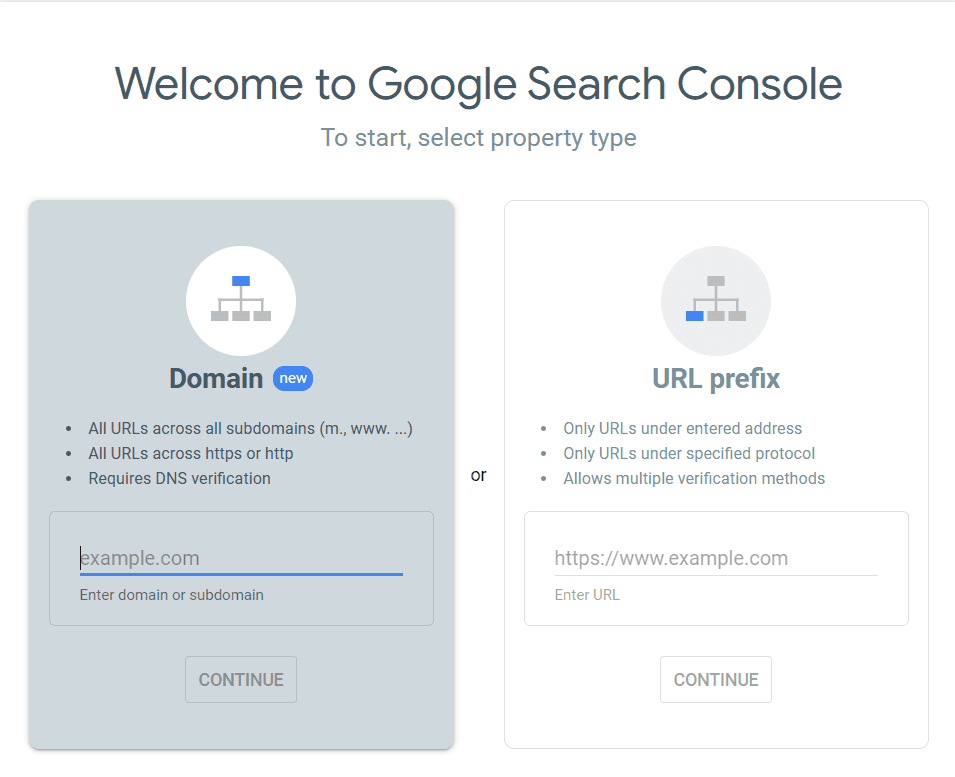
    Exploring Server Logs and Google Search Console for 301 Error Analysis

    301 Errors In WordPress 

    Your website’s server logs can help you find 301 errors and identify the URLs causing them. Google Search Console, a powerful tool, provides a comprehensive picture of your website’s search engine rankings.

    The Google Search Console ‘Coverage’ report shows URLs with 301 problems, making it worthwhile. A powerful combination of server log analysis and Search Console insights helps find problematic URLs. Once these problematic URLs are detected, you may quickly take action.

    This comprehensive approach helps website admins understand 301 problems influencing search engine performance. This helps them make informed decisions, fix issues, and improve user experience. Proactively managing 301 errors improves site efficiency and usability, benefiting site owners and visitors.

    The ‘Coverage’ report inside the Search Console center can reveal explicit URLs that have experienced 301 errors. By taking advantage of these assets, you can pinpoint the dangerous URLs and start remedial measures quickly.

    Find Out the 301 Errors Type

    Observing between a permanent and temporary redirect is fundamental, as they have particular ramifications. Temporary redirects (302) propose that a page has moved temporarily, while permanent redirects (301) mean a long-lasting move. 

    Misconstruing these 301 error types could prompt mistaken activities, influencing Website optimization and client experience. Understanding the error guarantees you execute proper fixes for the 301 error experienced. This, thus, keeps up with the website’s structure and search engine performance.

    Identify 301 Errors with Methods and Tools on the WordPress Site

    • Online Redirect Checkers: Tools like Redirect Checker permit you to check specific URLs and determine if they are being redirected and what type of redirect code is at the right place.
    • Browser Developer Tools: Use the browser’s developer tools (like Chrome DevTools) to supervise network activity. This can assist you in identifying unexpected 301 redirects as you navigate your website.
    • Website Auditing Tool: Screaming Frog SEO Spider is a powerful tool that can crawl your entire website and provide detailed explanations about redirects, broken links, and much more.
    • Google Search Console: Utilize the ‘Coverage’ report in Google Search Console to identify URLs with crawl issues, including 301 errors.
    • SEO Site Audit Services: Check using professional SEO site audit services to know and resolve various website issues, including 301 errors.

    By utilizing these strategies, methods, and techniques, you can efficiently recognize and correct 301 errors, guaranteeing a smoother perusing experience for your clients and a better Web optimization profile for your WordPress site.

    Common Fixes for 301 Errors in WordPress

    Below are a few of the common fixes for 301 errors in WordPress.

    1. Utilize the .htaccess File

    Implementing 301 redirects through the .htaccess file is the best technique to support users and search engines from outdated URLs to the correct destinations.

    The .htaccess file is a configuration file that stays in your website’s root directory. It can help you organize and manage the redirects, including 301 errors. To set up a 301 redirect using the .htaccess file, use the following syntax:

    Redirect 301 /old-url/ http://www.example.com/new-url/ 

    Replace “/old-url/” with the original URL path and “http://www.example.com/new-url/” with the new URL.

    This technique gives server-side redirection, productively taking care of the redirection cycle. Nonetheless, be mindful when altering the .htaccess document, as wrong designs can prompt blunders or site personal time.

    Note: Back up your .htaccess file before making any changes and verify the redirection using a browser or online redirect checker.

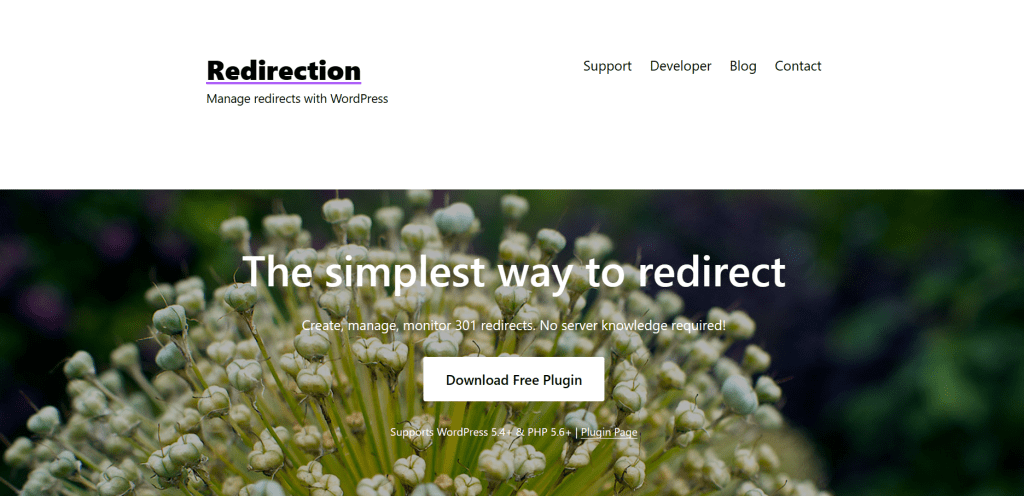
     2. Use Dedicated Redirection Plugin

    301 Errors In WordPress 

    A devoted Redirection plugin simplifies handling 301 errors, as it helps to create, manage, and supervise 301 redirects without directly editing files in the server. WordPress offers several redirect plugins, making it easier for beginners and experienced users to handle 301 redirects effectively and efficiently.

    Two important redirection plugins for managing the redirects in WordPress are

    Redirection: The Redirection plugin is a first choice. It helps a person to easily create & manage 301 redirects from within your WordPress dashboard. You can set up and make redirects based on specific URL patterns, monitor 404 errors, and even import/export redirection rules.

    Yoast SEO Premium: The premium version of the Yoast SEO plugin gives advanced redirect functionality. It seamlessly integrates with the Yoast SEO interface, enabling one to manage redirects and improve your website’s overall SEO technique.

    3. Update Permalinks

    In WordPress, permalinks are the URLs that point to your individual posts, pages, and other related content. Altering the structure of permalinks without real redirection can lead to 301 errors. To correct this, update your permalinks structure and establish proper redirects.

    4. Fix Broken Links

    Broken links, which reach to non-existent or relocated pages, can result in 301 errors. Scanning your WordPress site for broken links and fixing them can protect these errors and increase user experience.

    Consider using the Broken Link Checker plugin for WordPress. This WordPress plugin frequently scans your WordPress site for broken links and provides notifications when they are detected. It also allows you to edit, unlink, or update links directly from the plugin interface.

    Other Methods for Fixing 301 Errors in WordPress

    You can attempt these high-level strategies assuming the normal fixes for 301 errors have demonstrated hard. In any case, be careful while utilizing these strategies, as they include direct changes to your site’s code.

    Method 1: Custom PHP Scripting

    In circumstances where standard arrangements miss the mark, you can make custom PHP content to deal with complex 301 redirects. This approach is gainful while managing many-sided divert examples or explicit circumstances prior to diverting.

    Method 2: Modifying Server Configuration Files (Apache/Nginx)

    You can alter your web server’s setup records for more mind-boggling divert situations. This technique gives more noteworthy command over redirection and execution.

    a. For Apache

    Access the server’s .htaccess file, is often located in the root directory of your WordPress installation. Add the following code to set up a 301 redirect:

    Redirect 301 /old-url/ http://www.example.com/new-url/

    Replace /old-url/ with the original URL path and http://www.example.com/new-url/ with the new destination URL. 

    b. For Nginx

    Access your server’s Nginx configuration file, typically located in /etc/nginx/nginx.conf or a site-specific file. Add the following code within the appropriate server block:

    location /old-url/ {
    return 301 http://www.example.com/new-url/;
    }

    Replace /old-url/ with the original URL path and http://www.example.com/new-url/ with the new destination URL. Reload or restart your web server to apply the changes.

    Note: Modifying server configuration files demands a high sense of understanding of server setup. If you’re uncomfortable with server configurations, hire a WordPress developer.

    How to Prevent Future 301 Errors in WordPress?

    To improve client experience and keep a consistent web-based presence, finding a way proactive ways to forestall future 301 errors in WordPress is fundamental. The following are a couple of techniques that can assist with forestalling 301 mistakes in WP.

    1. Properly Handle Site Structure and URL Changes

    Guarantee that any progressions you make to your site’s design or URLs are executed with fastidious preparation and thought for 301 redirects. Assuming you’re modifying permalinks, rebuilding classifications, or changing post slugs, layout fitting 301 redirects to direct the two clients and search engines to the new page areas.

    2. Regularly Monitor and Update Redirects

    Lay out a daily schedule for checking and refreshing your site’s sidetracks. As your site advances, new pages might be added, content might be revamped, and URLs might change. Consistently audit and change your current redirects to guarantee they stay exact and viable.

    3. Perform Regular Site Audits to Detect and fix Potential 301 Errors

    Routinely direct thorough site reviews to distinguish and rectify potential sources of 301 errors.

    Use instruments like Ahrefs webpage review to break down your site’s URLs and distinguish broken links. These apparatuses give bits of knowledge into diverts, broken connections, and potential mistakes that could prompt 301 redirects. Routinely running these reviews helps with early discovery and goal of issues.

    Moreover, an efficient site design helps the client route as well as diminishes the possibility of experiencing 301 errors. Keep up with legitimate classes, appropriate inner connecting, and steady URL structures. This approach diminishes the requirement for incessant URL changes and diverts. Clear site design additionally helps search engines slither and file your substance effectively.

    Conclusion

    It’s important to handle 301 redirects properly to avoid SEO issues and provide a smooth user experience. Always keep backups of your website before making significant changes, and if you’re not comfortable working with these aspects of your site, consider seeking help from a web developer or WordPress Support Expert like Infyways Solutions.

  • Simple Guide for Wix To WordPress Migration 2024

    Simple Guide for Wix To WordPress Migration 2024

    Due to its many templates and simple layout, Wix may be a good fit for small enterprises. Wix makes website creation easy. As your business expands and restrictions become apparent, you should transfer from Wix to WordPress CMS for more control. Knowing both CMS platforms’ global market share can help if you’re on the fence about transferring. 

    Migrating begins with proper planning. How big is your site? Are all your photos and SEO settings necessary? You can also compare Wix and WordPress’s main differences to learn more. This post will show you how to transfer your Wix site to WordPress using reliable methods.

    Why Switch from Wix to WordPress?

    Wix To WordPress migration offers pros and cons based on your needs. There are reasons to convert from Wix to WordPress, such as:

    • WordPress lets you modify your site to your vision. You can customize the theme, code, plugins, and settings. You may immediately access your site’s files and database, unlike Wix.
    • WordPress is noted for its fast loading speed and SEO-friendly features. Yoast SEO, All in One SEO, and Rank Math can improve your site for search engines. Caching plugins like WP Rocket, W3 Total Cache, and LiteSpeed Cache help boost site performance.
    • Free and open-source WordPress reduces cost and scale. Just pay for web hosting and your domain name. Choose from many hosting plans to fit your budget and needs. WordPress allows easy scaling as your site expands without limits or fees.
    • WordPress’s large user and developer community improves the program and creates new themes and plugins. Online forums, blogs, tutorials, and courses can answer your queries, solve your difficulties, and recommend your site. Professional WordPress developers and maintainers can also help here.

    Factors To Consider For Transfering From Wix To WordPress

    When relocating, your blog may have been the ‘draw’ of your website, but remember to consider other factors. After all, website content is simply one aspect of its strategy. Other considerations include the following:

    • Sales landing pages and contact forms are vital.
    • Web navigation and structure.
    • All videos and photographs on your pages and posts.

    The design and style of your website are equally important. You may not be able to match the aesthetic of your old site, but you may find a solution you like (with a process compromise.) Next, a step-by-step guide will help you finish.

    Migrate Your Website from Wix. 

    After learning why you might switch from Wix to WordPress, let’s walk you through it. There are three basic ways to migrate from Wix to WordPress:

    • Content import from Wix to WordPress
    • Moving using a plugin
    • Manually copying and pasting pages

    Method 1: Importing Content from Your Wix Account to WordPress

    Wix Account to WordPress

    Importing Wix content to WordPress is the first step in migrating your website. This strategy works for sites with mostly blog posts or articles to move to WordPress. It requires exporting your Wix content through an RSS feed and importing it into WordPress. These are the stages for this method:

    Step 1: Sign up for a web hosting account.

    First, sign up for a web hosting account to install WordPress. WordPress hosting providers include Bluehost, SiteGround, HostGator, and DreamHost. Compare features, costs, and reviews to get the best one for your site.

    Step 2: Install WordPress on your web hosting account.

    WordPress installation on your web hosting account is next. Most web hosting providers offer one-click installation for quick and easy setup. WordPress can be installed in minutes using your web hosting panel.

    Step 3: Find the RSS feed URL of your Wix site.

    The final step is finding your Wix site’s RSS feed URL. The RSS feed contains your site’s content in a format other platforms can read. Wix material can be imported into WordPress via RSS feed.

    Follow these procedures to find your Wix RSS feed URL:

    • Locate the blog page you wish to export on Wix.
    • Select View Page Source from the right-click menu.
    • Search the source code for “RSS” using Ctrl+F or Command+F.
    • Copy the “.xml” URL after “href=.” It should look like this:
      https://example.wixsite.com/blog/feed.xml.

    Step 4: Import your content from Wix to WordPress.

    The fourth step is to import Wix material to WordPress using the RSS feed URL you copied earlier. Do this by following these steps:

    • Visit Tools > Import on your WordPress dashboard.
    • Select Run Importer under RSS.
    • Enter your Wix RSS feed URL, click Upload file, and import.
    • Add an author name to imported posts and check Download and import file attachments to import photos.
    • Click Submit and let the import finish.

    Step 5: Check and edit your imported content.

    Check and edit imported WordPress content in the fifth stage. Adjustments and modifications may be needed to make things look and perform properly. You may need to

    • Change your article permalinks to match Wix or boost SEO. Go to Settings > Permalinks and select an appropriate alternative.
    • Post categories and tags should be updated to categorize them. Go to Posts > Categories or Tags to edit them.
    • Fix import errors like broken links and images. Use Broken Link Checker or Media File Renamer plugins for this.
    • Add Wix-unimported forms, widgets, social media buttons, etc. WordPress plugins like Contact Form 7, Elementor, and Jetpack can add this functionality.

    Method 2: Using a Migration Plugin

    Wix To WordPress

    Another way to migrate from Wix to WordPress is to use a migration plugin. This works for sites with pages, menus, galleries, and more.  These are the stages for this method:

    Step 1: Sign up for a web hosting account.

    Sign up for a web hosting account to install WordPress. Many web hosting providers offer WordPress hosting, including Bluehost, SiteGround, HostGator, and DreamHost. Compare features, costs, and reviews to get the best one.

    Step 2: Install WordPress on your web hosting account.

    WordPress installation on your web hosting account is next. As said, most web hosting services offer one-click installation for quick and easy setup. WordPress can be installed in minutes using your web hosting panel.

    Step 3: Install and activate a migration plugin.

    Install and activate a migration plugin to convert your Wix site to WordPress. CMS2CMS, FG Wix To WordPress Premium, and WP All Import offer this service. Choose the one that fits your demands and budget. To install and activate a migration plugin, follow these steps:

    • Select Plugins > Add New from your WordPress dashboard.
    • Find the plugin you want and click Install Now.
    • After installing, click Activate to activate the plugin.
    • Configure the plugin on the options page. Depending on the plugin, your Wix, WordPress, and other site URLs may be required.

    Step 4: Run the migration process.

    The fourth step is the migration procedure with the installed and active plugin. Depending on your Wix site’s size and complexity, this may take time. Migration progress may be seen on the plugin dashboard. The migration process requires these steps:

    • Open the plugin dashboard and click Start Migration.
    • Wait for the plugin to scan and convert your Wix site to WordPress.
    • Review the results to ensure accuracy.
    • Click Finish Migration to finish.

    Step 5: Check and edit your migrated site.

    Check and edit your migrated WordPress site in the fifth stage. Adjustments and modifications may be needed to make things look and perform properly. Some steps may be similar to Method 1, such as:

    • Change your post and page permalinks to match Wix or boost SEO.
    • Organize posts and pages by updating categories and tags.
    • Link and image breaks from migration should be fixed.
    • Forms, widgets, social media buttons, etc., from Wix should be added.

    Method 3: Copying and Pasting Each Page Manually

    Copying and pasting pages manually is the third way to move from Wix to WordPress. This method is suitable for transferring a few pages or a simple layout to WordPress. It requires establishing WordPress pages and copying and pasting Wix content. These are the stages for this method:

    Step 1: Sign up for a web hosting account.

    First, sign up for a web hosting account to install WordPress. Many web hosting providers offer WordPress hosting, including Bluehost, SiteGround, HostGator, and DreamHost. Compare features, costs, and reviews to get the best one for your site.

    Step 2: Install WordPress on your web hosting account.

    WordPress installation on your web hosting account is next. As said, most web hosting services offer one-click installation for quick and easy setup. WordPress can be installed in minutes using your web hosting panel.

    Step 3: Create new pages on your WordPress site.

    The next step is to construct WordPress pages that match your Wix pages. Create and design pages using the WordPress editor or a page builders plugin like Elementor or Beaver Builder. To build WordPress pages, follow these steps:

    • Choose Pages > Add New from your WordPress dashboard.
    • Click Publish after entering your page title.
    • Repeat for each WordPress page you want to create.

    Step 4: Copy and paste the content from your Wix site.

    The fourth step is to copy and paste Wix material into WordPress. Paste the content into WordPress’s text, visual editor, or page builder plugin. Content may need formatting, alignment, spacing, and styling changes to look well on WordPress. Follow these procedures to copy and paste Wix content:

    • Open the page you wish to replicate on Wix.
    • Press Ctrl+A or Command+A to select the entire page.
    • Copy the text with Ctrl+C or Command+C.
    • Open the page you generated in Step 3 on your WordPress site.
    • Press Ctrl+V or Command+V to paste.
    • Use WordPress or a page builder plugin to format and edit content.
    • Repeat this for each Wix page you want to duplicate.

    Step 5: Check and edit your copied content.

    Check and edit copied WordPress content in the fifth step. Adjustments and modifications may be needed to make things look and perform properly. Method 1 and Method 2 may require comparable steps, such as

    • Changing your page permalinks to match Wix or boosting SEO.
    • Update your site’s menu to link to new pages. Go to Appearance > Menus and modify as needed.
    • Repair broken links and graphics from copying and pasting.
    • Add any forms, widgets, social media buttons, etc., that weren’t copied from Wix.

    Steps after Migration

    We will walk you through some of the most important actions to optimize and ready your WordPress site for visitors.

    Step 1: Check Your Site for Errors.

    After transferring from Wix to WordPress, inspect your site for faults and bugs. Common mistakes include

    • Broken links that lead to non-existent site pages or resources. Use [Broken Link Checker] to scan and mend broken links on your site.
    • Images not migrated from Wix to WordPress or with erroneous URLs are missing. Use [Media File Renamer] to rename and update picture URLs.
    • Formatting concerns include fonts, colors, space, alignment, and site layout. Edit and adjust your site’s design with [Elementor].

    Step 2: Optimize Your Site for SEO

    SEO optimization is the next step after switching from Wix to WordPress. SEO increases your site’s visibility and ranking on Google and Bing. SEO best practices include:

    • Install SEO plugin: An SEO plugin optimizes site content and settings for SEO. Yoast SEO is a popular WordPress SEO plugin. Your site can have meta titles, descriptions, keywords, sitemaps, breadcrumbs, and more.
    • Choose a quick and dependable hosting company: A hosting provider stores and delivers your site’s files. A quick and trustworthy hosting service can boost your site’s SEO-friendly performance and speed. WordPress hosts like Bluehost, SiteGround, and WP Engine are suggested.
    • Use a caching plugin: It builds and stores static versions of your site’s pages, reducing server load and speeding it up. Popular WordPress caching plugins include WP Rocket, W3 Total Cache, and WP Super Cache.

    Step 3: Secure Your Site from Threats

    The next step after converting from Wix to WordPress is to protect your site from hackers, viruses, spam, etc. Site security is essential for data and reputation protection. Some website security methods are

    • SSL installation: SSL certificates encrypt site-to-user communication. It includes a padlock image and a “https” prefix in your site’s URL, indicating security and trustworthiness. SSL certificates can be purchased from your hosting provider or [Let’s Encrypt].
    • Install security plugin: Security plugins guard your site from threats. It may block malicious login attempts, scan for malware firewall assaults, back up your site, etc. WordPress security plugins like Wordfence, Sucuri, and iThemes Security are popular.
    • Upgrade WordPress core, themes, and plugins: WordPress core, themes, and plugins must be updated for security and bug-free operation. Updates often contain security updates, bug fixes, and new features that improve site performance. You can update WordPress core, themes, and plugins from the dashboard or using [WP-CLI].

    Conclusion

    Finally, switching from Wix to WordPress can be smart as your website grows and your needs change. WordPress is more customizable and scalable. Each strategy has advantages and fits different situations. After migration, check for faults, enhance SEO, and secure your site. These stages make your new WordPress site functional, optimized, safe, and ready to attract and engage visitors. 

  • WordPress Maintenance Tasks Complete Guide

    WordPress Maintenance Tasks Complete Guide

    Own a shiny, fully functional WordPress website? Fantastic! Before you relax, when was the last time you maintained your website? Yes, WordPress Maintenance Tasks are the key to a fresh, fast, and significant online presence! Updating, optimizing, and securing your website is like a spa day.

    Like you would pay attention to a leaky faucet or your car’s oil change, your WordPress site needs care. This blog will reveal website care secrets, explain performance changes, and equip you to handle security issues.

    Understanding WordPress Maintenance 

    WordPress maintenance resembles a personal website caretaker. It involves regular duties and checkups to keep your site running well. Maintaining your site improves user experience and helps search engines rank you higher. WordPress maintenance includes what?

    Security updates, plugins, theme administration, content checks, database optimization, and more! The complete list keeps your site functioning smoothly and efficiently.

    Do I need to do all this? Can I set and remember? You could, but neglecting website maintenance is like ignoring a leak in your boat—it might sail for a while, but it will sink.

    1. WordPress Security and Backup Maintenance

    Security and backup are crucial to WordPress upkeep. Security protects your website from hackers, viruses, and other threats. Backup involves copying your site’s files and database for disaster recovery.

    Recommended Tools for Backup Management

    There are several WordPress backup tools. Some popular ones are:

    • UpdraftPlus is a free plugin that backs your site to Dropbox, Google Drive, Amazon S3, and more. You may plan automatic backups and recover them with a few clicks.
    • BackupBuddy is a paid plugin with greater functionality and support than UpdraftPlus. BackupBuddy’s Stash cloud storage service or other destinations can store your site. BackupBuddy lets you move your site to a new domain or server.
    • This subscription-based service is part of Jetpack, a suite of plugins from WordPress developer Automattic. V
    • aultPress offers real-time site backups and security assessments. VaultPress allows site restoration at any time.

    How to Backup Your WordPress Site

    Your WordPress backup tool determines the process. However, the general steps are:

    • Install and activate your backup plugin or service.
    • Set backup frequency, destination, and content.
    • Wait for the scheduled backup or manual backup.
    • Check that the backup files are in the chosen location.
    • For further security, download the backup files to your PC.

    How to Restore Your WordPress Site from a Backup

    How you restore your WordPress site from a backup depends on the tool. However, the general steps are:

    • Check the backup plugin or service dashboard.
    • Find the backup file to restore.
    • Follow the tool’s instructions or click Restore.
    • Let the restoration finish.
    • Check your site’s functionality after restoration.

    2. Enhancing WordPress Performance

    Performance is another WordPress maintenance consideration. Website performance is how quickly it loads and responds to user requests. Fast websites boost SEO, user experience, and conversions. The opposite can happen with a slow site.

    Leveraging Caching Methods for Faster Loading

    Caching boosts WordPress performance. Caching involves temporarily storing site material in the browser or server. This lets users load content faster from the cache than the source when they return to your site.

    WordPress has several caching methods:

    • Browser caching: Your site’s content is stored in the user’s browser. Add code to your.htaccess file or use a plugin like [W3 Total Cache] to activate browser caching.
    • Object caching: The server stores your site’s database requests. You may enable object caching with [W3 Total Cache] or [WP Rocket].
    • Page caching: Servers save your site’s pages. WP Super Cache and WP Rocket enable page caching.
    • CDN caching: Multiple servers around the world store your site’s content. CDN caching can be enabled with Cloudflare or Sucuri.

    Reducing Page Size and Minimizing HTTP Requests

    WordPress performance can be improved by lowering page size and HTTP requests. Your page size includes graphics, scripts, stylesheets, and fonts. HTTP requests are how often your site’s pages need server or resource communication to load.

    A huge page size and many HTTP queries might hinder site loading. These methods can reduce page size and HTTP requests:

    • Image compression: Reducing image file size without affecting quality. TinyPNG and Smush can compress images.
    • Minifying and combining scripts and stylesheets: Remove extraneous spaces, comments, and characters and consolidate them into fewer files. Use [Autoptimize] or [WP Rocket] to minify and consolidate scripts and stylesheets.
    • Lazy loading photos and videos: Delay loading until they appear on the screen. Use [a3 Lazy Load] or [WP Rocket] to lazy load pictures and videos.
    • Web font sparing: Use fewer, faster-loading fonts on your site. OMGF and WP Rocket help you use web fonts sparingly.

    3. Content Management in WordPress

    The third crucial WordPress maintenance task is content management. Material management involves creating, organizing, and updating site material, including articles, pages, media, and menus. Effective content management improves usability, SEO, and security.

    Effective Media File Management and Image Optimization

    Media file management and picture optimization are crucial to WordPress content management. Images, videos, audio, and documents you publish to your site are media files. Optimizing pictures improves performance and quality.

    WordPress media file management and picture optimization best practices include:

    • Folderizing media files: This involves creating folders for photographs, movies, papers, etc. Use [FileBird] or [Media Library Folders] to organize media files.
    • Proper media file naming: Use descriptive, SEO-friendly file names like “blue-sky.jpg” instead of “IMG_1234.jpg”. Use [Media File Renamer] or [Phoenix Media Rename] to appropriately name media files.
    • Resize photos before uploading: This involves resizing your photographs to fit your site’s style, such as 800×600 pixels instead of 4000×3000. Use [PicResize] or [Pixlr] to resize images before uploading.
    • Choosing the correct image format: Use JPEG for photographs, PNG for graphics, or WebP for both to fit your site’s purpose. Squoosh or WebP Express can help you choose the proper image format.

    Maintaining a Well-Organized Content Structure

    Content organization is another vital part of WordPress content management. Content structure organizes your site’s posts, pages, categories, tags, menus, and widgets. A well-organized content structure improves SEO, navigation, and user experience.

    WordPress recommended practices for content organization include:

    • Making page hierarchy clear involves using parent and child pages, like Home > About > Services > Contact, to organize your site’s pages. The WordPress editor’s Page Attributes box lets you organize pages.
    • Using tags and categories wisely: You use categories and tags to organize your entries by topic, such as Travel > Europe > France > Paris.
    • Create user-friendly menus: This will display your site’s primary navigation links, such as Home, About, Blog, Contact, etc. 

    4. Managing WordPress Plugins

    Plugin management is the fourth crucial WordPress maintenance task. WordPress plugins add contact forms, social media buttons, SEO tools, etc. Plugins can also affect site performance, security, and compatibility.

    Identifying and Handling Outdated or Unnecessary Plugins

    One of the critical aspects of managing WordPress plugins is identifying and handling outdated or unnecessary plugins. Outdated plugins refer to plugins that have not been updated for a long time or are no longer compatible with the latest version of WordPress. Unnecessary plugins refer to those you do not use or need on your site.

    Outdated or unnecessary plugins can cause various problems for your site, such as:

    • Slowing down your site’s loading time and consuming server resources.
    • Creating security vulnerabilities and exposing your site to hackers and malware.
    • Causing conflicts and errors with other plugins, themes, or WordPress core.
    • Breaking your site’s functionality and appearance.

    Assessing and Installing New Plugins as Required

    Assessing and installing new WordPress plugins is also essential. Assessing plugins means determining if they fit your site’s goals. Add new plugins to your site by installing them.

    Installing new plugins might increase your site’s performance and capabilities, but it poses new dangers and obstacles. Here are some ways to safely and successfully test and install new plugins:

    • Looking for reliable plugins: This is when you look for WordPress plugins with high ratings, positive reviews, frequent updates, active support, etc. The WordPress.org Plugin Directory and WordPress plugin blogs and forums can help you find reliable plugins.
    • Comparing comparable plugins: Compare plugins with similar functionality, features, pricing, performance, compatibility, etc. Use [WP Plugin Compare] or read WordPress blogs and forums to compare comparable plugins.
    • Installing plugins carefully: Follow standard procedures when installing plugins on your site.

    5. WordPress Theme Management

    Theme management is the sixth WordPress maintenance step. Themes set your WordPress site’s colors, fonts, graphics, menus, etc. Themes can also affect site performance, security, and compatibility.

    Customization of Themes Without Compromising Updates

    WordPress theme customization without affecting updates is crucial. Your theme’s appearance and functionality can be customized to match your site’s purpose and aesthetic. Your theme gets updated to correct problems, improve security, add features, etc.

    Customization of themes can make your site more unique and attractive, but it can also make it more challenging to update your theme. While updating themes can make your site secure and compatible, it can also erase your modification.

    You can alter themes without affecting updates using these methods:

    • Creating a child theme that involves copying and editing your parent theme. You can update the parent theme without affecting the child theme and keep your personalization. 
    • A custom CSS plugin lets you add custom CSS code to your site without altering your theme files. This lets you modify your theme’s appearance without affecting updates or functionality. 
    • A page builder plugin lets you drag-and-drop design your site’s pages without coding. This lets you change your theme’s layout and design without affecting its core files or updates. 

    Ensuring Theme Compatibility Across Various Browsers and Devices

    WordPress theme compatibility across browsers and devices is another important aspect. Theme compatibility relates to how well your theme functions and looks on different web browsers (Chrome, Firefox, Safari, etc.) and devices.

    Ensure theme compatibility to optimize site accessibility, usability, and SEO. The diversity and complexity of browsers and devices make theme compatibility difficult.

    These methods can assure theme compatibility across browsers and devices:

    • Choosing a responsive theme: This is when a theme automatically adjusts to the browser or device’s screen size and resolution. This way, you can verify your site’s content and layout display properly on any browser or device. You can find a responsive theme in the WordPress.org Theme Directory or on WordPress theme blogs and forums.
    • Testing your theme across browsers and devices: This is when you test your theme on different browsers and devices. This lets you find and fix site compatibility issues. 
    • Using cross-browser compatibility plugins: It improves site compatibility with multiple browsers. These plugins correct CSS prefixes, JavaScript problems, HTML5 support, etc. 

    6. Database Maintenance for WordPress

    Database maintenance is the sixth WordPress maintenance task. The database maintains your site’s information, settings, users, etc. Databases can also affect site performance, security, and reliability.

    Optimizing Database Tables to Enhance Performance

    Database maintenance includes optimizing tables for performance. Data in a database is organized through tables. Remove redundant data to optimize database tables for speed and efficiency.

    Optimizing database tables speeds up site loading and reduces server load. Due to data sensitivity and importance, improving database tables is dangerous and complicated.

    Here are some safe and effective database table optimization methods:

    • Cleaning up post revisions: Deleting or limiting database post revisions. Post revisions are made when you save or amend a post. Post revisions can be cleaned up with [WP-Optimize] or [WP Sweep].
    • Spam cleanup: Delete or designate irrelevant, rude, or promotional comments on your site as spam. Bots or malicious users submit spam comments on your site. Akismet or Anti-spam can remove spam comments.
    • Cleaning up transients: Deleting or expiring database transients. WordPress or plugins utilize these temporary data to cache information for faster access. Transients Manager and WP Rocket can remove transients.
    • Fixing and optimizing database tables: Fixing mistakes and optimizing structure and indexes. 

    Routine Backup and Restore Procedures

    Routine backup and restore are also crucial for database upkeep. A database backup involves making copies and keeping them safe. If disaster strikes, restore your database from a backup.

    Backing up and restoring your site helps prevent data loss, corruption, and harm. Due to database size and complexity, ordinary backup and restoration procedures might be complicated.

    You can use these methods to safely and effectively backup and restore:

    • Choosing a dependable backup tool involves backing up your database safely, consistently, and automatically. 
    • An appropriate backup site stores your files safely, conveniently, and economically. Your backup solution offers cloud storage, email accounts, FTP servers, and more as backup destinations.
    • Choose a backup frequency that balances freshness and file size. Choose a backup frequency from your backup tool’s daily, weekly, monthly, etc. options.
    • Verify backup files’ completeness, accuracy, and functionality. Downloading to your local computer, restoring to a test site, or other techniques indicated by your backup tool to test your backup files.
    • If a disaster strikes, you can restore your database from a backup. Your backup tool may require you to click a restore button, upload a backup file, etc., to restore your database.

    Conclusion

    Certainly! Keeping your WordPress website secure and functional is like having a reliable friend. Website care safeguards your internet presence like a good buddy. Maintenance includes security updates, plugin and theme administration, content optimization, and database maintenance.

    Abandoning these tasks is like leaving a valued friend on a dangerous journey; it may seem reasonable initially, but problems will come. Treat your WordPress website like a friend for a fresh, speedy, and robust online presence.

  • Top 10 WordPress Job Board Themes In 2024

    Top 10 WordPress Job Board Themes In 2024

    A job board site needs a good front-end design and a robust backend for dynamic search, job posting, and resume submissions. Developers have long used WordPress for constructing sturdy, user-friendly sites. 

    We show the finest WordPress job board themes to help you develop high-quality job and career websites. WordPress powers job listing sites due to its easy-to-use CMS. You may easily add user authentication and submissions. 

    You only need an excellent job board theme that meets your job website needs. This article lists the top job board WordPress themes with all the necessary features. In minutes, these themes let you create a professional employment portal like Indeed, CareerBuilder, Monster, or LinkedIn!

    1. Astra

    WordPress Job Board Themes

    Astra, a popular WordPress multipurpose theme, makes a great job board with little effort. Clean and fast, the theme has all the tools and compatibility you need to create a great website. Astra prioritizes speed and flexibility. It works with the WordPress block editor and Spectra and Elementor page builders and is straightforward to install. 

    It monetizes your board with WooCommerce, SureCart, and other eCommerce platforms. The design is excellent, with over 240 premade templates. The free version has many. Import a template, open it in your favorite page builder, and tweak it. 

    Use the available tools to alter everything on the page. From header to footer, you can brand anything. Every project you make will be speedy, SEO-friendly, and faultless. All templates are responsive and operate on any screen. Most job plugins and WordPress plugins work with Astra. 

    2. Careers

    WordPress Job Board Themes

    Attractive WordPress theme Careers uses parallax scrolling. This theme is excellent for job boards, recruitment services, and other HR websites. Careers’ mobile-friendliness adapts your site to all screen sizes. Its advanced search box lets job seekers filter results by numerous parameters.

    Careers show relevant numbers with animated statistics. Candidates, jobs placed, jobs filled, and corporations that trusted your service can be shown. The Testimonial section has a carousel slider. Here, you can display client praise. Other Careers homepage features include Job Listing, Company Logos, Call-to-Action, and more. Pre-designed page templates for various applications are included. These include Job Listing, About, Blog, Services, etc. 

    You can list vacancies on the Job Listing page by location, title, income range, and more. Careers provide distinct page layouts for each job submitted to your site. This template has a Job Summary, Description, Responsibilities, and more.

    3. Classy Ads

    WordPress Job Board Themes

    Classy Ads is a vibrant WordPress theme. Job listing and recruitment agency directory websites here are more attractive. Parallax scrolling on the Banner area attracts viewers—an advanced search bar with three filters included with Classy Ads. Options include keywords, places, and categories. Hover effects are also in the Featured Area. 

    This section includes six promo boxes. Classy Ads’ Newsletter section uses email marketing to grow your business. Other appealing homepage features include Featured Ads, Trending Today, Testimonials, and more. The Testimonial section has a nice carousel slider. You can tastefully display client testimonials with this functionality. 

    Classy Ads offers Ads Listings, Blog, About Us, Contact, and more page templates. Additional social icons can be added to your site. Classy Ads supports Twitter, Instagram, LinkedIn, and Facebook. Your audience can follow you on these sites for vacancy updates.

    4. Comports

    WordPress Job Board Themes

    Job-related WordPress theme Comports is innovative and roomy. This theme attracts job seekers and recruiters with its bright colors. Comports is mobile-responsive, and your website will display correctly on all devices. This SEO-friendly theme also boosts search engine rankings. Job seekers can easily find vacancies on Comports’ sophisticated search bar. 

    Candidates can screen jobs by category, location, and keyword. Banners can include Call-to-Action buttons. You can link this button to a critical site page. In its webpage Featured Area, Comports offers three promo boxes. Additionally, Comports’ homepage has a Newsletter section. Collect web visitors’ email addresses to launch an email marketing campaign. 

    You get various predefined page templates with this theme. These layouts include Job Category, Job Single, About Us, and more. You get a Pricing Plan page template. Your prospects can choose a membership bundle based on features, price, and other aspects here.

    5. ET Job Portal

    WordPress Job Board Themes

    ET Job Portal is a modern, user-friendly WordPress theme. You can create industry-specific job sites. Some are for accounting, banking, education, finance, etc. This responsive theme optimizes site size for all screen sizes. 

    Also, the ET Job Portal has a persistent header. This tool simplifies job portal navigation for your website users. ET Job Portal integrates WooCommerce for online stores. Job-related services can be sold with this eCommerce plugin. 

    ET Job Portal has numerous homepage sections. Examples include Search Banner, How it Works, Stats Counter, Testimonies, and Latest News. Your website layout can be customized with four color styles. ET Job Portal allows infinite theme color customization.

    6. Job Board 2

    WordPress Job Board Themes

    Job Board 2, a vibrant WordPress theme, is ideal for HR websites. This theme works for job boards, recruitment firms, etc. Your audience can browse the site on different displays. Job Board 2’s sticky header bar simplifies site navigation. 

    Job Board 2 gives all website buttons a hover effect. Also, Job Board 2 features an advanced search bar. Job seekers can filter results by keyword, area, and category. Your viewers can also get keyword suggestions from prior searches. Job Listings on Job Board 2’s webpage enable recruiters to describe vacancies. 

    They can list the job title, location, category, and deadline. Employers can describe positions in detail on the Job Detail page. Pre-designed page templates for additional applications are available from Job Board 2. 

    7. Jobfinder

    WordPress Job Board Themes 7

    Jobfinder is a stylish WordPress theme. Job board websites are its primary focus. Jobfinder has the responsiveness to display your site correctly on all devices. Parallax scrolling appears on its homepage’s full-screen Banner. This section has an advanced search bar. Using this property, job seekers can filter results by keywords, geography, and other factors. Jobfinder’s sticky header bar simplifies audience navigation.

    Additionally, Jobfinder’s scroll content loading feature speeds up your site. This function loads online content only when it appears on users’ screens. Jobfinder has various online features to showcase your job-related services. 

    Its categories include Popular Categories, Recent Jobs, Testimonials, Call-to-Action, Why Choose Us, etc. Jobfinder’s pre-designed page templates help you detail your services. For instance, the Post a Job page layout lets recruiters post vacancies. Other page layouts include Services, Internship, Browse Candidates, and more.

    8. JobListing

    WordPress Job Board Themes 8

    JobListing, a minimalist WordPress theme, allows you to create a tidy job board. The Featured Jobs carousel slider lets job seekers find their desired vacancy details. Banners have advanced search bars. Job searchers can sort by several criteria here. The Featured Job Categories area helps viewers look for jobs by standard categories. 

    The JobListing sticky menu bar has two CTA buttons. Visitors can quickly browse your site with this functionality. JobListing brings numerous pre-designed homepage themes. For instance, the cost Plan page layout shows job-related service costs. 

    At the same time, the Job Detail page design lets recruiters describe their openings. This page includes Experience Requirements, Job Features, an overview, Education Requirements, etc.

    9. Job Portal

    WordPress Job Board Themes 9

    The basic WordPress theme Job Portal helps you create job-related websites. A responsive theme helps your site render effectively on all screen sizes. Job Portal even speeds up page loading. Job Portal also has SEO options. With this functionality, you may optimize your website for search engine rankings. Job Portal allows one-click demo content import. 

    Website components like customizable content blocks are included in the demo. Drag-and-drop page builders let you customize these blocks. Job Portal offers multiple homepage areas. The Banner section’s keyword search field helps job seekers find jobs. Job Portal has Job Openings, Contact Us, a Blog, and more page layouts. 

    Google Maps is integrated into the Contact Us page to help customers find you. Your job board logo can be customized. Job Portals allow typographic and color adjustments.

    10. JobScout

    WordPress Job Board Themes 10

    JobScout is a sleek, stylish WordPress theme. Install this theme to create job board websites. This theme loads quickly, improving job seekers’ and recruiters’ experiences. This SEO-friendly theme integrates schema to boost search engine rankings. 

    JobScout is mobile-friendly/responsive, so your website works on all devices. JobScout’s WooCommerce support simplifies online store setup. The WP Job Manager plugin works with JobScout. This short-code plugin has an easy admin interface. You can modify, mark, and delete many tasks here. Let recruiters upload jobs from the front end. 

    JobScout offers advanced search. Job seekers can search by keyword, job type, region, and category. You receive numerous Job Dashboard, Single Job Listing, and other page layouts. The homepage showcases your job services with Banner, Job Posting, Call-to-Action, Latest Articles, and Testimonials. JobScout allows multilingual site translation. Right-to-left language scripts can be used to develop websites.

    11. Job Start

    WordPress Job Board Themes 11

    Jobstart is a stylish WordPress theme for creating large job board websites. Scroll content loads with this theme. Your site elements will load only when displayed. Jobstart is responsive, so your site works on all devices. This theme’s parallax scrolling effect grabs visitors’ attention. 

    The Banner area of Jobstart has an advanced search bar. Job searchers and recruiters profit from this service. Your audience can sort search results by keywords, geography, and category. Newsletters assist in developing your email marketing list. Notably, the Blog Feed helps you share content marketing tools and insights.

    Additionally, Jobstart offers other exciting features. Jobstart offers numerous pre-designed page layouts. Customize these templates to show job ads and related services. Page categories include Job Category, Employer Account, Register, Find Candidates, Careers, and more.

    12. Jobpply

    WordPress Job Board Themes 12

    Jobpply is a unique WordPress job board theme. This mobile theme is responsive; visitors can browse your site on any screen. Parallax and animation help you to build a general or industry-specific job listing site. Jobpply lets you customize any of these job boards. Your audience can choose between two possibilities in the Banner’s advanced search bar. Recruiters can click ‘Find a Candidate,’ and job seekers can ‘Find a Job.’ Job seekers and recruiters can search by area, category, and keyword.

    Additionally, Jobpply’s Newsletter feature helps you expand your mailing list. This function helps you convert email marketing prospects. Other Jobpply homepage features include Featured Area, Top Categories, Hot Jobs, Stats Counter, etc. The sticky header bar of this theme helps visitors navigate your site. Jobpply has various pre-designed page templates. You receive a Candidates List, About, Blog Feed, Contact, and templates.

    13. Skillhunt

    WordPress Job Board Themes 13

    Skillhunt is a content-heavy WordPress theme for job boards and recruiting agency websites. This theme has stylish homepage sections and vibrant features. The Skillhunt responsiveness renders your site on all screen sizes. The lazy loading feature boosts job site speed. Skillhunt’s Banner shows statistics with animation. 

    Company, Active Employee, and other stats are included. The Banner’s search bar enables readers to find jobs and qualified individuals. The ‘Find a Job’ option helps job searchers find openings. Here, customers can filter by keywords, categories, and places. Recruiters can also use the ‘Find a Candidate’ option to find qualified candidates. 

    Hover effects appear on Skillhunt buttons and other parts. Featured Areas, Top Categories, and Jobs are examples. Also, the Newsletter component grows your mailing list. Send employment updates to your audience to improve email marketing. The latest Candidates, Testimonials, Our Blogs, and more are Skillhunt features.

    Conclusion

    A strong online presence is vital for job board websites, and the appropriate WordPress theme may make all the difference. This article covers 2023’s top 13 WordPress job board themes. These themes provide powerful search, responsive layout, and parallax scrolling to make your job board website user-friendly and attractive. 

    With WordPress and these themes, you can construct professional employment portals like Indeed, CareerBuilder, Monster, or LinkedIn. These themes give you the tools and aesthetics to make your job board, recruiting agency, or HR website stand out. Use one of these top WordPress themes or create a custom theme to elevate your job board in 2023. Your candidates and recruiters will appreciate it.