Category: Wordpress

Learn about WordPress

  • WordPress php get featured image url

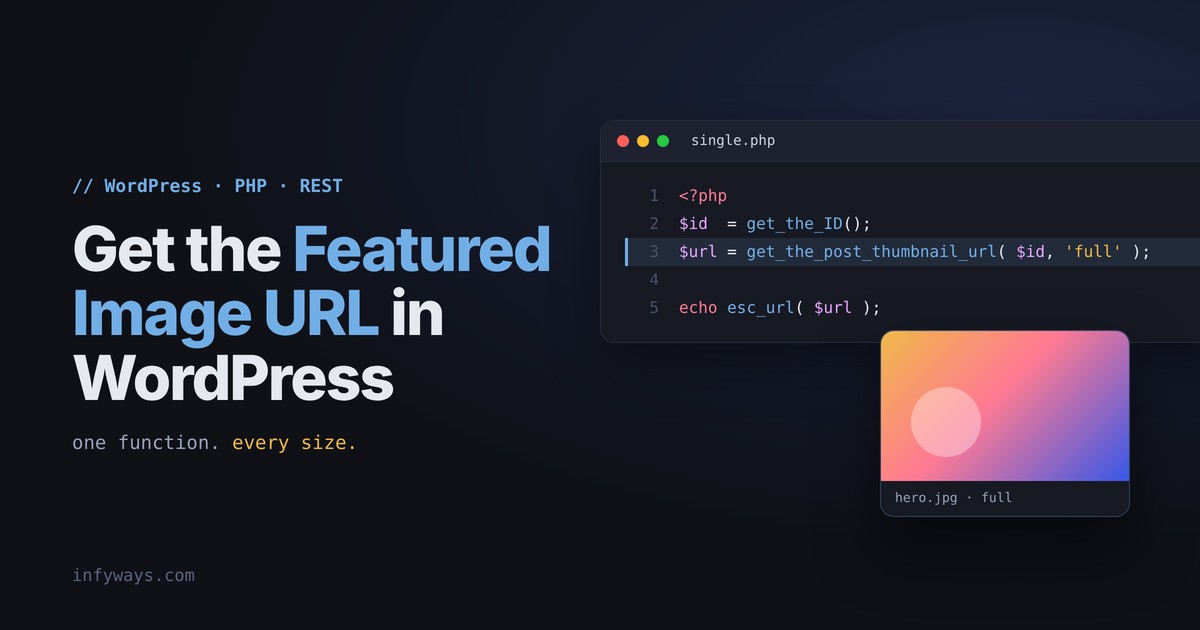
    WordPress php get featured image url

    Featured images, or post thumbnails, are essential for adding a visual element to your WordPress posts. It is vital in enhancing user engagement and increasing the aesthetics of your webpage.

    Featured images represent the content and can serve as a visual summary of the post or page.

    Utilizing featured images can enhance the look of your site, draw attention to specific content, and even improve SEO.

    Pro Tip: Always create a complete backup of your website before making any changes to the code or content. It ensures a safety net in case of unexpected errors.

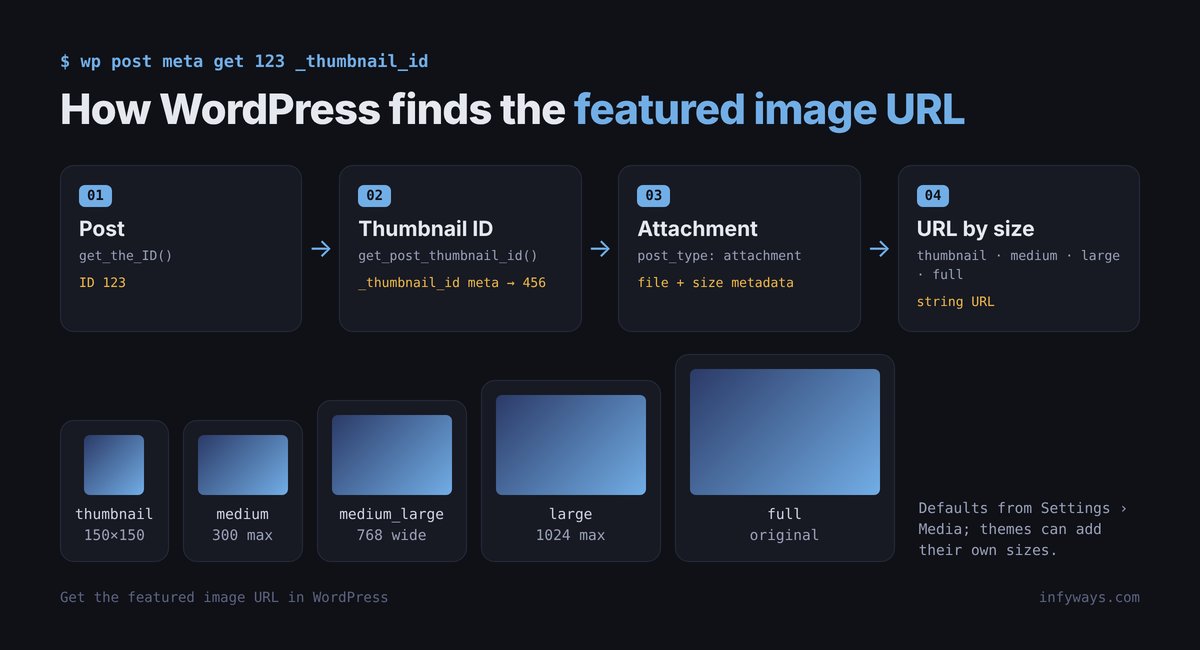
    How to Get the Featured Image URL using PHP?

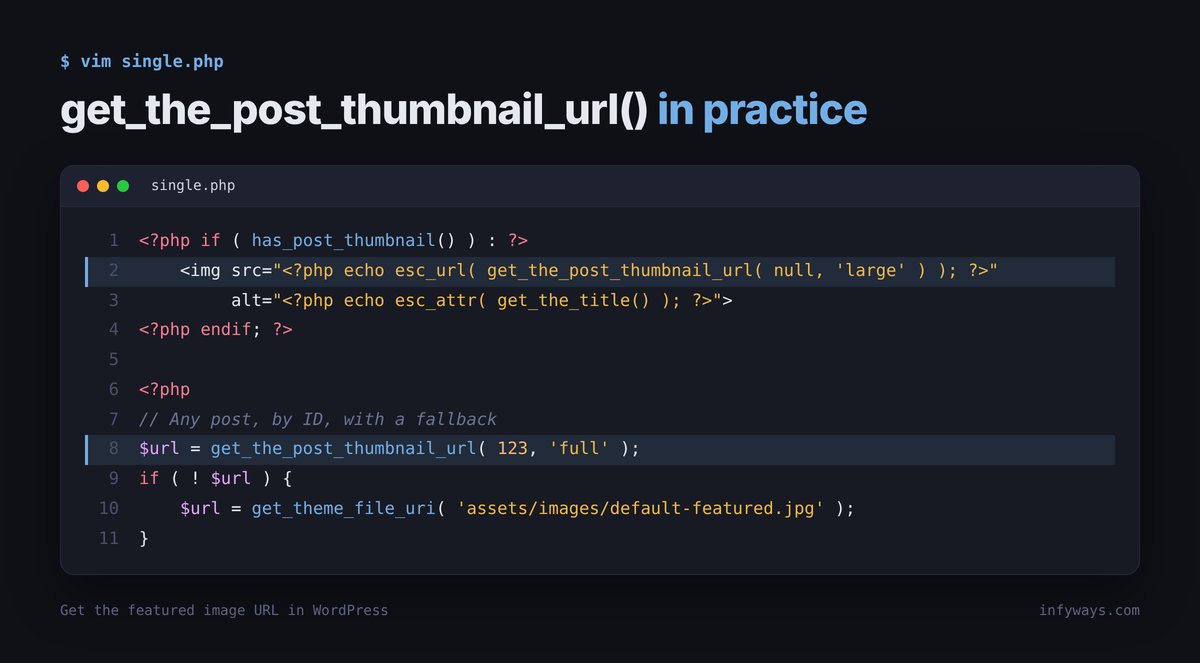
    Retrieving the featured image URL in WordPress using PHP is a crucial functionality. Here’s how you can do it.

    Step 1: Determine the Post ID

    The first step is to identify the post ID for which you want to retrieve the featured image URL.

    $post_id = get_the_ID();

    Step 2: Get the Thumbnail ID

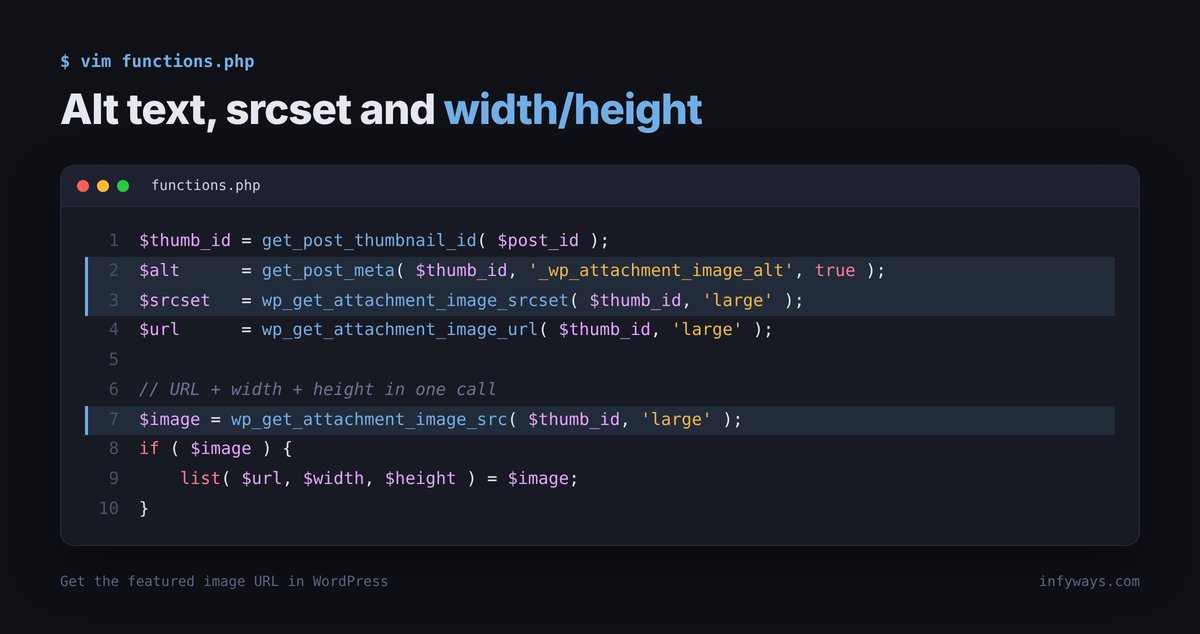
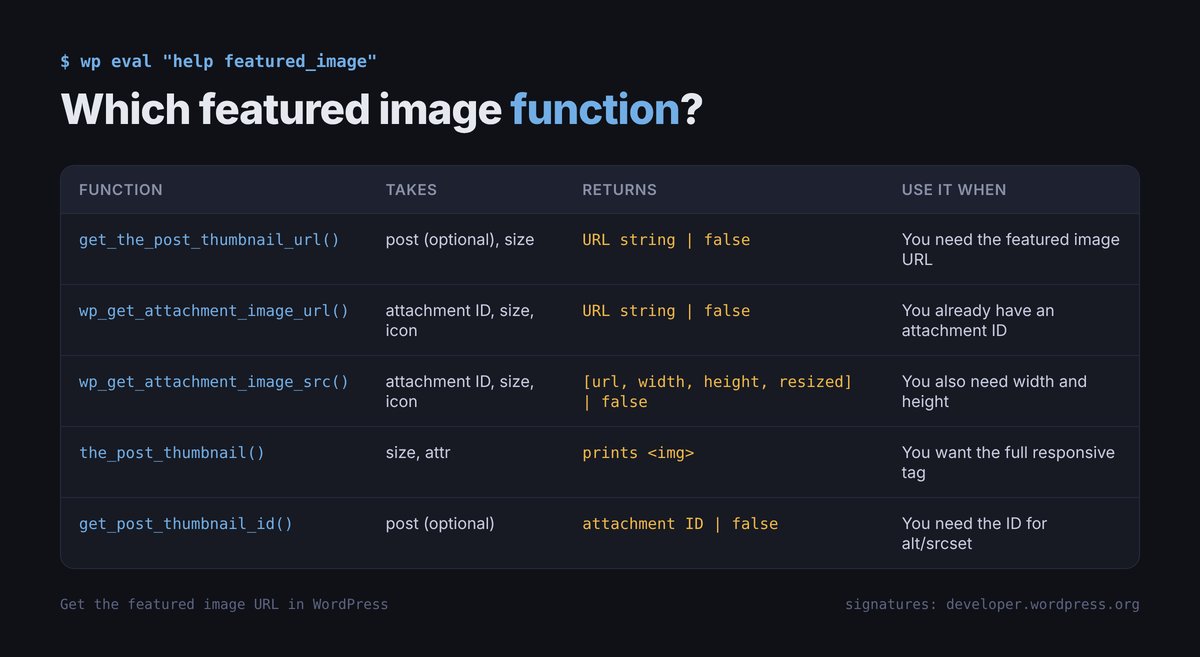
    $thumbnail_id = get_post_thumbnail_id($post_id);

    Step 3: Retrieve the Featured Image URL

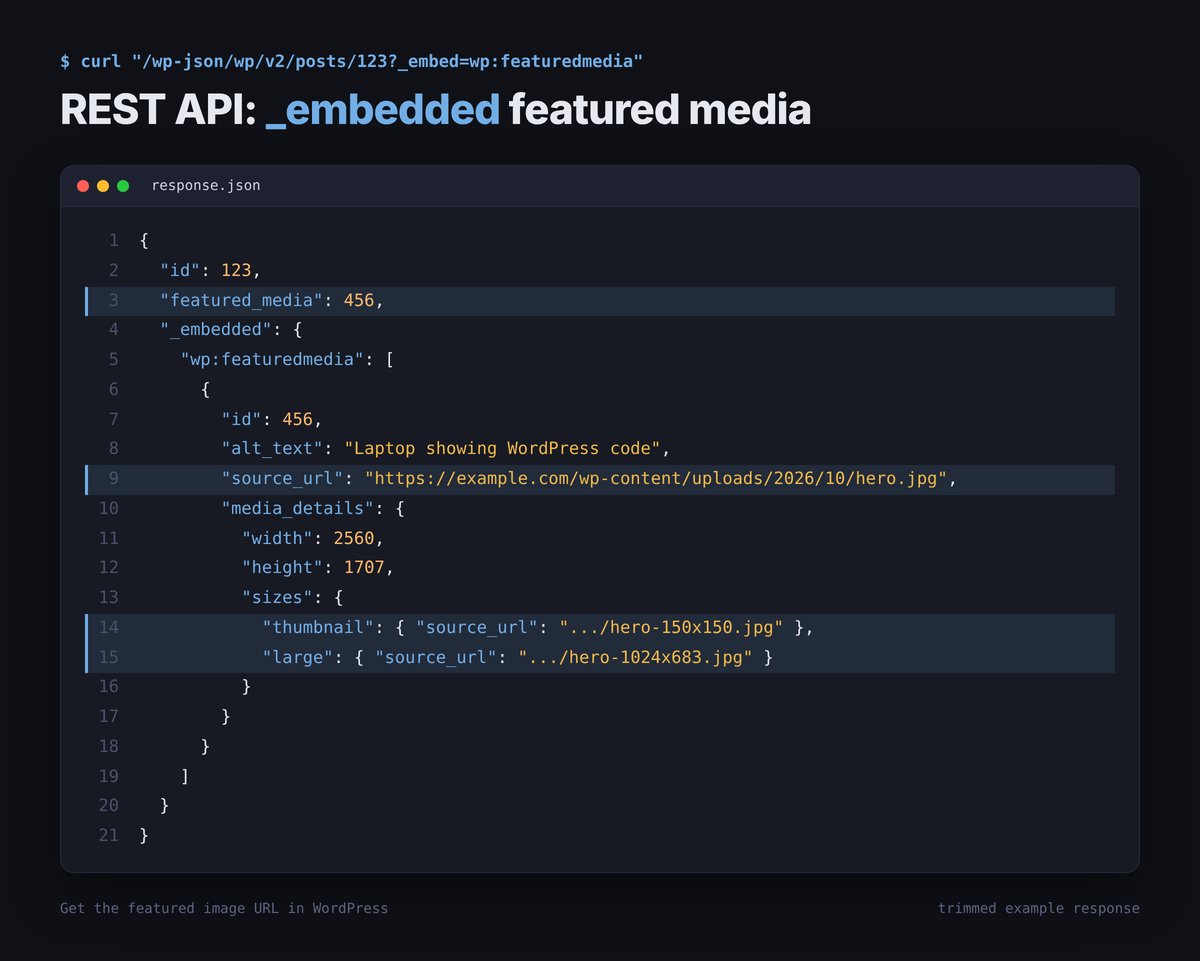
    $featured_image_url = wp_get_attachment_url($thumbnail_id);

    By following these steps, you will have successfully retrieved the featured image URL using PHP in WordPress.

    Below, I will outline how you can retrieve the featured image URL in WordPress using PHP for different sizes such as medium, small, and large. This can be particularly useful for responsive design, ensuring that the appropriate image size is served depending on the device or view size.

    Retrieving Featured Image URL in Different Sizes

    Small Thumbnail

    To get the URL of the small-sized thumbnail, use the following code:

    $thumbnail_id = get_post_thumbnail_id($post_id);
    $small_image_url = wp_get_attachment_image_src($thumbnail_id, 'thumbnail');

    'thumbnail' refers to the small size, and the URL will be stored in $small_image_url[0].

    Medium Thumbnail

    For the medium size, change the second parameter to 'medium' as shown below:

    $thumbnail_id = get_post_thumbnail_id($post_id);
    $medium_image_url = wp_get_attachment_image_src($thumbnail_id, 'medium');

    The medium-sized image URL can be accessed using $medium_image_url[0].

    Large Thumbnail

    Similarly, for the large thumbnail, use 'large':

    $thumbnail_id = get_post_thumbnail_id($post_id);
    $large_image_url = wp_get_attachment_image_src($thumbnail_id, 'large');

    The URL for the large image will be stored in $large_image_url[0].

    Define a custom Image Size

    You can define a custom image size by adding the following code to your theme’s functions.php file:

    add_image_size('custom-size', 800, 600, true);

    Troubleshooting

    child theme functions php

    Are you having trouble getting the featured image URL to appear? You might need to enable featured images, as not all themes automatically support them.

    You can fix this easily. Just add a little bit of code to your theme’s functions.php file, and you’ll be able to use featured images. I always recommend to use child theme in WordPress.

    To make this change, find and edit the functions.php file. You can do this using an FTP client, the WordPress Theme Editor, or your web host’s file manager.

    Add the following code

    add_theme_support('post-thumbnails');

    Conclusion

    Retrieving the featured image URL using PHP in WordPress is crucial for developers and site administrators.

    By adhering to the guidelines in this guide, you can add this feature easily into your site.

    Whether for wordpress theme design or content enhancement, mastering this skill can significantly elevate your WordPress expertise.

  • A Complete Tutorial on WordPress Update_post_meta

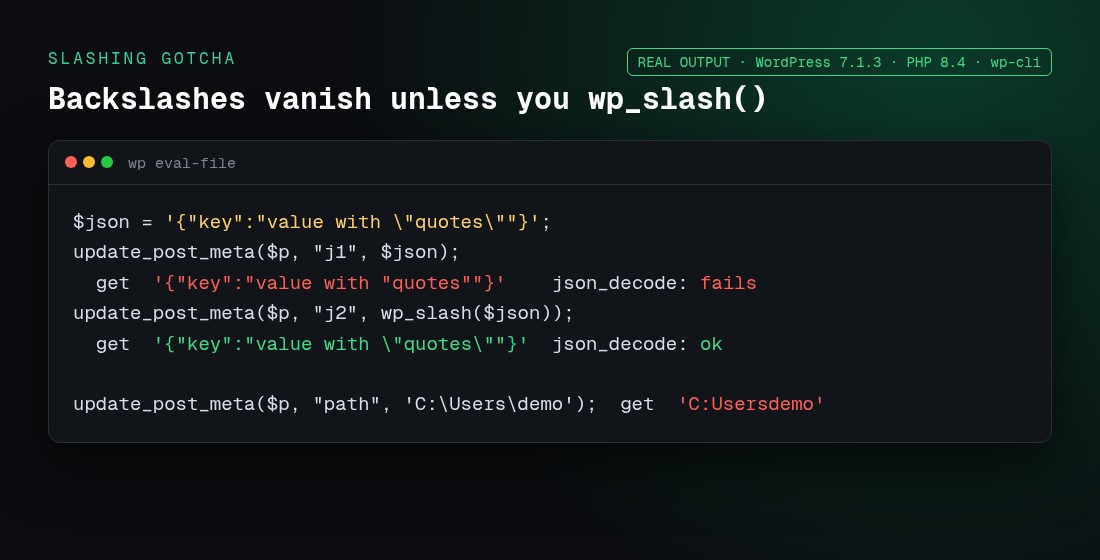
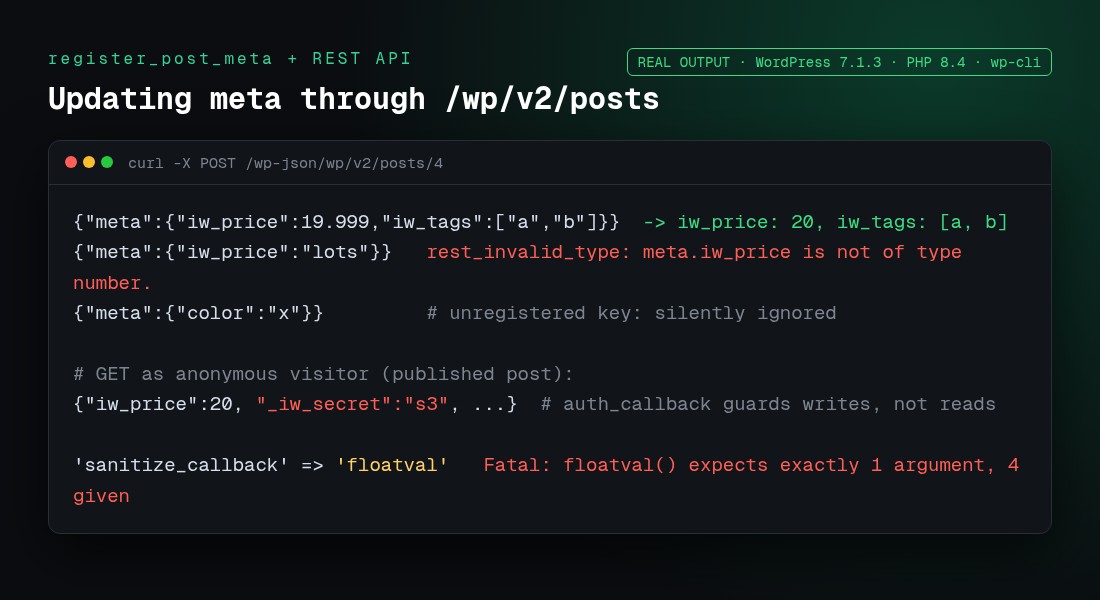
    A Complete Tutorial on WordPress Update_post_meta

    WordPress post meta refers to the additional information attached to a post, such as author name, publish date, or custom fields. In 2021, 30% of global WordPress users implemented custom metadata to enhance their sites’ functionality.

    Updating post meta helps in boosting SEO and tailoring user experience. This guide will focus on “how to update post meta in WordPress,” covering all necessary steps and benefits.

    WordPress update_post_meta

    Requirements and Prerequisites

    Before updating post meta, ensure you meet the essential WordPress requirements and understand the code involved. WordPress Codex is a great starting point.

    Identifying the Correct Post ID

    Identifying the right post ID is vital for the update_post_meta function. Various plugins can assist you in this step.

    Detailed Guide to Using update_post_meta Function

    Code Syntax and Parameters

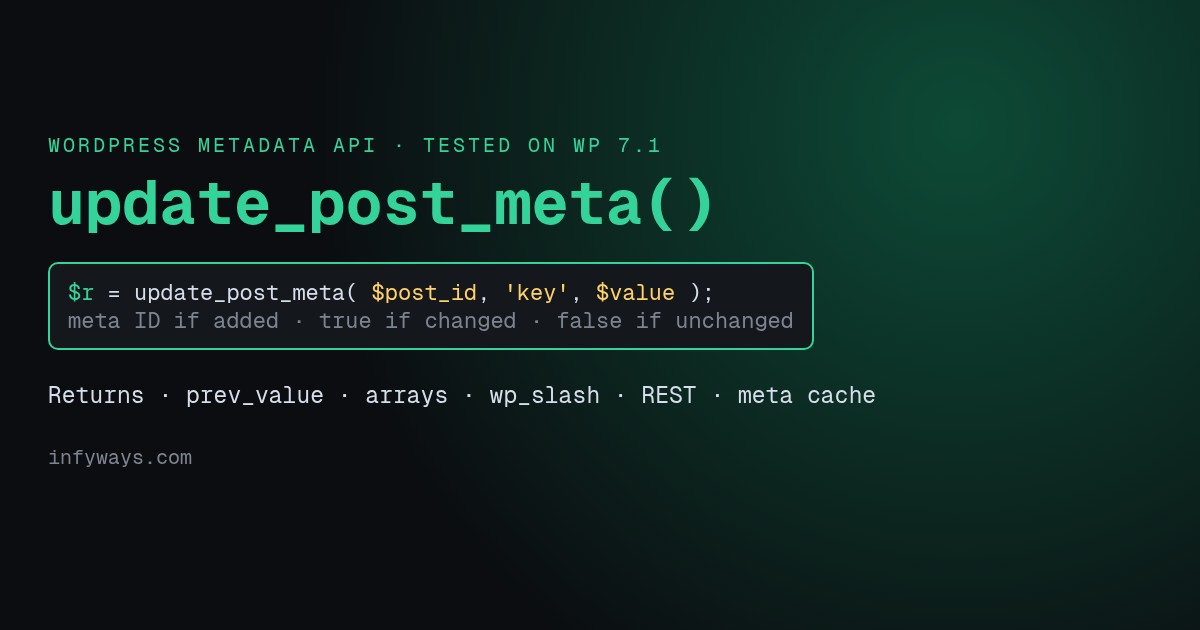
    The update_post_meta function uses the following syntax:

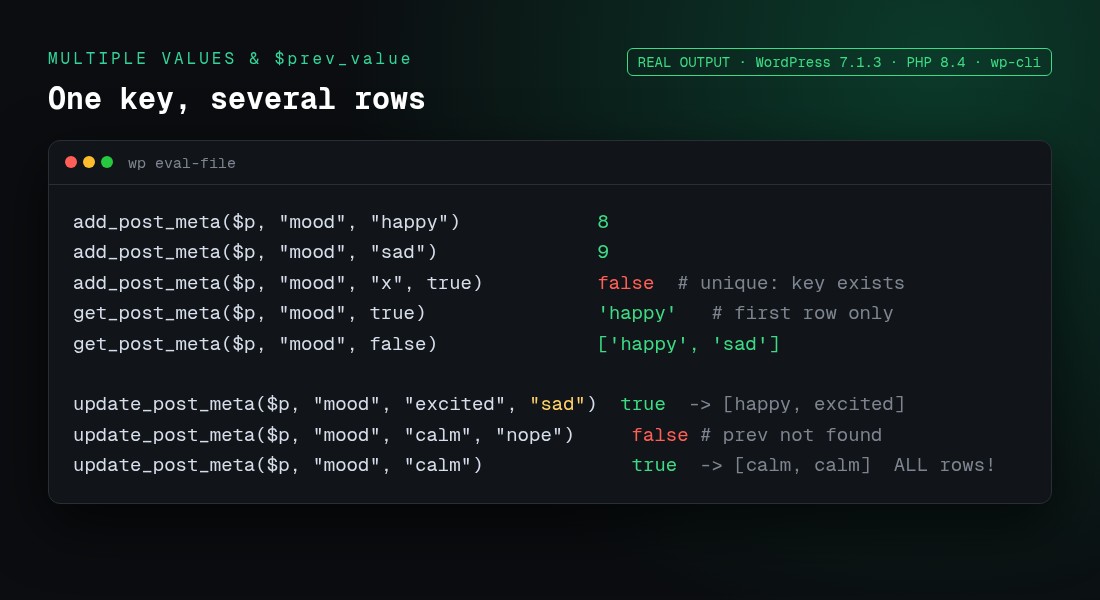
    update_post_meta( $post_id, $meta_key, $meta_value, $prev_value )

    Here, $post_id is the ID of the post, and $meta_key defines the meta key.

    Step-by-Step Implementation

    Follow this step-by-step guide to implement the function:

    Step 1: Identify the Post ID You need to know the ID of the post for which you want to update the metadata. You can find the post ID by editing the post in the WordPress admin panel and looking at the URL. The post ID will be present in the URL as a parameter. Example – /wp-admin/post.php?post=XXXX&action=edit. Here XXXX is the post ID.

    Step 2: Open your Theme’s Functions.php File To use the update_post_meta function, you’ll typically write the code in your theme’s functions.php file. This file is located within your active theme’s folder.

    Step 3: Write the Code Inside your functions.php file, you can write the code that uses the update_post_meta function. Here’s an example code snippet:

    function update_custom_field_value() { 
    $post_id = 123; // Replace with the actual post ID 
    $meta_key = 'custom_field_key'; 
    $new_meta_value = 'New meta value'; // Update the custom field value 
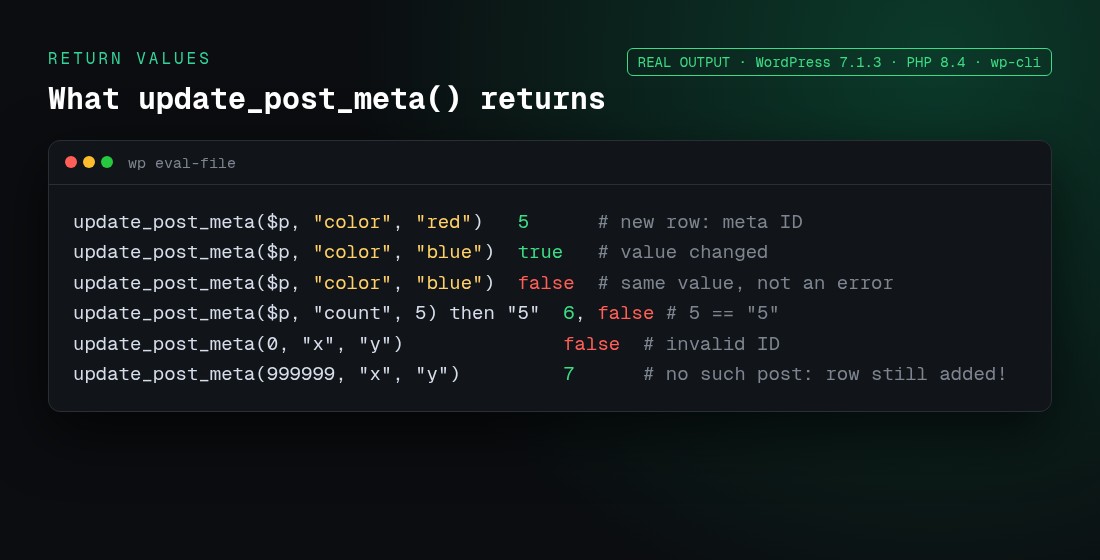
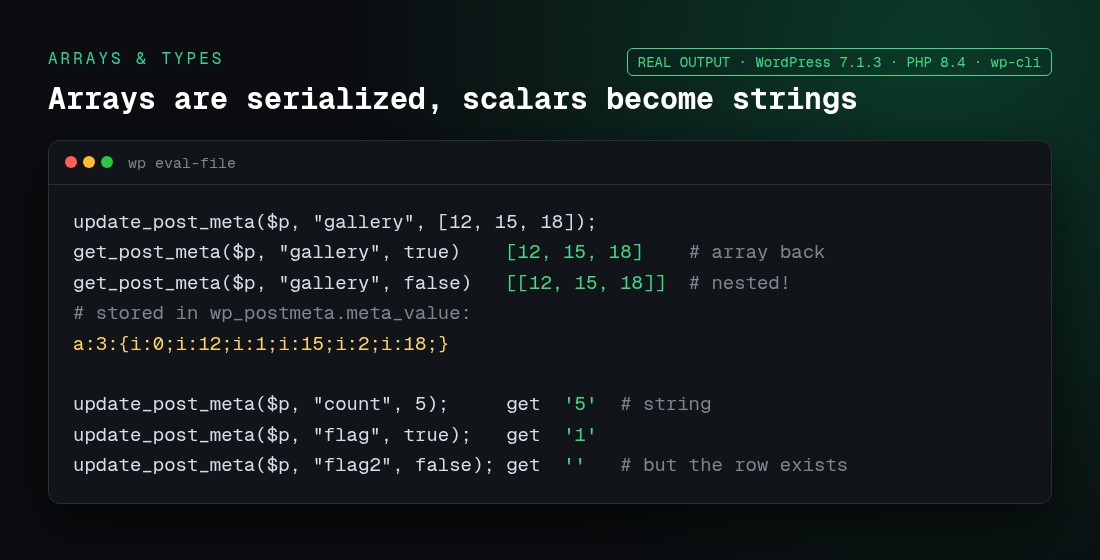
    update_post_meta( $post_id, $meta_key, $new_meta_value ); 
    } 
    add_action( 'init', 'update_custom_field_value' );

    In this example, we’re creating a function named update_custom_field_value that updates the custom field with the key ‘custom_field_key’ for the post with the given ID. You should replace $post_id with the actual post ID and adjust $meta_key and $new_meta_value as needed.

    Step 4: Save and Test After adding the code to your functions.php file, save the file. You can then go to the WordPress admin panel, visit any page, post, or custom post type that matches the ID you specified in the code. The custom field value should now be updated to the new value you specified.

    Remember that using the update_post_meta function can have consequences, so make sure to double-check the values you’re using and test thoroughly to ensure the desired outcome.

    Always consider best practices, such as making a backup of your theme’s functions.php file before making changes, and avoid directly modifying core theme files if possible by using child themes or custom plugins.

    Troubleshooting and Errors

    If you encounter errors, refer to WordPress Support for help.

    SEO and Performance Implications

    How Updating Post Meta Boosts SEO

    SEO experts like Rand Fishkin believe that “enhancing SEO through WordPress metadata” can significantly improve search rankings.

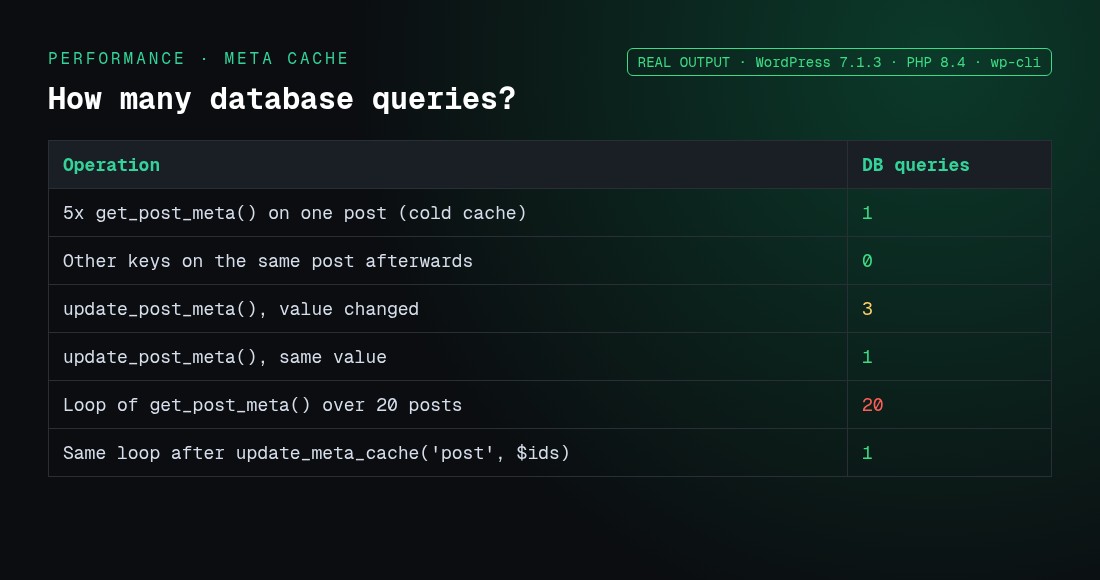
    Performance Improvements Through Metadata

    Metadata optimization can lead to a 20% increase in site speed according to various studies.

    FAQs

    What is the update_post_meta function in WordPress?

    It’s a WordPress function that updates the metadata for a given post.

    How does updating post meta improve SEO?

    By optimizing metadata, you enhance the relevance and visibility of your content in search engines.

    Can I troubleshoot errors myself?

    Yes, with proper guidance and reference to WordPress support.

    Are there plugins to help with post meta updating?

    Yes, numerous plugins can streamline the process.

  • Literally the Best Platforms: Showit vs WordPress

    Literally the Best Platforms: Showit vs WordPress

    In the digital age, having a website is essential for businesses, bloggers, and creatives. Two platforms that stand out in the website design landscape are Showit and WordPress. But which one is right for you? This article will provide a detailed comparison to help you make the best choice.

    Showit: An Overview

    Showit Logo

    Showit is a modern, drag-and-drop website builder known for its stunning design capabilities. It’s perfect for those who want to create visually appealing sites without needing to know code.

    WordPress: An Overview

    wordpress logo

    WordPress is a powerful content management system (CMS) that powers over 40% of the web. It’s a go-to platform for bloggers, e-commerce sites, and large businesses.

    Showit vs WordPress: A Comprehensive Comparison

    Feature/AspectShowitWordPress
    Ease of UseUser-friendly, drag-and-drop interface, no coding required.Steeper learning curve, more control, coding knowledge beneficial.
    Design FlexibilityKnown for beautiful, artistic designs, great for creative sites.Endless customization with themes and plugins, versatile.
    SEO CapabilitiesBasic SEO tools, may require additional efforts for advanced SEO.Robust SEO capabilities with plugins like Yoast, preferred by experts.
    Performance and SpeedGenerally good but may vary with design complexity.Known for speed, especially with proper optimization and caching.
    PricingSubscription-based pricing with different tiers.Free to use, costs may arise from hosting, themes, plugins.
    Security MeasuresBuilt-in security features, SSL certificates.Requires regular updates, security plugins for optimal protection.
    Community and SupportOfficial support, community of designers.Extensive community support through forums, blogs, tutorials.
    Integration and PluginsLimited integration options.Thousands of plugins available for various functionalities.
    Mobile ResponsivenessDesigns are mobile-friendly, adapt to different screen sizes.Themes must be chosen carefully for mobile optimization.
    E-commerce CapabilitiesLimited e-commerce options, suitable for small stores.Robust e-commerce capabilities with plugins like WooCommerce.
    Content ManagementSimple content management, best for visual sites.Advanced content management, ideal for blogs and large sites.
    Migration and PortabilityPossible but may require professional help.Easier migration options with various tools and plugins.
    User Reviews and TestimonialsPraised for design and ease of use, criticized for limited functionality.Loved for flexibility and community support, may be complex for beginners.
    ProsBeautiful designs, ease of use.Flexibility, community support.
    ConsLimited functionality, higher cost.Steeper learning curve, potential security risks.

    Conclusion

    Choosing between Showit and WordPress is a significant decision that depends on your specific needs, budget, and skills. Both platforms offer unique features and benefits, and understanding them will help you make the best choice for your website.

    Frequently Asked Questions​

    Showit is a visual website builder known for its artistic designs and ease of use, especially for beginners. WordPress is a robust content management system (CMS) offering extensive customization and functionality. While Showit focuses on visual appeal, WordPress provides more control and versatility.

    Showit is generally considered more beginner-friendly due to its drag-and-drop interface and no coding requirement. WordPress, while offering more control and flexibility, may have a steeper learning curve for those new to website development.

    Showit operates on a subscription-based pricing model with different tiers, while WordPress itself is free to use. However, costs may arise in WordPress from hosting, themes, plugins, and other additional features.

    Migration between Showit and WordPress is possible but may require professional assistance or specific tools, depending on the complexity of the site.

    Showit offers basic SEO tools but may require additional efforts for advanced optimization. WordPress, on the other hand, has robust SEO capabilities, especially with plugins like Yoast, making it a preferred choice for SEO professionals.

    For e-commerce, WordPress typically offers more robust capabilities, especially with plugins like WooCommerce. Showit has limited e-commerce options, making it more suitable for small stores or simple selling functionalities.

    Showit offers built-in security features and SSL certificates. WordPress requires regular updates and may need additional security plugins for optimal protection. Both platforms prioritize security, but the measures may vary.

    Both Showit and WordPress offer customization options. Showit focuses on visual design with a user-friendly interface, while WordPress offers endless customization through themes, plugins, and coding.

    Showit offers official support and has a community of designers for assistance. WordPress has extensive community support through forums, blogs, tutorials, and a vast network of developers and users.

    Choosing between Showit and WordPress depends on your specific needs, preferences, budget, and skills. Showit is ideal for visually stunning, artistic sites, while WordPress provides more functionality and control. Consider factors like design, functionality, SEO, pricing, and support to make the best choice for your website.

  • Steps to fix hacked WordPress website

    Steps to fix hacked WordPress website

    Is your WordPress site hacked? Don’t panic! I’ll guide you through the steps to fix a hacked WordPress website in this article.

    First, understand that WordPress is secure. However, hacking is still possible. Various reasons could explain why your site was hacked.

    We’ve assisted many website owners over the past years. We’ve helped them recover hacked sites and remove malicious code.

    WordPress powers 43.1% of all websites on the internet. That makes it a tempting target for hackers.

    Forbes published a report with a startling fact. Almost 30,000 websites get hacked daily. Seeing your website hacked is stressful.

    A hacked site damages your reputation. It affects your customers and Google rankings. Therefore, fixing it quickly is crucial to avoid impacting your business.

    Things to know before we start

    No website is 100% secure. Hundreds of vulnerabilities are found daily. Hackers can exploit these to hack sites. It’s not always the WordPress core files at fault.

    The PHP version on your server may be the issue. It could be anything. So, use the latest versions of both the CMS and PHP.

    Google and some browsers may warn visitors about hacked sites. This warning harms your website’s reputation. Hacked websites often contain or point to inappropriate content.

    Website security must be a top priority if you run an online business. It’s vital to pick a reputable hosting company.

    Good hosting companies update their servers and scan hosted sites regularly. We’ve used LiquidWeb for years without compromise. Regular backups are also essential; ask your host for auto-backup.

    You can use online scanners like Sucuri to check for hacks. We’ve used this site to scan client websites for malicious code.

    About 40% of websites get hacked through server vulnerabilities. Good hosting, regular backups, and scanning are essential for security.

    But if you’re reading this, your site might be hacked. Or you want to secure your WordPress website.

    How to identify if a WordPress website is Hacked?

    Using View Source

    Open your website in a browser. Right-click and select “View Page Source.” Look for unfamiliar website links. Search for anything you didn’t add to your pages.

    You might find HTML iframe codes. Words like Viagra or Cialis could appear on the pages. You may not see these words or links upfront.

    Hackers often hide these with CSS. They set the properties to ‘hidden’ or ‘none.’ The page loads these hidden elements, but users don’t see them.

    When Google crawls your website’s pages, it may mark the site as spam or hacked. This occurs because of these hidden elements.


    Redirections

    If you see that your website gets redirected to any different pharma, porn or weird websites, then it is a confirmation that the site has been hacked.

    Keyword Autolink

    Some hackers insert scripts into the WordPress site which auto links the words in your website to some other websites.

    Crashing and Freezing

    Upon visiting, the site loads slowly, crash and freezes. The reason behind this is the script that has been added to the site by the hacker.

    Unnecessary Popups and Windows

    Popups, alerts and new windows to different porn or objectionable URLs open when the site is visited.

    Notices and Alert from Hosting Provider

    Most of the hosting providers send you emails and alerts if any files get infected by malicious code or scripts. If you are using shared hosting, then other sites in the host generally get affected in such situations.

    So, these are some of the techniques to find out if a website is hacked. Now let me tell you how you can fix the hacked WordPress website.

    If you want your things to get done quickly without wasting a single minute, then you can hire a professional to fix the site for you.

    Hire website security Professional

    If you’re a skilled web security professional, you can handle this. Not a coder or comfortable with servers? Then hiring a WordPress Security Expert is recommended.

    An expert can investigate the cause. They can find infected files, remove malicious code, and restore the website.

    Hackers often inject malicious code into many files. Every file on the server must be scanned and checked precisely. Even one hacked file can ruin the site again.

    As said, we have been fixing and cleaning up Malware from WordPress websites for years; so you may consider us to help you with securing your WordPress website. We charge between $99-$199 depending upon the severity.

    Well, this is a secondary option. Let me first guide you the steps to remove Malware and clean up your hacked WordPress website.

    Okay, let’s begin.

    Step 1: Scan the computer which connects to the server

    Before you start any fixes to the website, the first and foremost thing is to scan your computer, which gets connected to the server via FTP. If your computer is affected by Malware, virus and Trojans, the FTP details get stolen by the hackers. I would recommend you to use a reputed anti-virus and then connect to the server.

    Step 2: Change all the passwords

    After scanning your website, you should change the usernames and passwords of FTP, WordPress Admin area login details and hosting details. Use a strong password for all the three. You can also use a strong password generator and keep the password safe.

    Step 3: Contact the Hosting Provider

    If you are using a shared server, then ask your host to check if other sites in the host are affected. Most of the hosting providers are helpful and scan the entire server to remove the Malware and update the security settings of your files.

    We had a horrible experience with our last hosting provider which hosted our site on a shared server and didn’t bother to update the server or remove Malware, so we moved our site to a VPS after cleaning the site. You may change your host or your hosting plan. Now follow the next step if your host isn’t helpful.

    Step 4: Restore from Backup

    If you regularly backup your WordPress website, then you won’t have any issues in deleting all the hacked files and replacing those with the backup files. Don’t delete the database as you might lose the changes you have done to the posts or pages. If you don’t have a backup, then follow the next step.

    Step 5: Download WordPress from Official Website

    If you don’t have a backup, then the last thing to do is downloading the version of WordPress that your website is using from the official website and UNZIP it to a folder.

    Step 6: Remove Infected files

    Now that you have cleaned your computer and extracted the WordPress files from the official site, you can now login to your website using FTP or web-based file manager and go to the folder where you have installed your WordPress and delete all the files except wp-config.php and the wp-content folder.

    Check the wp-config.php file and other files inside the wp-content folder properly and make sure that the file doesn’t contain any malicious code. Remove additional files with weird names. You can search for a PHP function base64(); which is used by the hackers to encrypt the data. Try to remove those codes. You can also use an online base64 decoder to check and verify the encrypted infected codes.

    For example, you see some data like this PGEgaHJlZj0iaHR0cHM6Ly93d3cuaW5meXdheXMuY29tIj5JbmZ5d2F5czwvYT4 . Copy the encoded contents and decode it. The decoding code shows you the following:

    <a href="https://data.infyways.com/new">Infyways</a>

    Check all the folders inside the wp-content thoroughly. You can also remove the WordPress plugins folder and the themes which you aren’t using. If you have a clean backup of your active theme, then you can delete all the themes. Plugins can be installed later once you complete the process.

    Step 7: Re-Upload Core WordPress Files

    If you have checked all the files which are there in the server, the next step is uploading the extracted WordPress files (Step 5) into the server through FTP.

    Step 8: Update the site and files

    Once you re-upload the core files, you can now login to the backend and install all the missing plugins and themes. Activate the theme and plugins. Your site is ready now, but it is still not secured. Follow the next step and make the site secured.

    Step 9: Securing a WordPress Website

    • Download all the plugins from the official repository of WordPress.
    • Don’t’ use nulled theme or plugins. All nulled files have malicious or infected codes inside them.
    • Set the folder permission to 755 and files to 644. Avoid chmod permission 777
    • Check the list of users and see if it contains any new user with admin access. An admin has access to change the theme files directly in the wp-admin or WordPress Dashboard.
    • You can set up a firewall monitoring system by installing plugins such as Acunetix or Sucuri. These security plugins enhance security and block the attack on the website.
    • Disable file edits in the backend.
    • Limit the login attempts in the backed. This can be done by installing a plugin called Limit Login Attempts

    Step 10: Remove Google Malware Warning

    Site Harmful Browser Screenshot

    Removing Malware warning is the last step which has to be done once your site is free from malware infection. You can submit the website to Google for review once again in order to remove the warning “This site may harm your computer”. The warning can be removed using the Google Webmaster Tools.

    Conclusion

    Never use nulled WordPress themes or plugins and keep your WordPress, themes and plugins updated. If you don’t, the website may get hacked and ultimately lose rank on SERPs. The recent Google algorithm impacts the hacked or spam website. So, keeping your website secured should be your utmost priority.

    I hope the guide must have helped you to fix hacked WordPress website. If you are still facing issues, then feel free to contact us. We are happy to help you any time.

    Frequently Asked Questions​

    When your WordPress site is hacked, you can follow these steps: Scan your computer for malware, change all your passwords (FTP, WordPress admin, and hosting), contact your hosting provider, restore your website from a backup if available, remove infected files, re-upload core WordPress files, update your site and files, and secure your WordPress website. Lastly, remove the Google malware warning.

    Yes, a hacked website can be restored. If you have a clean backup of your website, you can delete all the hacked files and replace them with the backup files. If you don’t have a backup, you can manually clean the infected files, re-upload the core WordPress files, and update your site.

    WordPress websites can be hacked due to various reasons such as weak passwords, out-of-date software, plugin and theme backdoors, vulnerable file permissions, and insecure hosting providers. Hackers often target WordPress due to its popularity.

    To remove a virus from WordPress, you need to scan your website for malware, remove the infected files, and re-upload the clean files. You can use various security plugins available for WordPress to scan and remove the malware.

    You can secure your WordPress website by using strong passwords, keeping your WordPress, themes, and plugins updated, using trusted themes and plugins, limiting login attempts, implementing SSL encryption, and installing a web application firewall.

    Signs that your WordPress website has been hacked include unexpected redirects, spammy on-site content, warnings from Google or web host, unexplained accessibility issues, and website behaving strangely.

    If you can’t fix your hacked WordPress site on your own, you should contact a professional WordPress security service. They have the expertise to clean your website and secure it from future attacks.

    To prevent your WordPress website from being hacked in the future, ensure your passwords are secure, keep everything updated, use trusted themes and plugins, delete unused plugins and themes, protect your website from malware, and find a reputable hosting company.

    A nulled theme or plugin is a premium theme or plugin that has been cracked and made available for free illegally. You should avoid it because it often contains malicious or infected codes that can harm your website.

    Once your site is free from malware infection, you can submit your website to Google for review to remove the warning “This site may harm your computer”. You can do this using Google Webmaster Tools.

  • A Complete Guide to Improving WordPress Tag Clouds

    A Complete Guide to Improving WordPress Tag Clouds

    When you visit a website, you often see a bunch of words or tags grouped together, right?
    These are called tag clouds. They help you find the most popular topics on the website and make it easy for you to explore different content. But sometimes, the tag clouds in WordPress, a popular website-making tool, aren’t very good.
    Don’t worry, though! This guide will teach you how to make better tag clouds that will make your website visitors happy.

    What Are Tag Clouds?

    Tag clouds are like signposts on a website. They help you navigate through all the content available. The more a tag is used, the bigger or brighter it appears in the tag cloud. This way, visitors can easily find and explore topics they’re interested in.

    Think of your website as a huge library, and the tag cloud as the index. Just by looking at the tag cloud, users can find popular topics and dive into the content they like. Tag clouds give your audience the freedom to explore without feeling lost.

    What Makes Up a Tag Cloud?

    A tag cloud is made up of tags, which are clickable links. They are displayed in different sizes or colors based on how important they are. The size or color shows how often the tags are used, helping users explore content easily.

    Why Good Tag Cloud Design Matters

    Organizing Tags

    To make a better tag cloud, you need to sort your tags properly. Group them based on topics or how related they are. This will make your tag cloud easier to use.

    Making Tag Clouds User-Friendly

    The best websites focus on user experience. When you design your tag cloud, make sure it’s easy to use on all devices and screen sizes. This way, everyone can have a great experience, no matter what device they use.

    Making Tag Clouds Look Good

    A good-looking tag cloud can make users want to explore more. Try using cool fonts, bright colors, and nice layouts. This will make users want to click on the tag cloud and explore your content.

    How to Build Better WordPress Tag Clouds

    Picking the Right Plugin

    WordPress has many tag cloud plugins. Choose one that helps you reach your goals and lets you customize your tag cloud. Plugins like “Tag Cloud Magic” or Cool Tag Cloud let you control how your tag cloud looks and works.

    Adjusting Tag Cloud Settings

    Changing the tag cloud settings can help it match your website’s look and goals. You can change things like font size, color scheme, and how many tags are shown to make your tag cloud look good and easy to use.

    Making Tag Clouds Work on All Devices

    More people are using their phones to browse the web. So, it’s important to make sure your tag cloud looks good on all devices. Use responsive design techniques to make tag clouds that work well on different screen sizes.

    Adding Fun Visuals

    Tag clouds don’t have to be boring. Add fun visuals like icons, pictures, or custom images as tags. This will make your tag cloud more interesting and inviting.

    Best Practices for Tag Clouds

    Creating a Good Tag Structure

    A well-organized tag cloud needs a good tag structure. Look at your content and find common themes or categories. Create a logical structure that helps users navigate.

    Grouping Tags

    Tags work even better when they’re grouped into categories. For example, if you have a food blog, you could create categories like “desserts,” “main courses,” or “vegetarian.” This helps users find specific content easily.

    Being Consistent and Avoiding Duplicate Tags

    Make sure you use tags consistently across your content. Don’t use synonyms or similar terms as separate tags. This makes it easier for users to find what they’re looking for.

    Updating Tags

    Over time, you might end up with tags that you don’t use anymore. Regularly check your tag cloud and remove or combine tags that are too similar. This keeps your tag cloud up-to-date and accurate.

    Advanced Tips for Improving Tag Clouds

    Using SEO

    SEO, or Search Engine Optimization, helps your website show up in search results. Use relevant keywords in your tags and their descriptions to improve your website’s visibility. A well-optimized tag cloud can help your SEO efforts.

    Using Plugins for Customization and Optimization

    Plugins can be really helpful for customizing and optimizing your tag cloud. Try plugins like “Tag Manager” or “Custom Taxonomies Menu Widget” to unlock more customization options and improve user experience.

    Using Widgets

    Widgets let you show your tag cloud in different places on your website. Try putting the tag cloud in easy-to-find areas, like the sidebar or footer. This encourages users to engage and explore.

    Linking Tag Clouds to Related Content

    Link your tag cloud to related content on your website. When users click on a tag, take them to a page that shows related articles or posts. This encourages users to explore more and stay on your site longer.

    Making Tag Clouds More Interactive

    Adding Filtering and Sorting Options

    Let users filter or sort tags based on what they want. Add options like alphabetical sorting, popularity sorting, or category filtering. This lets users customize their exploration experience.

    Adding a Search Feature

    Make it easier for users by adding a search feature to your tag cloud. This lets users search for specific tags and find relevant content quickly.

    Using Tooltips

    Tooltips give users more information about tags. When users hover over a tag, show a tooltip with a brief description or related stats. This makes the user experience better and encourages users to engage more.

    Adding Animations

    Animations can make a lasting impression. Consider adding subtle animations or hover effects to your tag cloud. These small interactions make your tag cloud more fun and interesting.

    How to Measure Tag Cloud Performance

    Analyzing User Interactions

    Use tools like Google Analytics to track how users interact with your tag cloud. Look at things like how often users click on tags, how long they spend exploring tags, and which tags get the most clicks. This can help you understand user engagement and make improvements.

    Tracking Click-through Rates

    Find out which tags are popular by tracking how often they’re clicked. Use this data to make popular tags more noticeable. This attracts user attention and encourages them to explore more.

    Using Analytics Tools

    Use analytics tools designed for tag clouds, like “Tag Cloud Analyzer” or “Tag Manager Analytics.” These tools give you detailed insights into how your tag cloud is performing and how users are interacting with it.

    Conclusion

    Improving WordPress tag clouds is a journey. By understanding what tag clouds are, using best practices, and trying out advanced techniques, you can make your tag cloud a powerful tool that makes your website visitors happy.

  • Add Custom Attributes Dropdown to WooCommerce Product Page

    Add Custom Attributes Dropdown to WooCommerce Product Page

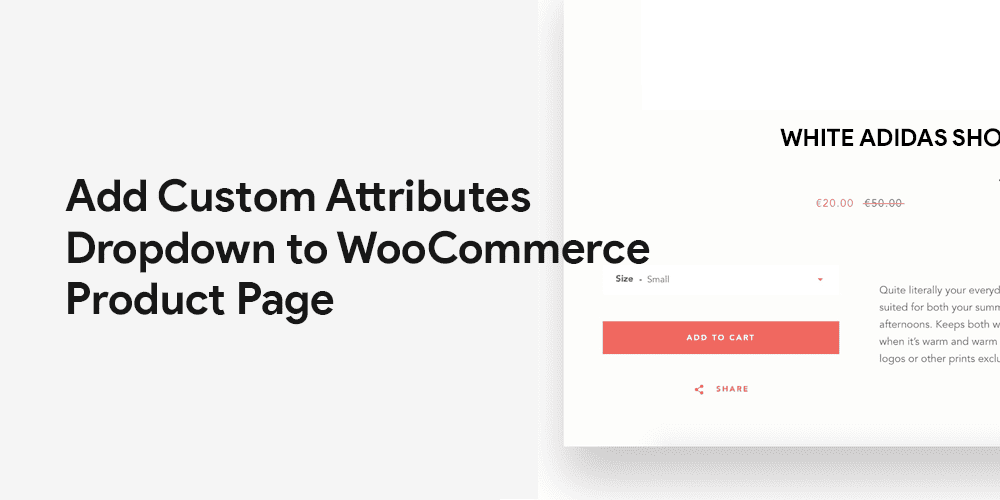
    WooCommerce product attributes let you define extra product data, such as size or colour to help customers know more about the product. The default Woocommerce template does have the features to display it in the additional information section but if you are looking to show it just above the cart button then you can use the WooCommerce hook woocommerce_before_add_to_cart_button. This is the best way to show custom product attributes on the shop page programmatically.

    Display Custom Products Attributes Dropdown

    The following code will work only for simple product or if you are using WooCommerce lottery. To show a list, select or a dropdown for all the custom attributes in the frontend just above the cart button you can add the code to functions.php file of the current theme you are using.

    add_action('woocommerce_before_add_to_cart_button', 'custom_product_attributes');
    
    function custom_product_attributes() {
    global $product;
    $attributes = $product->get_attributes();
    if ( ! $attributes ) {
    return;
    }
    if ($product->is_type( 'variable' )) {
    return;
    }
    echo '<div class="wc-prod-attributes"><h2>Custom Attributes</h2>';
    foreach ( $attributes as $attribute ) {
    $attribute_data = $attribute->get_data();
    $attribute_terms = $attribute_data['options'];
    $label = $attribute_data['name'];
    ?>
    <div class="wc-prod-single-attribute">
    <h3><?php echo $label; ?></h3>
    <select class="wc-custom-select-attribute" name="attribute[<?php echo $attribute_data['id']; ?>]" id="attribute[<?php echo $attribute_data['id']; ?>]">
                    <option value selected>Choose an option</option>
                    <?php foreach ( $attribute_terms as $pa ): ?>
                        <option value="<?php echo $pa; ?>"><?php echo $pa; ?></option>
                    <?php endforeach; ?>
                </select>
    </div>
    <?php
    }
    echo '</div>';
    }
    ?>

    Note: Don’t place the code in the woocommerce plugin folder. It is always advised to place the above code in functions.php of the theme you are using so that the files don’t overwrite when you update WooCommerce plugin.

    Adding Custom Attribute to the Backend

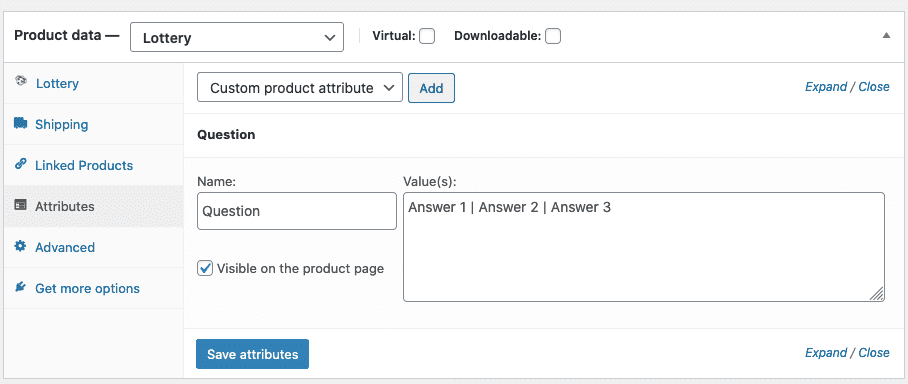
    We are using lottery plugin and wanted to show a custom attribute in the frontend. To add a custom attribute, click on the Attributes Tab. Select Custom product attribute and enter the name and the values. The dropdown values have to be separated by | as per the screenshot.

    Add Custom Attributes Dropdown to WooCommerce

    Custom Attribute Select Display

    As you can see the list shows all the options that we have added in the backend of the particular product. You can add any number of values in the backend which is shown as an option in the frontend.

    select list woocommerce custom attribute

    Conclusion

    Using Custom Attributes at the right place in the product page will definitely help the customers in taking the right decision while purchasing the products. If you have any questions or face issues with the implementation of custom product attributes into your woocommerce page, then feel free to contact us. We will get back to you as soon as possible

  • How to fix WordPress and IE compatibility issues?

    How to fix WordPress and IE compatibility issues?

    WordPress, being a versatile platform, is used by millions worldwide. However, like any other web platform, it can sometimes face compatibility issues with certain browsers, especially older versions of Internet Explorer (IE). This guide will provide advanced solutions to instantly resolve these issues and ensure your WordPress site runs smoothly across all browsers.

    Understanding the Issue

    Before diving into the solutions, it’s essential to understand the nature of compatibility issues. WordPress themes, plugins, and custom codes might not always align with the way older browsers, like IE, interpret and display web content. This misalignment can lead to distorted layouts, malfunctioning features, or even security vulnerabilities.

    Solutions to WordPress and IE Compatibility Issues

    1. Browser Detection Using JavaScript: Implement browser-specific code by detecting the user’s browser through JavaScript. Place this code in the header file of your WordPress page or post. This method can identify common browsers like Opera, Internet Explorer, Safari, Chrome, and Firefox.
    2. Separate Style Sheets for Different Browsers: Create distinct CSS files tailored for specific browsers. For instance, if you notice that a particular CSS attribute doesn’t render well in IE but works perfectly in Firefox, you can create two separate style sheets. Use JavaScript to determine which style sheet to apply based on the user’s browser.
    3. Use the Compatibility View in IE: For users still on Internet Explorer, especially older versions like IE 11, there’s a feature called “Compatibility View.” This feature allows websites to be displayed as if the user was viewing them in an older version of IE. It can be a quick fix for many display issues.
    4. Update WordPress Themes and Plugins: Ensure that your WordPress themes and plugins are updated. Developers often release updates to address compatibility issues.
    5. Use Cross-Browser Testing Tools: Tools like the Microsoft Edge browser can help you run cross-browser compatibility checks on your site. This can be particularly useful to identify and resolve any inconsistencies.
    6. Clear Browser Cache: Sometimes, the issue isn’t with the website but with the stored cache in the browser. Clearing the cache can often resolve display issues.

    FAQs

    • How do I make my WordPress site compatible with all browsers?
      Regularly update your themes and plugins, use cross-browser testing tools, and consider implementing browser-specific code using JavaScript.
    • What is the browser compatibility plugin for WordPress?
      There are several plugins available that can help identify and fix compatibility issues. It’s essential to choose one that’s regularly updated and has good reviews.
    • Why is my WordPress site not displaying correctly?
      This could be due to outdated themes/plugins, browser cache, or compatibility issues with certain browsers.
    • How do I enable IE compatibility mode in Chrome?
      Chrome doesn’t have a native IE compatibility mode. However, there are third-party extensions available that can emulate this feature.

    Conclusion

    Ensuring your WordPress site is compatible with all browsers, especially older versions like IE, is crucial for user experience. By following the steps mentioned above, you can ensure a seamless experience for your users across all browsers.

  • WordPress Website Builder Showdown: Avada vs Elementor – Unleashing the Ultimate Battle

    WordPress Website Builder Showdown: Avada vs Elementor – Unleashing the Ultimate Battle

    When it comes to choosing a WordPress website builder, there are a lot of options to choose from like Beaver, WP Bakery, Visual Composer and lot more. However, two of the most popular choices are Avada and Elementor. Both have a lot to offer, but which one is the best? In this blog post, we’ll take a look at both software, explore their pros and cons, highlight the similarities and differences between both, and see which one is the best for developing your website.

    Choosing Between Avada & Elementor for Your Next WordPress Project – What’s In It For You?

    Choosing between these two popular WordPress page builders can be a difficult decision. Avada and Elementor are both powerful page builders that offer drag-and-drop functionality, easy customization, and incredible design options. They both can deliver a high-quality website design and offer many configuration options, an intuitive interface, and plenty of customization choices to choose from. However, each of them has the strengths and weaknesses that set both apart from each other.

    When deciding which one to use for your next project, it is important to consider what is important to you as a designer or webmaster. If you are looking for a lot of design options or want to be able to build any type of website with the same tool, then Avada may be the best option for you. If you need more flexibility in terms of design, then Elementor will be a better choice for website building.

    Pros & Cons of Using Avada & Elementor

    Avada and Elementor are two of the most popular website builder software in the market today. They have a lot of similarities and differences.

    • The main difference between Avada and Elementor is that Avada has more templates to choose from, but Elementor is easier to use for beginners.
    • Both have drag-and-drop features, but Elementor is more intuitive for this purpose. Elementor comes with an intuitive interface, which cuts down on the time spent on creating the site.
    • Avada has a better SEO function than Elementor, but at the same time, it’s less user-friendly than Elementor when it comes to adding content to your website.
    • Elementor offers better customer support than Avada, but at the same time, it’s less flexible than Avada with some of its features like contact forms or popups.

    Avada vs. Elementor Review – Which is Better?

    Avada is a premium WordPress theme that offers more than 5000 different features, including an advanced drag-and-drop page builder. It is highly customizable, providing you with all the tools you need to create any type of website in minutes. If you’re looking for powerful website builder software, Avada is a great option. It’s easy to use and offers a wide range of features, making it a great choice for both novice and experienced web developers.

    With Elementor, you can create exquisite, responsive websites with ease. Plus, there’s no need to code! Just drag and drop your way to a stunning website. From a wide selection of templates to a wide range of widgets, Elementor has everything you need to create a profitable website. It is an ideal tool for both the beginner and the pros. And, it’s free! If you’re looking for a powerful, yet easy-to-use website builder software, then you must check out Elementor.


  • Plugins to Speed Up Your WordPress Site

    Plugins to Speed Up Your WordPress Site

    Google rewards faster websites, and every user customers want a quicker site too. As you know, when a site is slow to load, you quickly lose patience and click away, right? With all the hard work that you put into building your website, do you know the one thing that can kill it before it even has a chance? Then the only thing is boosting your WordPress speed to get high rank and more traffic.

    Loading speed is essential for your site’s success.

    Think about it. How long are you willing to wait for a site to load before you decide to move onto the next one?

    Not long, right?

    Most visitors of your site are only willing to wait a matter of seconds for your website to load before they decide it isn’t worth the effort and escape out, back to Google, where they will eventually search for other sites.

    The WordPress plugins are designed to increase the load speed of your page through a variety of mechanisms. Which one you need depends significantly on the structure, design, and reach of your page.

    Why should you increase WordPress Speed?

    There are many reasons to speed up WordPress, some of which might even cause significant concerns for you.

    • Search engines rank websites with fast-loading times higher than the slow-loading ones. So, if you want to improve your position in the SERP, improving speed should be one of your priorities.
    • Studies have said that site-loading speed of more than 2 seconds usually results in about 47 per cent of visitors bouncing off the website. So, to keep about half of your visitors stick to your site, you should speed up your WordPress.
    • Online buyers are the most impatient; they expect the page to load within a second. So, if you are running an e-commerce store on WordPress, then you better get ready to make significant improvements so your business can be more profitable.

    To help you which WordPress plugin is best for your site, we have discussed some of our favourites, to help you get more traffic.

    WP Rocket

    WP-Rocket plugin is the best WordPress Speed loading plugin. It is the most accessible and most beginner-friendly caching plugin, which is a big help if you don’t know the technical terms used for different caching options.

    Features

    • It allows users to cache their website with one-click instantly.
    • WP Rocket crawler automatically fetches your WordPress pages to build up the cache.
    •  This plugin then automatically turns on recommended WordPress caching settings like zip compression, page cache, and cache pre-loading.
    • WP Rocket also includes optional features as you can turn on to further improve performance. This includes lazy loading images, CDN support, DNS pre-fetching, minification.

    WordPress Speed

    Reducing Image Size: WP Smush

    Every image on your site can increase page load time. In the past, the only real way around this was by compromising image quality. With WP Smush plugin, every image is compressed so that the overall size is decreased, and the quality of the image remains the same.

    Features

    • It supports all standard image formats, including JPEG, GIF, and PNG, removes unused colours from images.
    • WP Smush is compatible with other plugins. It compresses any image in your directory.
    • It removes metadata from JPEG images.
    • WP Smush handles up to 50 at a time of multiple images to compress.
    • It is the go-to plugin for image optimization.

    wp smush


    WP Super Minify

    WP Super Minify plugin combines, minifies, and caches inline JavaScript and CSS files to speed up page loads, using Minify PHP Framework.  By activating this plugin, you will see the source of your HTML, inline JavaScript and CSS are now compressed. The size will be smaller and quite helpful to improve your page load speed as well as google page speed. It combines JS, HTML and CSS files so that they can be compressed and served to visitors in a way that reduces website loading times.

    Features

    • WP Super Minify plugin minifies JavaScript, CSS and HTML.
    • It gives option to disable compression of CSS/JavaScript.
    • The plugin is extremely straight forward and easy to use.

    wp super manify


    W3 Total Cache

    WordPress caching is one of the best ways to improve website performance. The primary purpose of caching is storing the website data temporarily in the cache so that it loads faster the next time the user opens the same page. W3 Total Cache WordPress plugin is one of the most popular plugins and the best caching plugin for WordPress.

    Features

    • W3 Total Cache fetch page cache, database caching, object caching, browser caching and a lot more.
    • It lets you integrate CDN services to reduce page load time.
    • W3 Total Cache has options to magnify and HTTP compression of the HTML, JS, and CSS files so that you can save bandwidth up to 80%.

    w3 total catche


    You need to install the plugins mentioned above in your site to reach its potential. This can only happen when it is fully optimised for speed and usability. These WordPress plugins help your website to appear professional and user-friendly.

    Downloading is easy, and you need at least one of these plugins right now. Don’t wait.

    Increase your speed, boost your WordPress and start optimizing traffic today.